Moeri Okuda
Assistant Professor | Ph.D. in Information Science
Artificial Intelligence and Informatics Course
Visual Media Engineering Research Group
Moeri Okuda's research applies machine learning to the study of plants, exploring how computational models can interpret and reason about images of tree and aquatic plant leaves. She regards information science as a foundation valuable not only to specialists but to people from every kind of background, a conviction that shapes her approach to connecting computer vision with questions in plant biology.
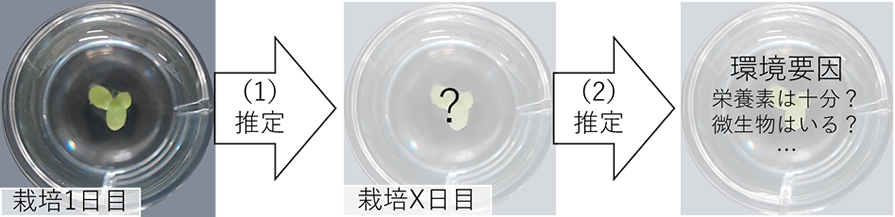
Estimating the Growth Rate of Duckweed
What students can learn
Through this project, students gain hands-on experience in duckweed cultivation, develop practical skills in image-recognition programming, and build the problem-solving mindset needed to carry a research question from observation to insight.
This project explores how the growth rate of duckweed can be estimated from a single photograph. Duckweed holds promise as a biomass resource for applications such as biofuel production, but its growth slows once leaf density becomes too high. By enabling more precise monitoring, this research aims to support cultivation conditions that keep duckweed growing at its full potential.
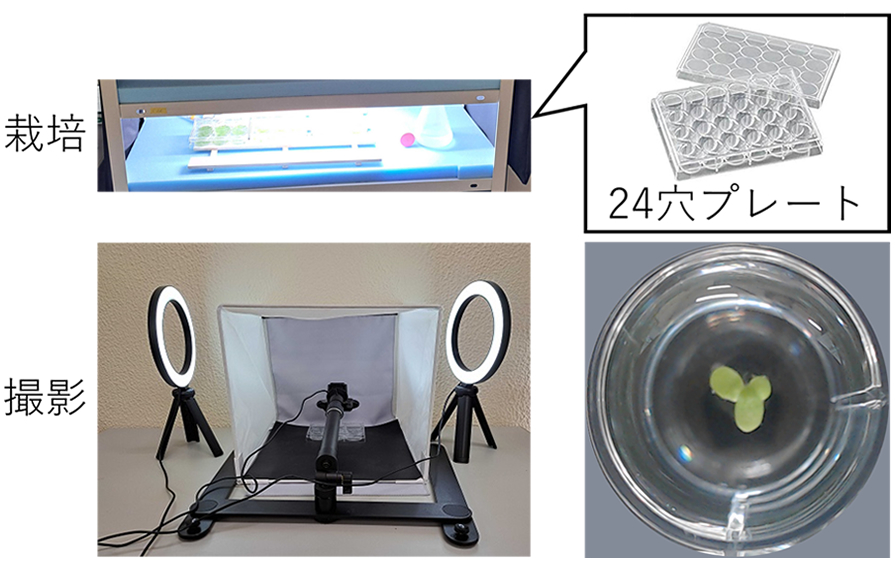
Automation of Duckweed Management
What students can learn
Working on this project, students build practical skills in duckweed cultivation and coding for image recognition, while developing the analytical mindset needed to approach an open-ended engineering problem from multiple angles.
This research addresses the automation of duckweed cultivation, harvesting, and related tasks. Realizing duckweed's potential as a biomass resource requires growing, imaging, and harvesting the plants, a process that is costly and labor-intensive when carried out entirely by hand. By automating key steps in this workflow, the project seeks to make duckweed a more practical and scalable resource.