Haruhiko Yoshida
Associate Professor | Ph.D. in Engineering
Electrical and Electronic Engineering Course
Electronic Properties Research Group
Electronic properties lie at the heart of how materials behave, and it is this fundamental field that anchors the research of Associate Professor Haruhiko Yoshida. He investigates the surface and interface properties of semiconductors and semiconductor devices, develops methods for evaluating these properties, and works to improve device performance and advance power-generation technologies. In the classroom, he complements his lectures with supplementary materials and exercises designed to deepen students' understanding.
Nanostructuring Solar-Cell Surfaces to Capture Sunlight Efficiently
What students can learn
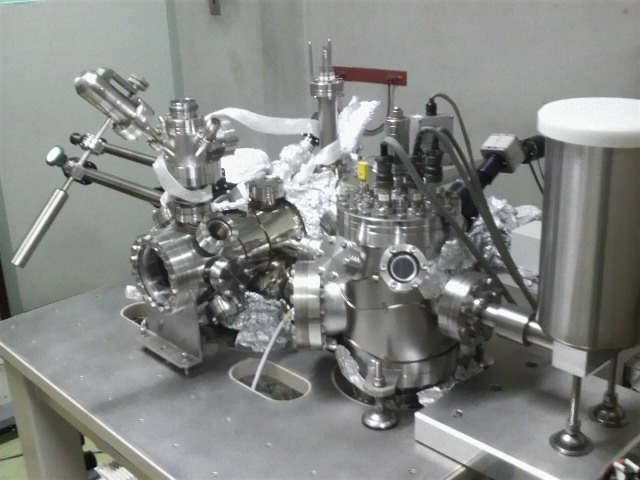
This research introduces students to nanofabrication techniques for solar-cell surfaces, together with the manufacturing processes involved. Students also gain hands-on experience with surface observation using scanning electron microscopy and atomic force microscopy, as well as optical evaluation methods such as measuring surface reflectance.
A flat solar-cell surface reflects more than 30 percent of the sunlight that strikes it, so surface processing is applied to suppress this reflection. This research explores surface processing at a finer, nanometer scale than conventional approaches allow. The aim is to achieve surface nanostructures that not only minimize reflection but also extract electricity efficiently.
Development of Multifunctional Protective Films for Solar Cells
What students can learn
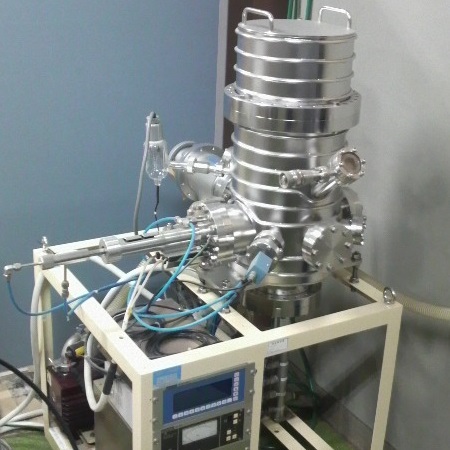
Through this work, students become familiar with thin-film fabrication and other semiconductor-device processes, learn to analyze electronic states and elemental composition using photoelectron spectroscopy, and practice basic electrical measurement techniques.
Solar-cell surfaces are typically covered with protective insulating films. This research investigates metal-oxide films that suppress light reflection while still allowing electricity to pass through efficiently. Unlike conventional protective films, which must be partially removed to make electrode contact, these multifunctional films allow electricity to be extracted without such processing, helping to reduce manufacturing costs.