Kenji Setoura
Associate Professor | Ph.D. in Engineering
Electrical and Electronic Engineering Course
Optical Nanotechnology Research Group
Optical nanotechnology sits at the heart of Associate Professor Setoura's research, which extends into applications such as energy conversion and biosensing. In his teaching, he focuses on oscillation and wave theory, favoring intuitive explanations of the mathematics underlying electric circuits and electromagnetism.
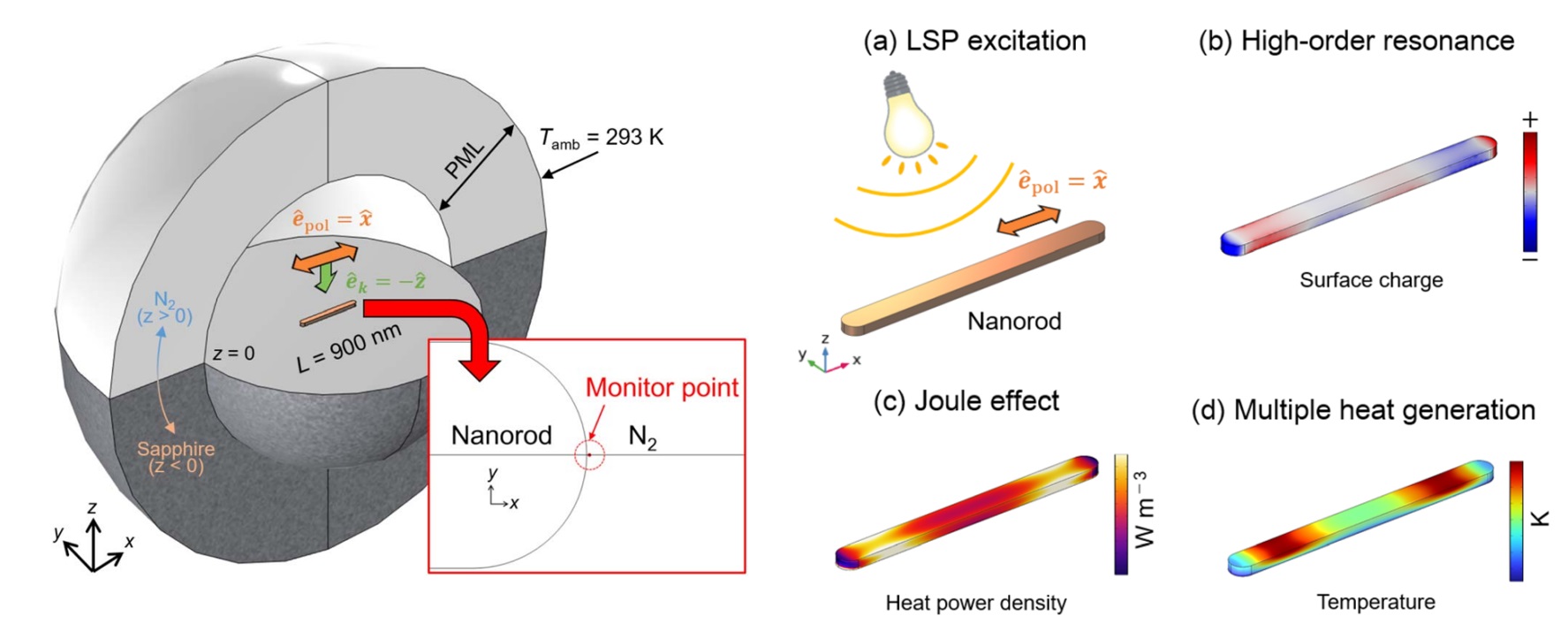
Nanoscale Photothermal Conversion Using Metal Nanoparticles
What students can learn
In this laboratory, students gain hands-on experience with optical equipment such as lasers and spectrometers, become familiar with electromagnetic-field simulation of light, and develop microfabrication skills including electron-beam lithography.
This research designs, fabricates, and evaluates plasmonic metal nanostructures capable of converting optical energy into heat with high efficiency, while investigating potential applications of these structures across nanotechnology.
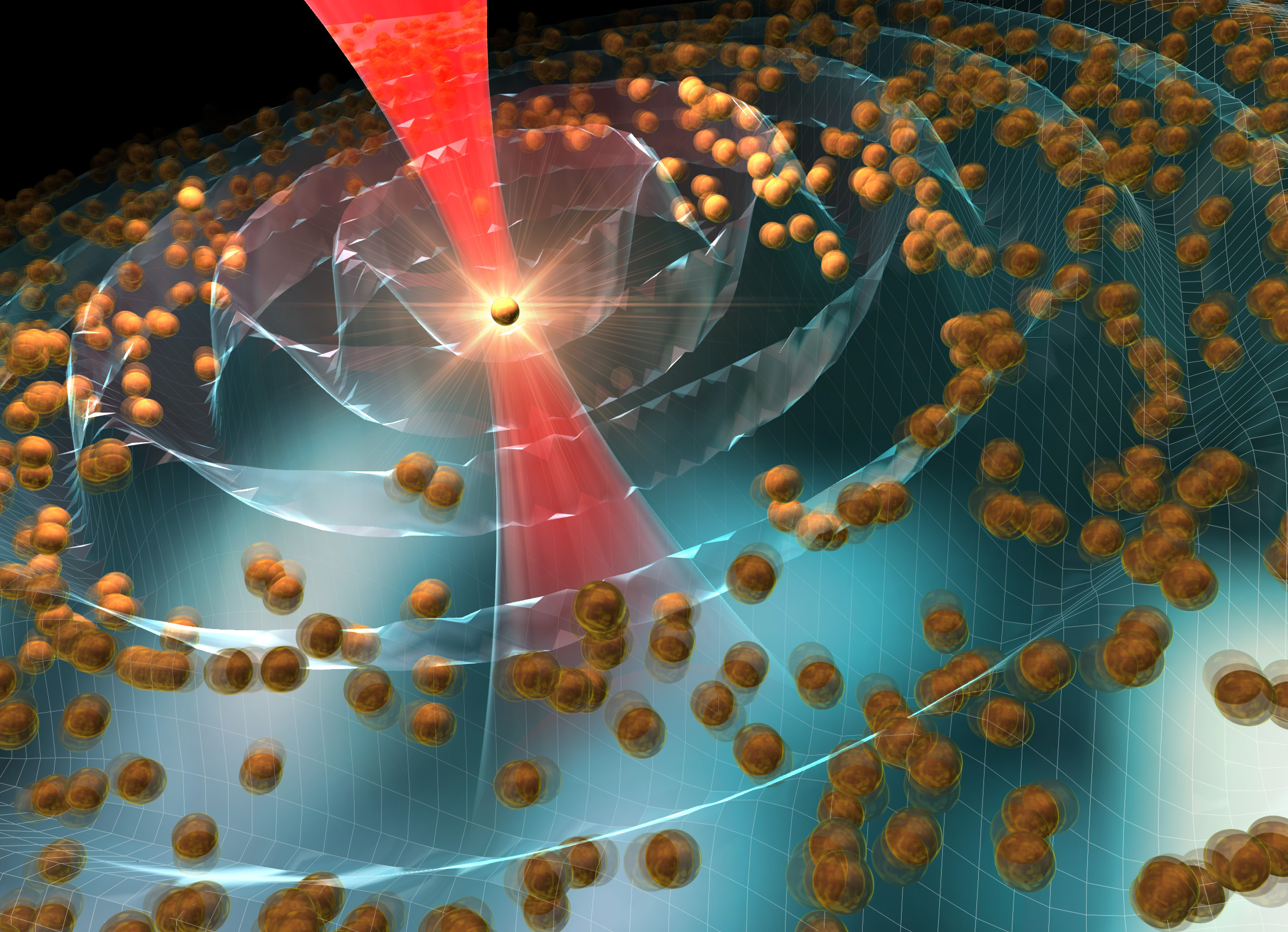
Optical Manipulation of Nano- and Microparticles
What students can learn
Through this project, students develop skills in optical instrumentation, electromagnetic-field simulation, and numerical simulation of thermal-fluid phenomena.
Because light behaves as a wave, it exerts a small pressure in its direction of propagation, a force capable of capturing and transporting tiny objects. By combining this optical pressure with laser-induced fluid phenomena, the group aims to develop new technologies for freely manipulating nanomaterials.