Sho Okada
Assistant Professor | Ph.D. in Engineering
Electrical and Electronic Engineering Course
Power System Engineering Research Group
Electricity is a pervasive yet often invisible phenomenon, and Assistant Professor Okada draws on concrete, relatable examples to help make its underlying nature easier to grasp. His research centers on electrical discharge phenomena and their role in two foundations of social infrastructure: stable electricity supply and water purification.
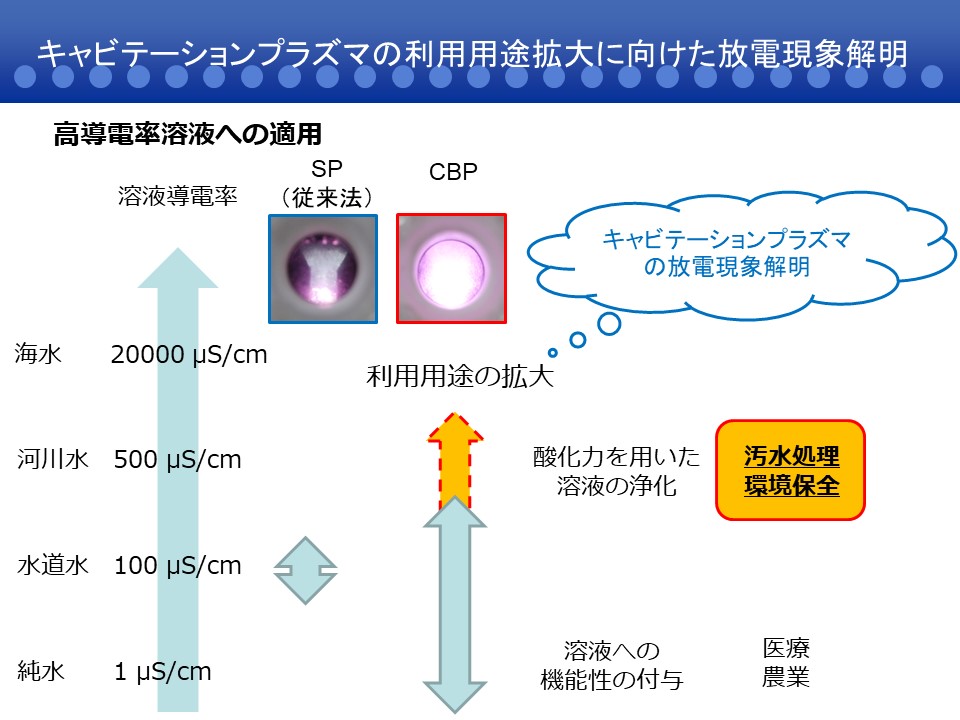
Clarifying Discharge Phenomena to Expand Applications of Cavitation Plasma
What students can learn
Students gain hands-on experience observing high-speed phenomena with oscilloscopes and high-speed cameras, and explore the chemical reactions that plasma induces in different substances.
This research generates plasma within liquids to drive chemical reactions that break down harmful substances or synthesize useful materials. It aims to establish efficient methods for creating plasma in liquid, a task that has long proven difficult. The work may contribute to treatment equipment capable of removing substances that conventional methods struggle to address, supporting more stable access to safe water.
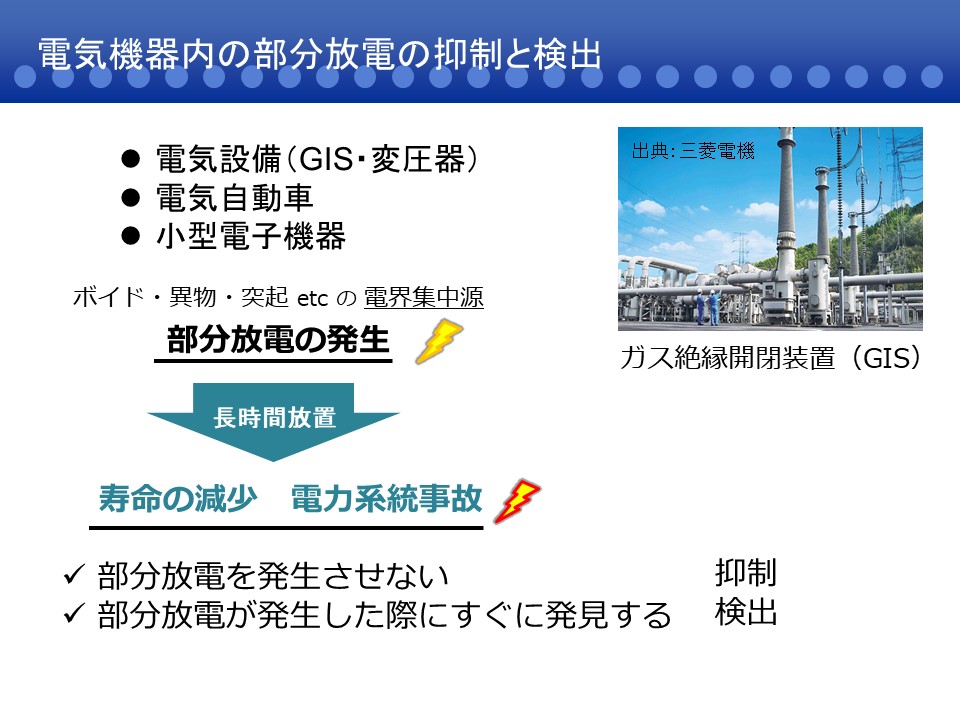
Suppression and Detection of Partial Discharge in Electrical Equipment
What students can learn
Through this theme, students build skills in high-speed observation using oscilloscopes and high-speed cameras, as well as in the statistical processing of the resulting data.
This research aims to extend the service life of power-transmission equipment and electric motors and to stabilize the operation of electrical facilities. By suppressing or detecting the small discharges that can lead to failures, it helps prevent equipment accidents before they occur. As a diagnostic technology for electrical infrastructure, this field contributes to a safe and stable electricity supply.