Tatsuki Osato
Assistant Professor | Ph.D. in Engineering
Electrical and Electronic Engineering Course
Plasma and Discharge Engineering Research Group
Power electronics has grown increasingly important as ever more devices connect to the Internet, and this field lies at the heart of Assistant Professor Tatsuki Osato's research. He develops original circuit-design software that derives circuit parameters to support near-optimal operation, helping to realize compact, low-loss power-supply circuits.
Advancing Discharge, Plasma, and Pulsed Power through High-Voltage Inverter Power Supplies
What students can learn
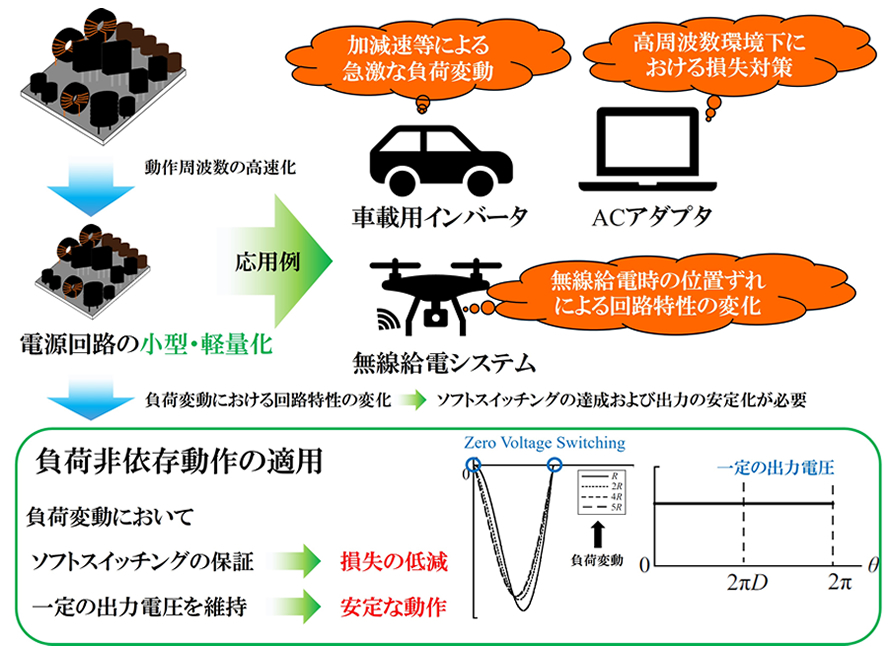
Working with high-voltage inverters built on next-generation semiconductor devices, students gain hands-on experience in power conversion, device driving, discharge and insulation phenomena, circuit implementation, and circuit simulation.
This research applies soft-switching techniques to high-voltage power-supply circuits and uses wireless power transfer to achieve insulation in high-voltage drive systems. By substantially reducing losses within these power circuits, it aims to design efficient high-voltage supplies. High-voltage operation above 5 kV using next-generation semiconductor switches is expected to support applications such as plasma-discharge generation and electrical-insulation testing.
Mathematical Modeling of Soft Switching in High-Frequency Power Supplies and Its Design Applications
What students can learn
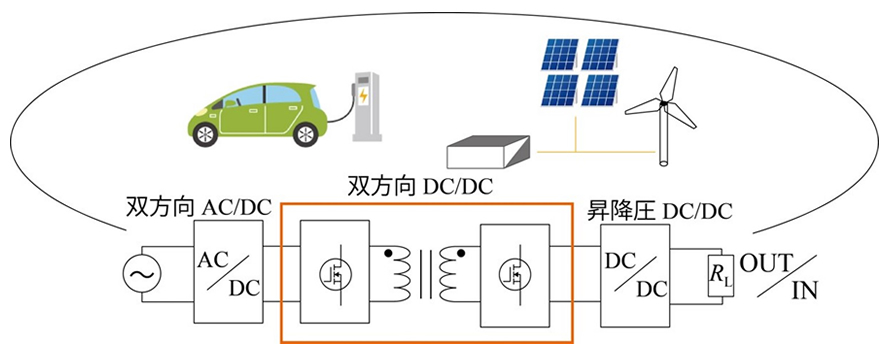
Through the development of original circuit-design software, students build practical skills in programming, circuit implementation, and the other techniques needed for circuit design.
Energy-conversion technologies that harness renewable energy efficiently are attracting growing attention. This research develops power-circuit design software aimed at reducing energy losses in high-frequency inverters and wireless power-transfer systems. The software can rapidly derive near-optimal circuit parameters, helping to substantially reduce design costs.