Ai Nozaki
Professor | Ph.D. in Engineering
Applied Chemistry Course
Field of Applied Chemistry
In her lectures, Professor Nozaki first presents familiar, easy-to-visualize examples before introducing the underlying theory, an approach designed to make the material accessible to students. Her research centers on the development of metal catalysts that contribute to the creation of new energy sources and the construction of a recycling-oriented society, with the aim of reducing environmental impact and enriching everyday life through engineering.
Development of Novel Metal Catalyst Materials from Alloys
What students can learn
Students engage with the full process from alloy fabrication using materials-science techniques to the preparation of alloy nanoparticles through chemical methods. Through the development of high-performance catalysts, they acquire analytical skills using state-of-the-art characterization instruments.
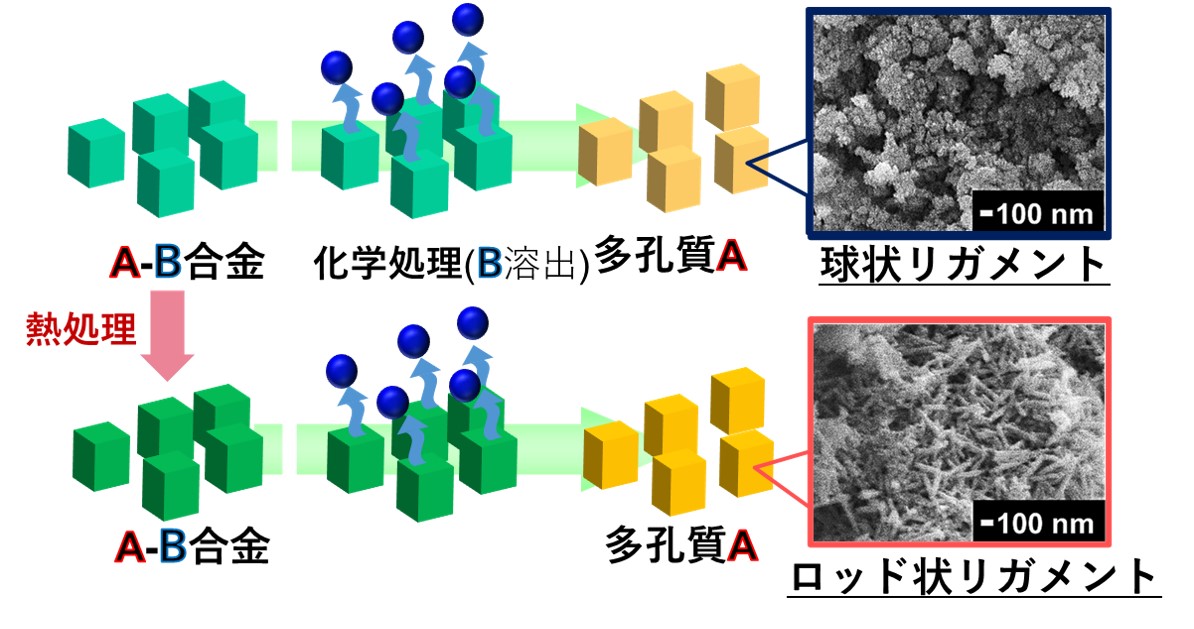
This research develops porous catalyst materials that exploit the structural characteristics of alloys. By varying the constituent elements, composition ratios, structure, and preparation conditions of the precursor alloys, catalyst materials with the diverse morphologies shown above can be produced. The development of high-performance catalysts contributes to reducing the energy consumption of industrial processes. Furthermore, whereas precious metals have traditionally been the dominant choice for metal catalysts, advancing catalyst development based on abundant, low-cost metals may help address resource, environmental, and energy challenges.
Catalyst Development Supporting Environmental Purification and a Hydrogen-Based Society
What students can learn
Students explore how catalysts can address challenges in environmental purification and the realization of a hydrogen-based society, while also acquiring the technical skills required for catalyst material development.
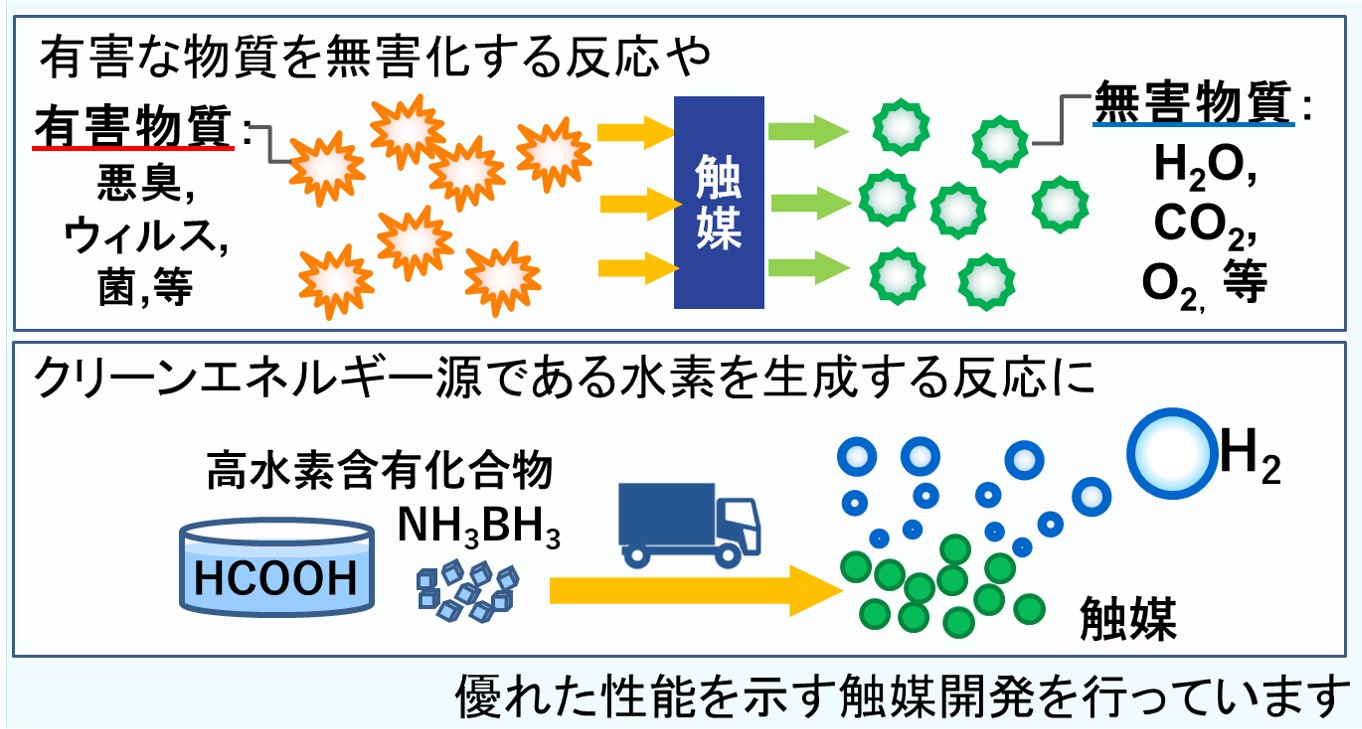
This research develops catalysts that exhibit excellent performance in reactions that render harmful substances harmless as well as in hydrogen-generation reactions. It focuses on the oxidative decomposition of toxic gases and on reactions that generate hydrogen, a clean energy source, from hydrogen-rich compounds attracting attention as energy carriers, with the aim of reducing environmental impact and enriching everyday life through engineering.