Atsushi Mineshige
Professor | Ph.D. in Engineering
Applied Chemistry Course
Field of Applied Chemistry
In his lectures, Professor Mineshige draws on familiar, everyday examples to help students develop an interest in inorganic materials and energy, in the hope that more of them will go on to pursue the goal of building a sustainable society. His research centres on fuel cells, all-solid-state batteries, and hydrogen. In particular, he seeks to clarify the relationship between crystal structure and material properties in order to design original, high-performance inorganic materials, with the aim of contributing to the realisation of a carbon-neutral society.
Developing New All-Solid-State Batteries to Surpass Lithium-Ion Batteries
What students can learn
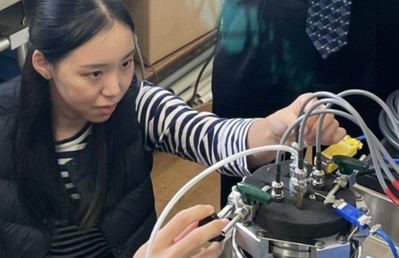
Working from the periodic table, students learn to design crystal structures that place specific ions in specific positions, an approach that may lead to the discovery of new materials. Along the way, they also acquire analytical skills through the use of a range of advanced characterisation instruments.
This research aims to develop all-solid-state batteries that greatly surpass the performance of batteries currently in use. The work involves designing new inorganic materials capable of rapid ion transport and evaluating their properties as battery components. At its core, it is research into the electrolyte, the ion-conducting material that serves as the heart of a battery. Looking ahead, the aim is to collaborate with industry partners to bring these materials into practical batteries, substantially improving the performance of today's electric vehicles.
Development of Reversible Oxide Fuel Cells
What students can learn
By considering how different ions can be arranged within a crystal lattice, students gain insight into the design of novel materials and their potential for new discoveries. They also develop hands-on experience with a range of state-of-the-art analytical instruments.
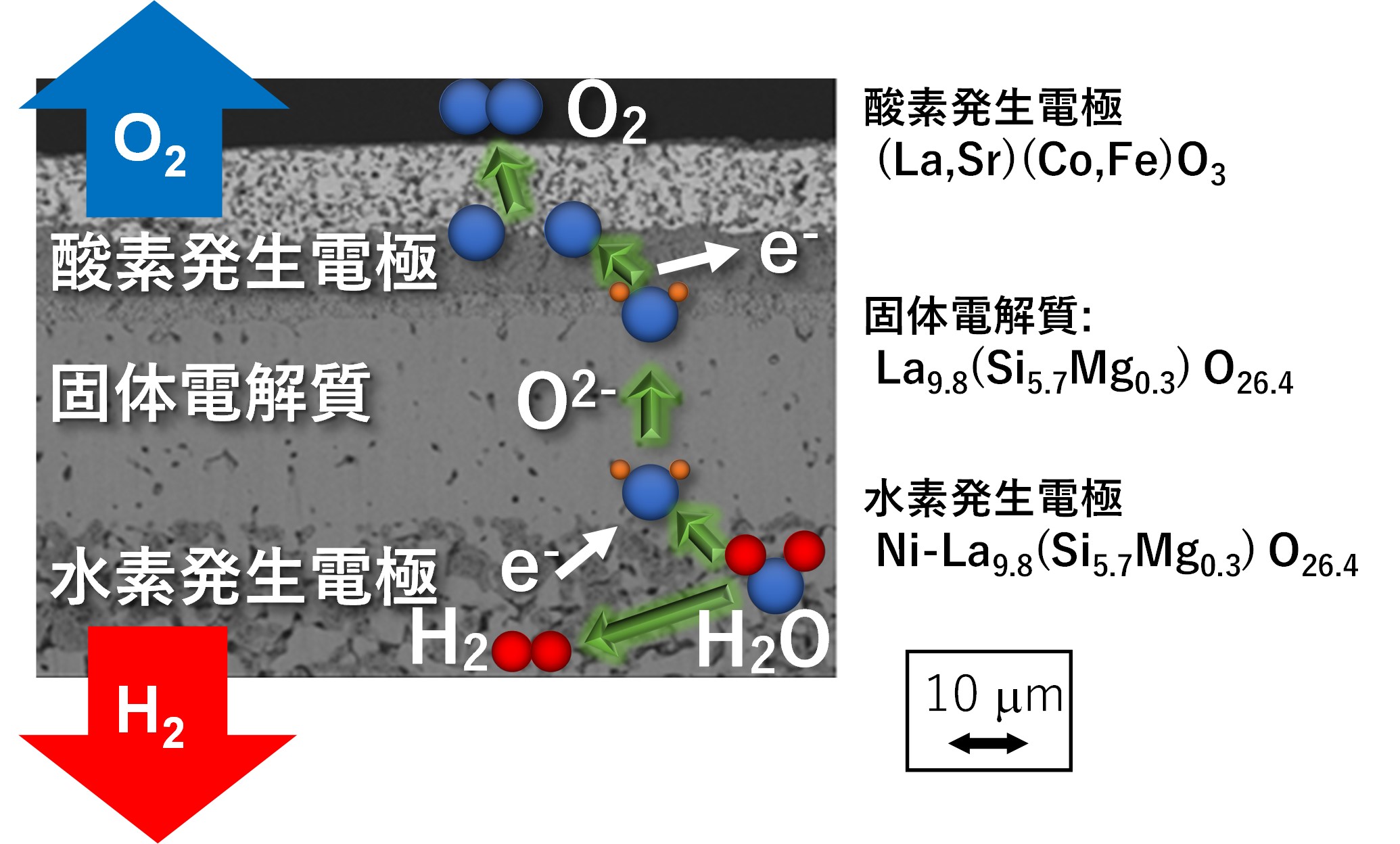
This research seeks to develop a single system capable of both producing hydrogen and generating electricity from it. In particular, the work involves designing new inorganic materials that allow rapid ion transport and applying them to fuel cells, hydrogen production, and the synthesis of natural gas. At its core, it is research into the electrolyte, the ion-conducting material that serves as the heart of a fuel cell. Looking further ahead, the goal, pursued in collaboration with industry partners, is to help build a hydrogen energy society less dependent on fossil fuels, including through the synthesis of natural gas and petrol substitutes.