Hiroaki Yamamoto
Professor | Ph.D. in Engineering
Applied Chemistry Course
Field of Applied Chemistry
In his lectures, Professor Hiroaki Yamamoto strives to go beyond explaining industrial methods and processes, also addressing the academic principles that underlie them. His research centers on the electrolytic deposition of functional materials in non-aqueous solutions and the measurement of thermodynamic quantities, with an emphasis on understanding chemical phenomena from both equilibrium and kinetic perspectives.
Energy Generation and Utilization
What students can learn
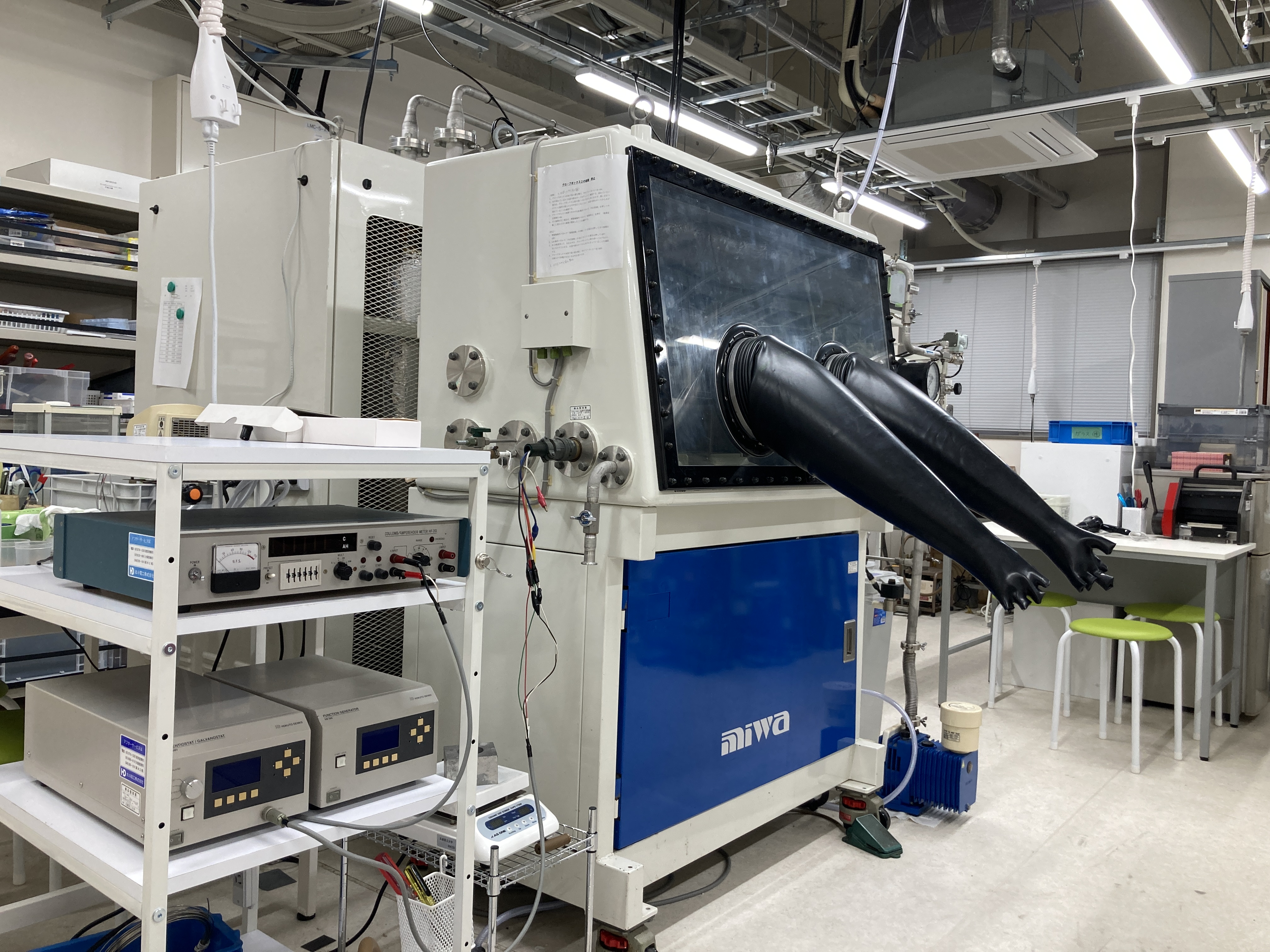
Through the electrolytic fabrication of thermoelectric conversion materials and the development of cathode electrodes for water electrolysis, students come to appreciate the significance of using energy effectively.
Using electrolysis in non-aqueous solutions, this research fabricates thin-film thermoelectric conversion materials aimed at making effective use of waste heat. Producing compounds and alloys of a targeted composition through electrolysis requires careful design of the electrolytic bath and exploration of electrolysis conditions, so the work draws on electrochemical measurements and thermodynamic data to guide material fabrication. Thermoelectric conversion transforms a temperature difference within a material directly into electrical energy. As a form of energy harvesting that draws electrical energy from ambient conditions such as heat and temperature gradients, this research is conducted with an eye toward eventual use as a power source for sensors and micro-actuators.
Determination of Thermodynamic Quantities
What students can learn
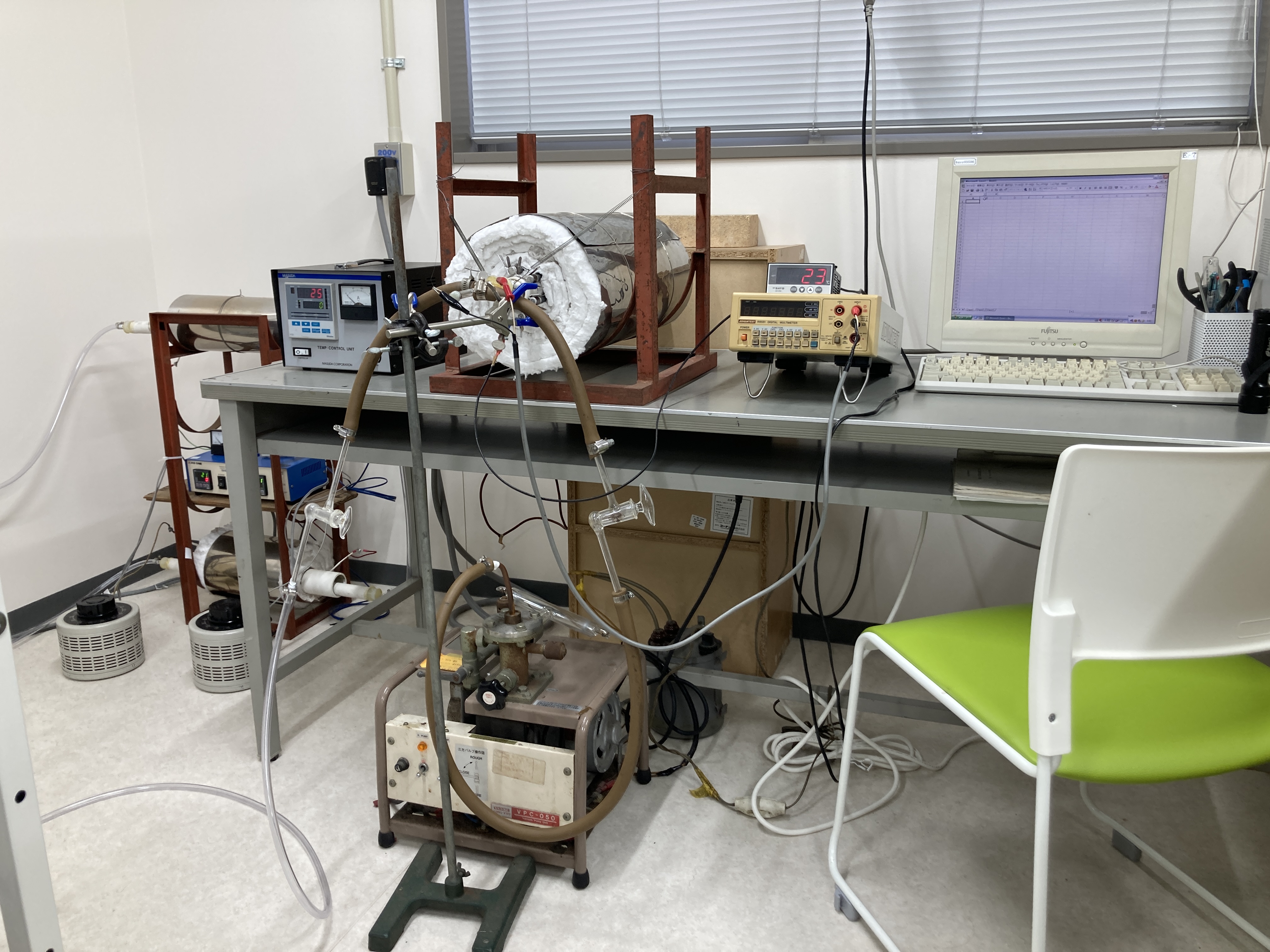
Students deepen their understanding of thermodynamics and chemical thermodynamics, and acquire the basic approach to constructing chemical equilibrium diagrams from measured and literature values of thermodynamic quantities.
This research measures thermodynamic quantities such as the standard Gibbs energy of formation and examines reaction direction and chemical equilibrium from an equilibrium-based perspective. Thermodynamic quantities are determined using electromotive force methods with solid electrolytes and calorimetric methods. The resulting data helps clarify the electronic and bonding states of a wide range of substances and provides important information for developing new functional and energy-related materials.