Hiroshi Satone
Professor | Ph.D. in Engineering
Applied Chemistry Course
Field of Applied Chemistry
Lectures are designed not merely to explain textbook material, but to reveal how that knowledge functions in actual industrial processes and how it relates to other courses, so that students can put what they learn into practice. Research centers on the optimization of powder-handling and separation processes, spanning a broad range of applications from manufacturing to environmental purification.
Optimization of Slurry Processes
What students can learn
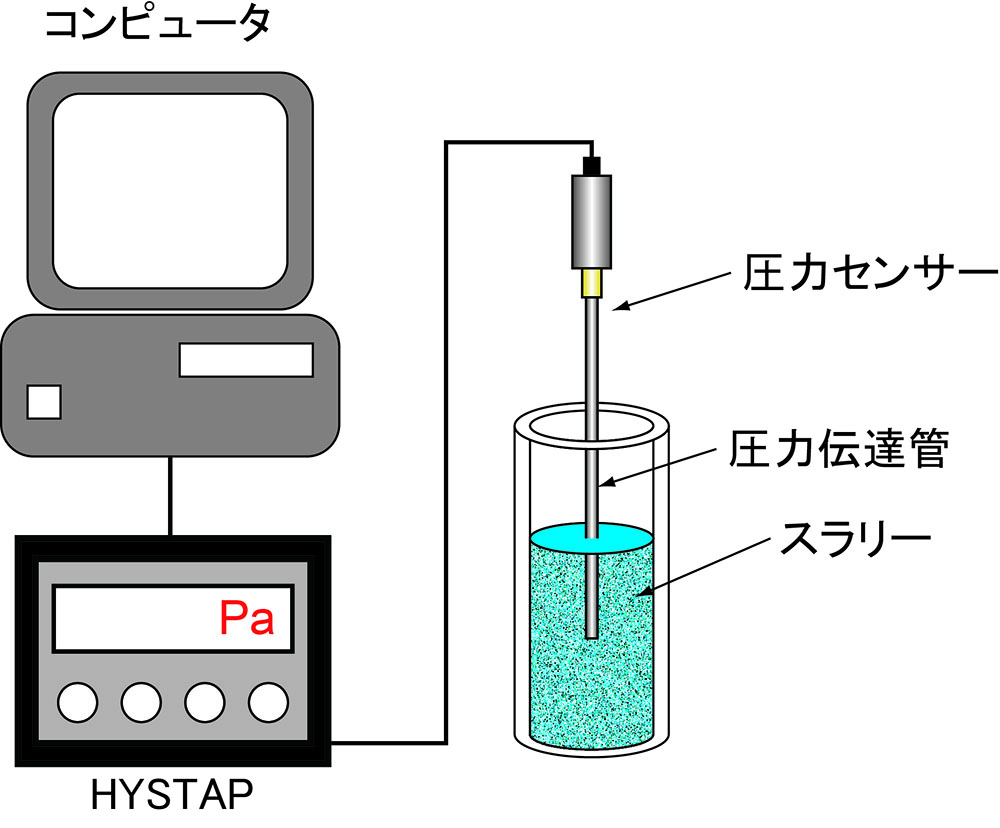
Through reviewing and newly designing processes that handle mixtures of powder and liquid, students acquire process-design skills that are directly applicable in industrial settings.
A slurry is a suspension of solid particles in a liquid such as water. Familiar examples range from evidently liquid substances like river water and milk to materials more readily imagined as solids, such as prepared wasabi paste, cement, and clay. Slurries are notoriously inconsistent: even when the same raw materials are used, the resulting product can differ depending on who prepares it, and even the same person may produce different results from one batch to the next. This variability poses a serious problem, as it destabilizes the underlying process. This research aims to understand the temperamental behavior of slurries and to optimize their properties, with a view to designing more reliable processes.
Control of Particle Dispersion States in Liquids
What students can learn
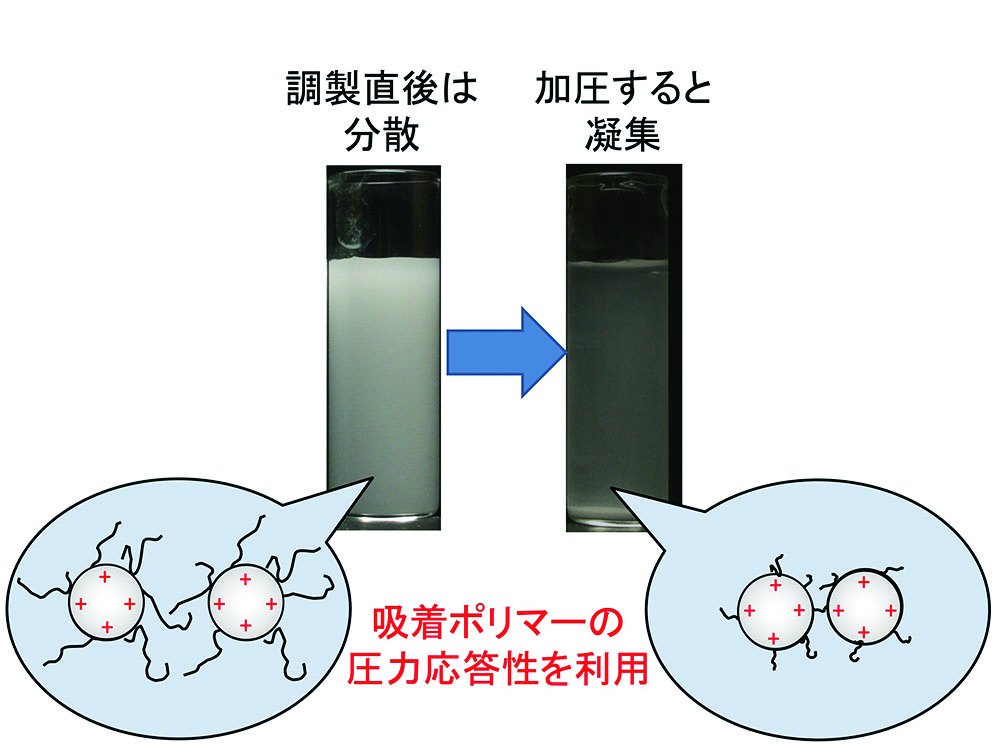
By working to control the dispersion state of fine particles suspended in liquids, students come to understand the governing principles of solid-liquid dispersion systems along with a range of evaluation techniques.
The optimal dispersion state of fine particles suspended in a liquid varies from process to process. In ceramics manufacturing, for instance, particles must remain dispersed (evenly scattered), whereas in solid-liquid separation processes such as water treatment, they must instead be aggregated (gathered together). In some cases, a single process may even require both dispersed and aggregated states at different stages. This research seeks to control the dispersion state to suit the requirements of each process and, where possible, to make the transition between dispersion and aggregation reversible.