Naoki Fukumuro
Associate Professor | Ph.D. in Engineering
Applied Chemistry Course
Field of Applied Chemistry
In lectures, Professor Fukumuro explains the principles and characteristics of the electron microscopes, elemental analysis instruments, and X-ray diffractometers that many students rely on for materials analysis in their graduation research, illustrating each technique with actual images and data drawn from research-relevant case studies. His research centers on electroplating, a process applied broadly from the surface treatment of large machinery to the fabrication of minute electronic components, and investigates the state of hydrogen co-deposited within plated films and its effects on their structure and physical properties.
Analysis of Hydrogen Behavior in Plated Films
What students can learn
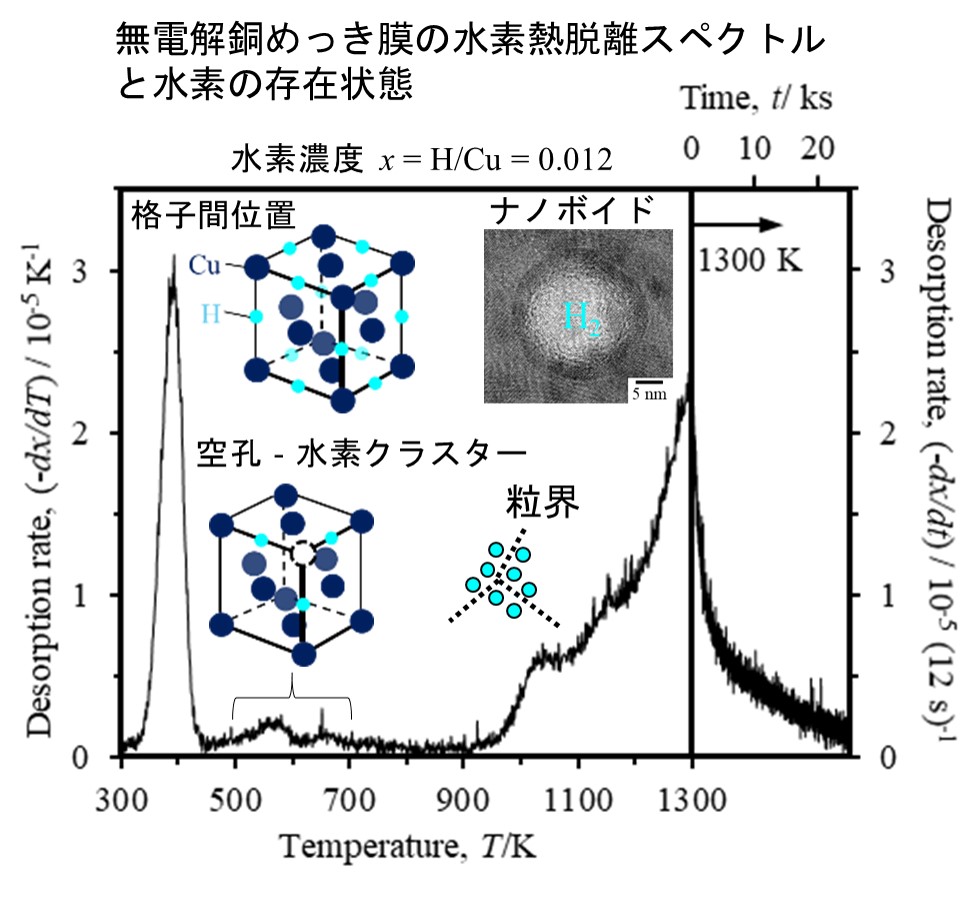
Students acquire techniques for analyzing the state of hydrogen that variously affects the structure and physical properties of plated films, using methods such as thermal desorption spectroscopy, electrochemical hydrogen permeation, and X-ray diffraction.
This research investigates the state of hydrogen co-deposited within plated films and its influence on their structure and physical properties. Hydrogen incorporated during plating can cause blistering and delamination of the film, void formation, grain growth at room temperature, and hydrogen embrittlement of the substrate metal. By examining in detail, through thermal desorption spectroscopy, electrochemical hydrogen permeation, and X-ray diffraction, how plating conditions affect the amount and state of hydrogen co-deposition, the work aims to reduce hydrogen incorporation into plated films.
Fabrication of Functional Thin Films by Electrochemical Methods and Elucidation of Their Formation Mechanisms
What students can learn
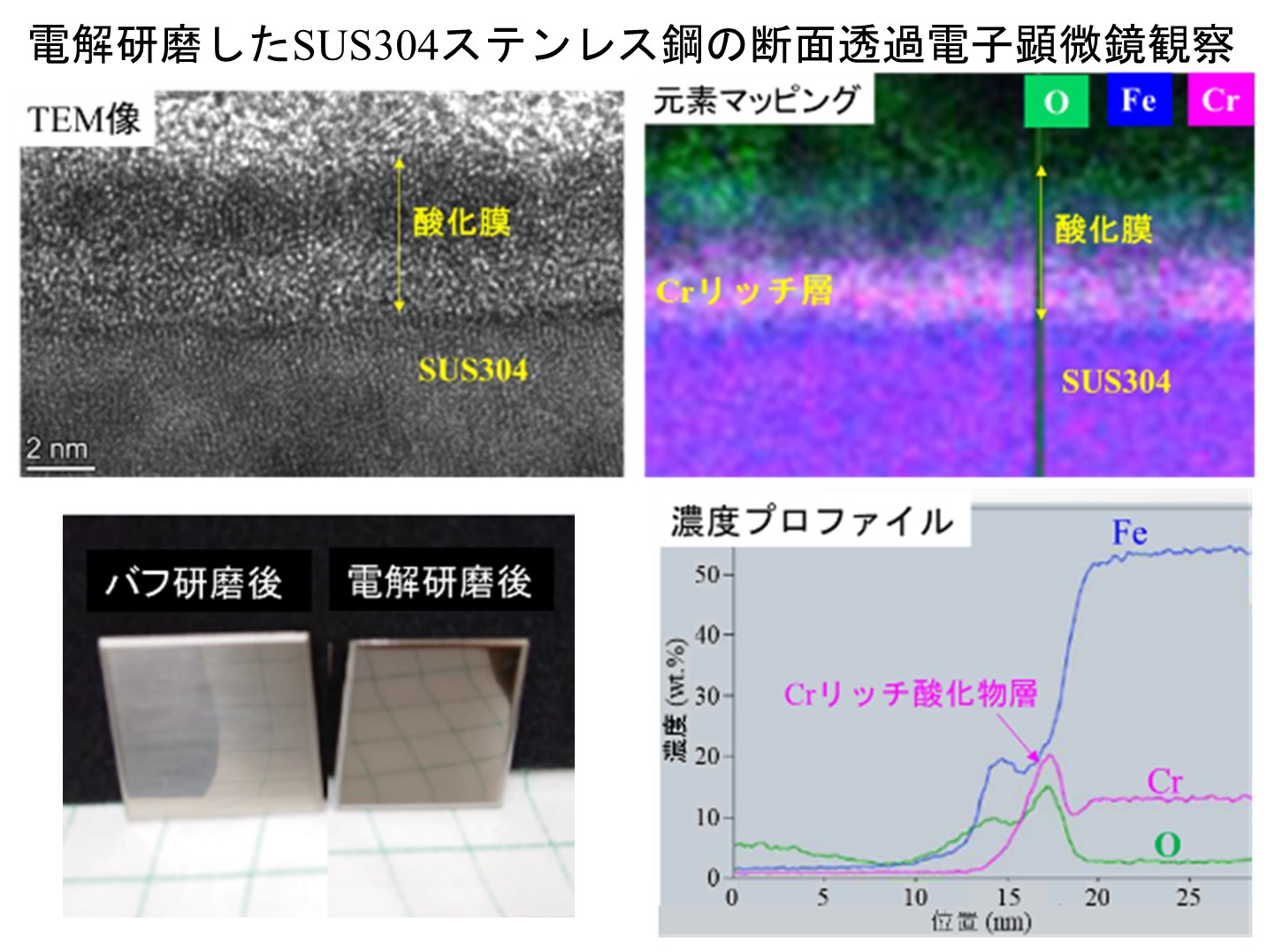
Students develop skills in observing thin-film materials at atomic resolution with a transmission electron microscope and in performing nanoscale elemental mapping and crystal structure analysis.
This research examines the structure of thin films and material surfaces formed through electrochemical methods such as electrolytic and electroless plating, electropolishing, and anodic oxidation, and explores the mechanisms underlying their formation. Because properties such as the electrical conductivity of copper-plated wiring on printed circuit boards, the corrosion resistance of oxide films on stainless steel surfaces, and the visible-light emission of porous silicon depend on the fine structure of the thin films and surfaces, the work employs nanoscale structural analysis using a transmission electron microscope in addition to scanning electron microscopy and X-ray diffraction. The aim is both to improve the properties of functional thin films obtained by electrochemical methods and to reduce the environmental impact and cost of the fabrication process.