Seigo Ito
Professor | Ph.D. in Engineering
Applied Chemistry Course
Field of Applied Chemistry
In his lectures, Professor Seigo Ito emphasizes working through practice problems with the textbook at hand, helping students understand problems on their own and develop the ability to resolve challenges as they arise, rather than relying on memorization. In guiding research, he sets a distinct theme and goal for each student, with the aim of cultivating the ability to break through difficult problems.
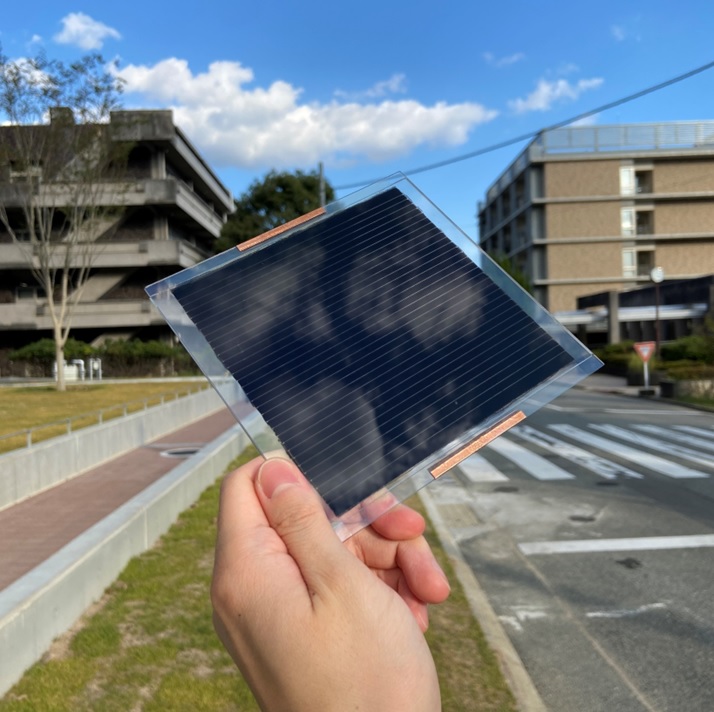
Fabrication of Ultra-Durable Perovskite Solar Cells via a Fully Printed Process
What students can learn
Course content covers nanoparticle synthesis, formulation of functional inks, screen-printing techniques, scanning electron microscopy, X-ray crystal analysis, nitrogen-adsorption-based surface area analysis of nanoparticles, solar cell measurement, light absorption measurement, and impedance measurement. Through this work, students gain the ability to build materials up from their constituent elements, fabricate them into devices, and evaluate their performance.
Today's solar power panels remain expensive, and their cost has not yet fallen low enough to make thermal power generation unnecessary. This points to the need for new, low-cost solar cells that can be manufactured through fast, vacuum-free printing processes. Our laboratory has succeeded in fabricating ultra-durable perovskite solar cells through just such a fully printed process. Ongoing research aims to further improve the efficiency of these solar cells, and in the course of this work students can acquire practical know-how in developing new materials together with skills in characterizing their physical properties.
Development of New Catalysts for Polymer Electrolyte Membrane Hydrogen Fuel Cells
What students can learn
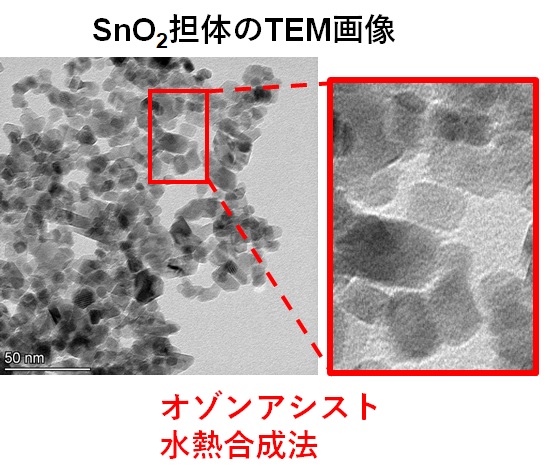
Topics addressed include nanoparticle synthesis, formulation of functional inks, screen-printing techniques, scanning electron microscopy, X-ray crystal analysis, nitrogen-adsorption-based surface area analysis of nanoparticles, hydrogen fuel cell measurement, infrared spectroscopy (FT-IR), and impedance measurement. In the process, students develop the capacity to construct materials from elemental building blocks, incorporate them into working devices, and assess their properties.
To realize the coming hydrogen energy society, gasoline-powered vehicles will need to give way to hydrogen fuel cell vehicles. However, the catalysts currently used in hydrogen fuel cells rely on platinum, whose annual global production is so limited that even if the entire supply were allocated to fuel cell vehicles, only a small number of vehicles could be equipped. It is therefore necessary to develop platinum-free catalysts for hydrogen fuel cells in order to support the wider adoption of such vehicles. Ongoing research aims to improve the efficiency and durability of new platinum-free catalysts, and in the course of this work students can acquire practical know-how in developing new materials together with skills in characterizing their physical properties.