Tadao Takada
Associate Professor | Ph.D. in Engineering
Applied Chemistry Course
Field of Applied Chemistry
His lectures draw on concrete applications and case studies, helping students understand the properties of the chemical substances encountered in daily life and the chemical principles behind everyday phenomena. His research centers on the structure and function of nucleic acids—DNA and RNA—and aims to develop artificial nucleic acids through chemical modification grounded in synthetic chemistry, with a view toward medical applications.
Biosensors Based on Light-Responsive Artificial Nucleic Acids
What students can learn
Through the synthesis and design of artificial nucleic acids, students can acquire molecular synthesis techniques rooted in organic synthetic chemistry and biochemical experimental skills, while also deepening their understanding of computer-based molecular simulation.
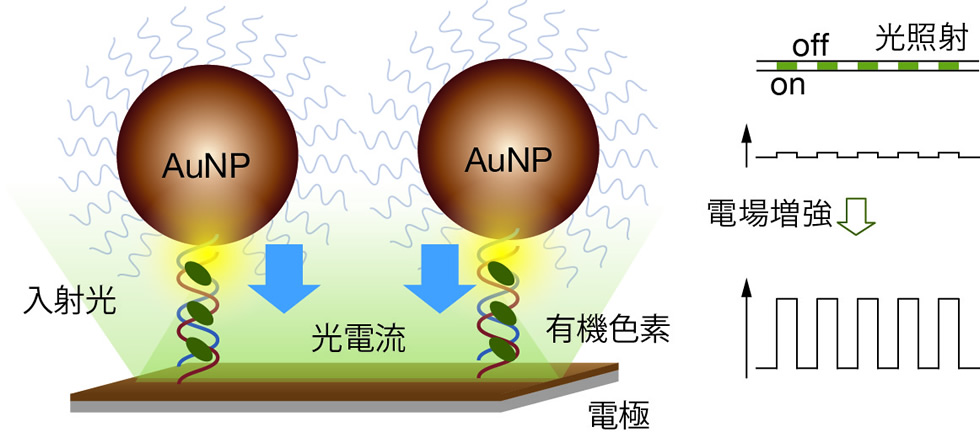
This research develops artificial nucleic acids capable of converting light energy into electrical current, and applies them to biosensors that detect trace biomolecules with high sensitivity. Chemically modified artificial nucleic acids are designed to absorb light and convert it into an electrical signal, forming a system in which the resulting current changes in the presence of specific chemical substances or biomolecules. This work is expected to contribute significantly to the development of compact sensors capable of detecting minute quantities of biomolecules in bodily fluids, supporting the early diagnosis of disease and the detection of infection.
DNA Hydrogels Encapsulating Gold Nanoparticles
What students can learn
Students can acquire organic synthesis techniques and learn to analyze chemical reactions using spectroscopic instrumentation, together with microscopy skills.
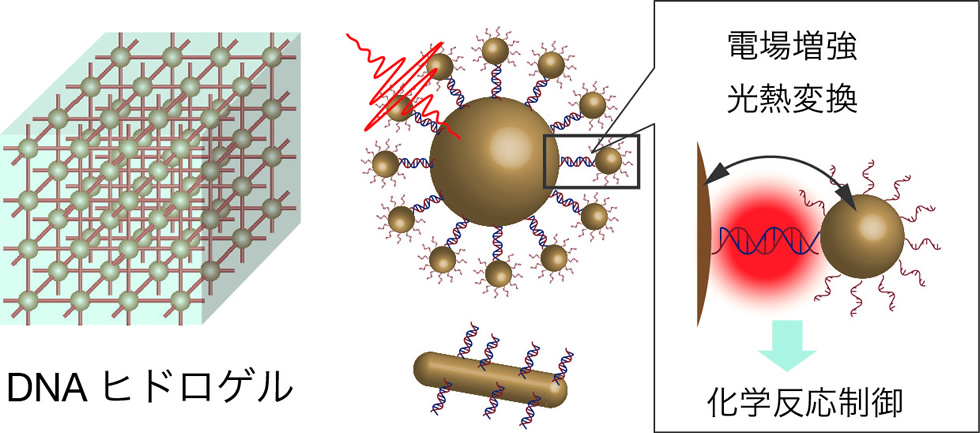
This research investigates artificial DNA hydrogels that encapsulate gold nanoparticles, with a focus on their potential as biomaterials. By exploiting the self-assembly of DNA together with the photothermal conversion and electromagnetic field enhancement properties of gold nanoparticles, biomaterials are developed with the capacity for substance conversion and controlled release. These gold nanoparticle hydrogels exhibit high biocompatibility and are expected to find application in stimulus-responsive drug activation and drug delivery systems.