Takuji Yamamoto
Professor | Ph.D. in Engineering
Applied Chemistry Course
Field of Applied Chemistry
Separation and purification processes are said to account for as much as 30% of the energy consumed in chemical manufacturing, making further improvements in the efficiency and energy economy of separation technologies essential to sustainable development. In our laboratory (the Environmental Chemical Process Research Group), we cultivate a friendly, collaborative atmosphere while pursuing research on separation processes such as crystallization, adsorption, filtration, and membrane materials, working together with students to push the boundaries of chemistry and advance toward a decarbonized society.
Separation and Purification of Fatty Acid Mixtures by Melt Crystallization
What students can learn
Students gain hands-on experience with crystallization operations using a compact, lab-scale melt crystallization apparatus. By deepening their understanding of the equipment's structure and function and developing proficiency in its operation, they cultivate the practical skills and intuition required of a chemical engineer.
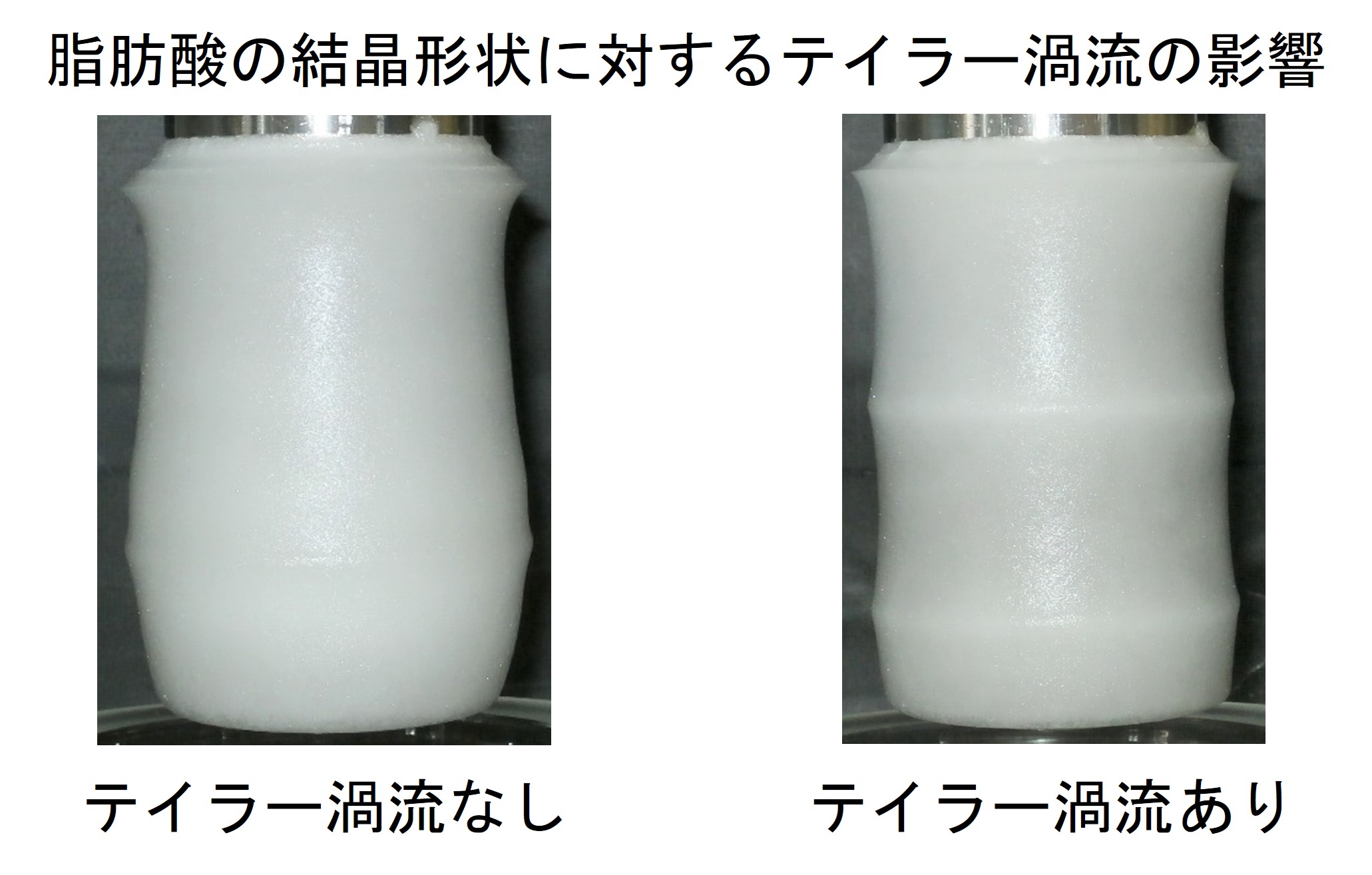
Melt crystallization separates and purifies substances by exploiting the compositional changes that occur as a melt solidifies on a cooled surface. My research focuses on melt crystallization using a double-tube apparatus, consisting of inner and outer tubes, designed to efficiently yield layered crystals that are easy to recover. This configuration generates a distinctive flow pattern known as Taylor vortex flow, and I am investigating how this flow influences the formation of the crystal layer through numerical modeling and computational experiments conducted alongside the physical trials. The work aims to contribute to applications such as the purification of biofuel feedstocks and the more efficient operation of methane fermentation.
Synthesis and Performance Evaluation of Phenolic Resin-Based Adsorbents
What students can learn
Students acquire knowledge of the physical and chemical properties of materials, together with practical skills for synthesizing adsorbents from chemical precursors and methods for evaluating their adsorption performance.
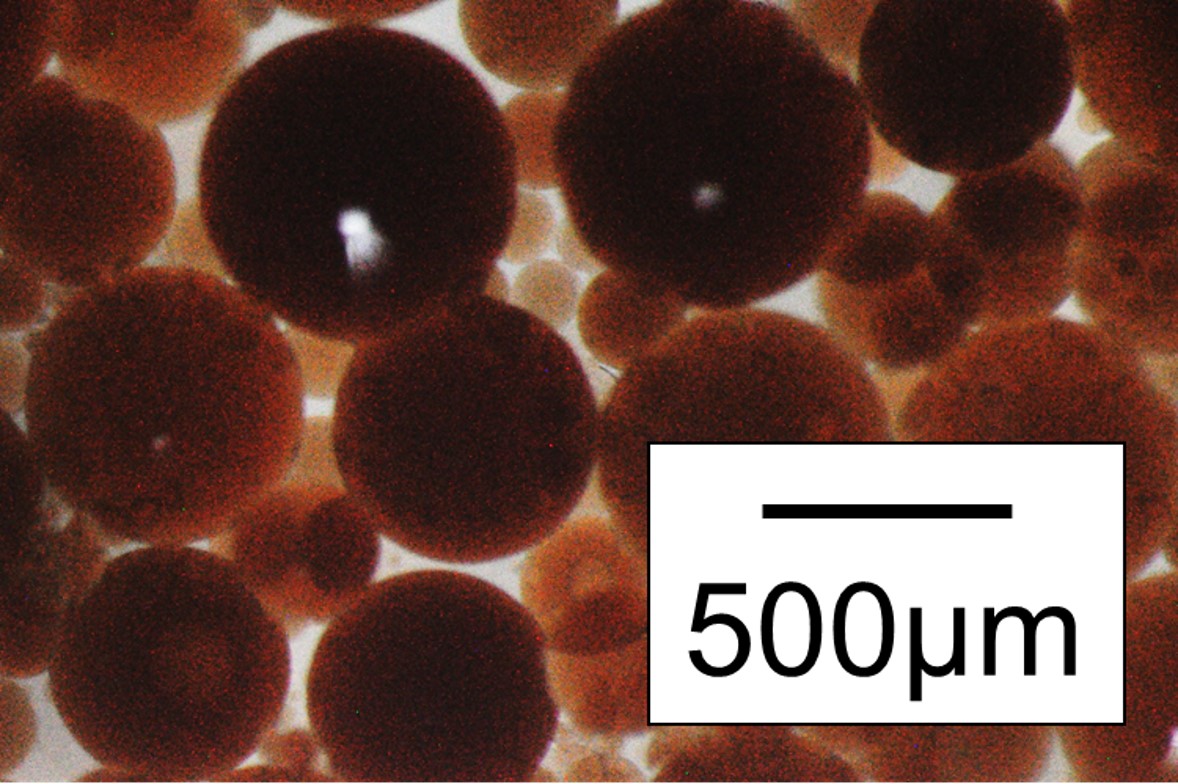
Adsorption is a phenomenon in which substances become concentrated on the pore surfaces of porous materials, and it is widely applied to the recovery of valuable resources and the removal of contaminants. My research focuses primarily on removing contaminants from water, through the development of phenolic resin-based adsorbents and the evaluation of their adsorption performance in liquid-phase systems. Through a detailed investigation of the reactions involved in synthesizing phenolic resins, I optimized the synthesis conditions and substantially improved adsorption performance for cesium ions in water compared with previous studies. This adsorbent is also expected to find applications in the recovery of heavy metal ions.