Yoshiaki Matsuo
Professor | Ph.D. in Engineering
Applied Chemistry Course
Field of Applied Chemistry
In his lectures, Professor Matsuo takes care to explain mathematical expressions and graphs in detail so that students can grasp what they represent, while introducing the latest research findings to spark interest and deepen understanding.
His research focuses on creating new functional materials through the chemical modification of inorganic layered compounds, including carbon-based materials, and on exploring their application in a variety of energy storage devices and sensors.
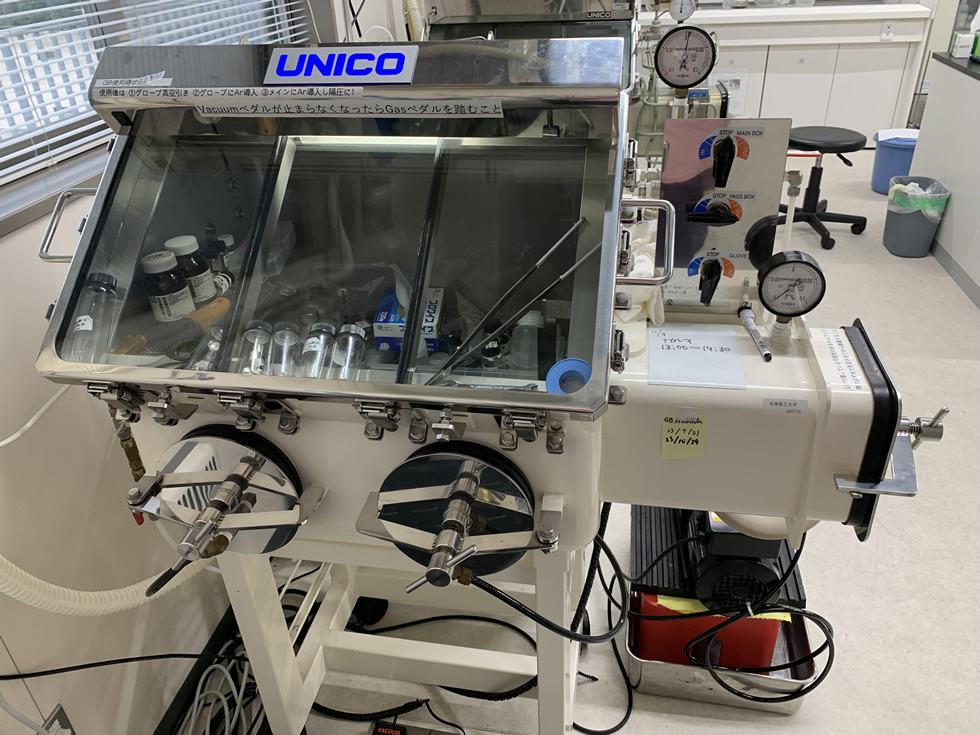
Synthesis and Analysis of Active Materials for Rechargeable Batteries
What students can learn
Students gain an understanding of the operating principles and interfacial phenomena of rechargeable batteries that function through the storage of various ions, together with practical skills in X-ray diffraction, spectroscopic techniques, and electrochemical measurements used to analyze them.
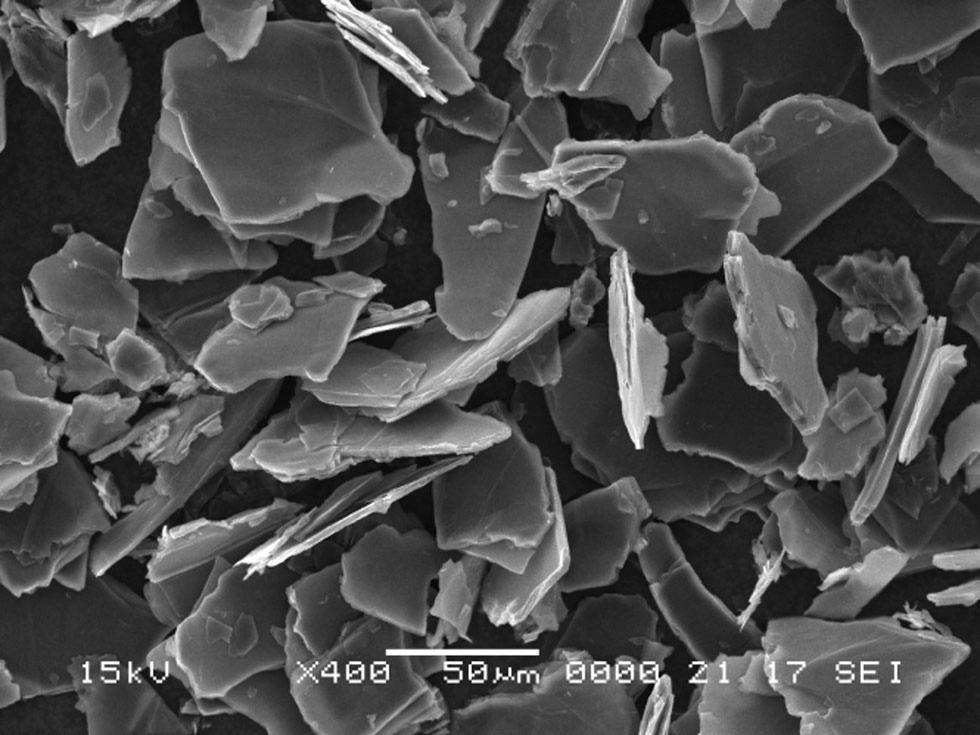
This research investigates graphene-like graphite—formed by the regular stacking of oxygen-functionalized hexagonal carbon sheets with pores roughly 1-5 nm in size—as an active material for a range of rechargeable batteries. Compared with conventional graphite, this material allows a greater quantity of various ions to be inserted and extracted at higher speed. It is therefore being explored for use as a negative electrode in lithium-ion and sodium-ion batteries, a positive electrode in fluoride shuttle batteries, and both electrodes in dual-ion batteries.
Creation and Evaluation of Novel Nanoporous Materials
What students can learn
Students explore the characteristics, design principles, and applications of porous materials, along with techniques for chemically modifying inorganic materials using organic solvents and for probing their structure through gas adsorption, X-ray diffraction, and photoelectron spectroscopy.
This research synthesizes porous pillared materials obtained by linking the layers of layered compounds, or the units of cluster compounds, with silsesquioxane bridges, and investigates their structure and functional potential. By controlling the pore size and wall properties of these materials, the aim is to achieve selective adsorption of specific ions and molecules. Such properties are expected to support applications in gas sensors capable of selective responses and as negative electrode active materials for all-solid-state lithium-ion batteries.