Zhenhua Pan
Associate Professor | Ph.D. in Engineering
Applied Chemistry Course
Field of Applied Chemistry
In courses on coordination chemistry, Professor Zhenhua Pan guides students—through theory and concrete examples—toward an understanding of cutting-edge research addressing global environmental challenges and the utilization of solar energy. The research group, named the Artificial Photosynthesis Chemistry Group, develops photocatalysts that drive artificial photosynthesis reactions, drawing on catalytic chemistry, electrochemistry, semiconductor physics, and photochemistry. Advancing this field is essential to realizing a carbon-neutral society.
Development of Photocatalysts Responsive to Long-Wavelength Light
What students can learn
Through engagement with the development of advanced photocatalysts, students gain the opportunity to study catalytic chemistry and materials chemistry, while also deepening their understanding of the challenges involved in harnessing solar energy.
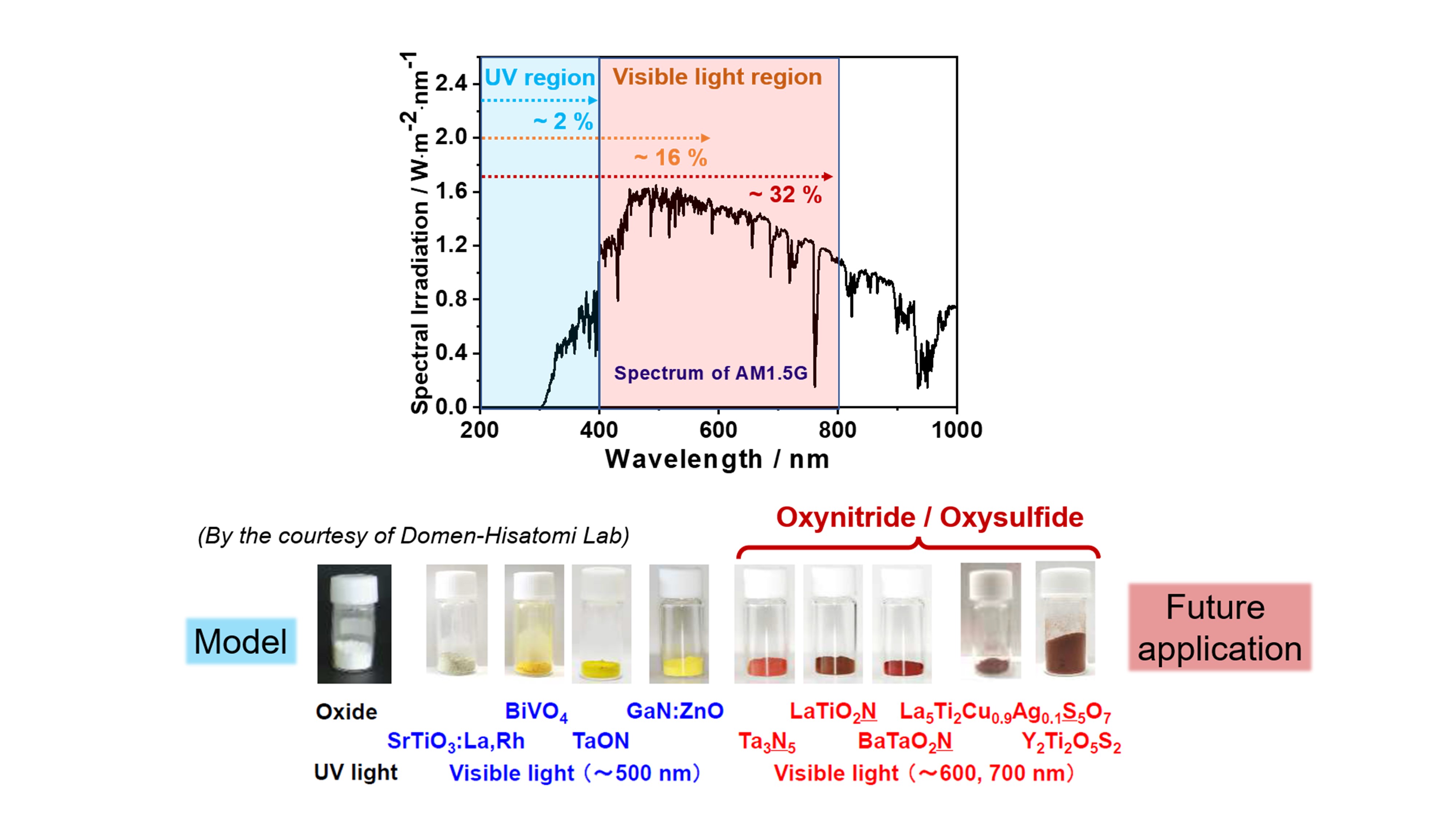
Effective use of sunlight and the practical realization of artificial photosynthesis depend on developing photocatalysts responsive to long-wavelength light. Although many such photocatalysts have already been reported, this research aims to improve their efficiency and stability. Particular attention is given to water-splitting and hydrogen peroxide generation reactions, which serve as clean energy sources and find application in industrial production and environmental purification. Producing these substances at large scale and low cost is expected to contribute to the realization of a carbon-neutral society.
Photochemistry in Photocatalytic Reactions
What students can learn
Students can learn analytical methods essential to materials chemistry and catalytic reactions, including X-ray diffraction analysis, UV-visible spectroscopy, electrical property measurement, transient absorption spectroscopy, and reactor simulation.
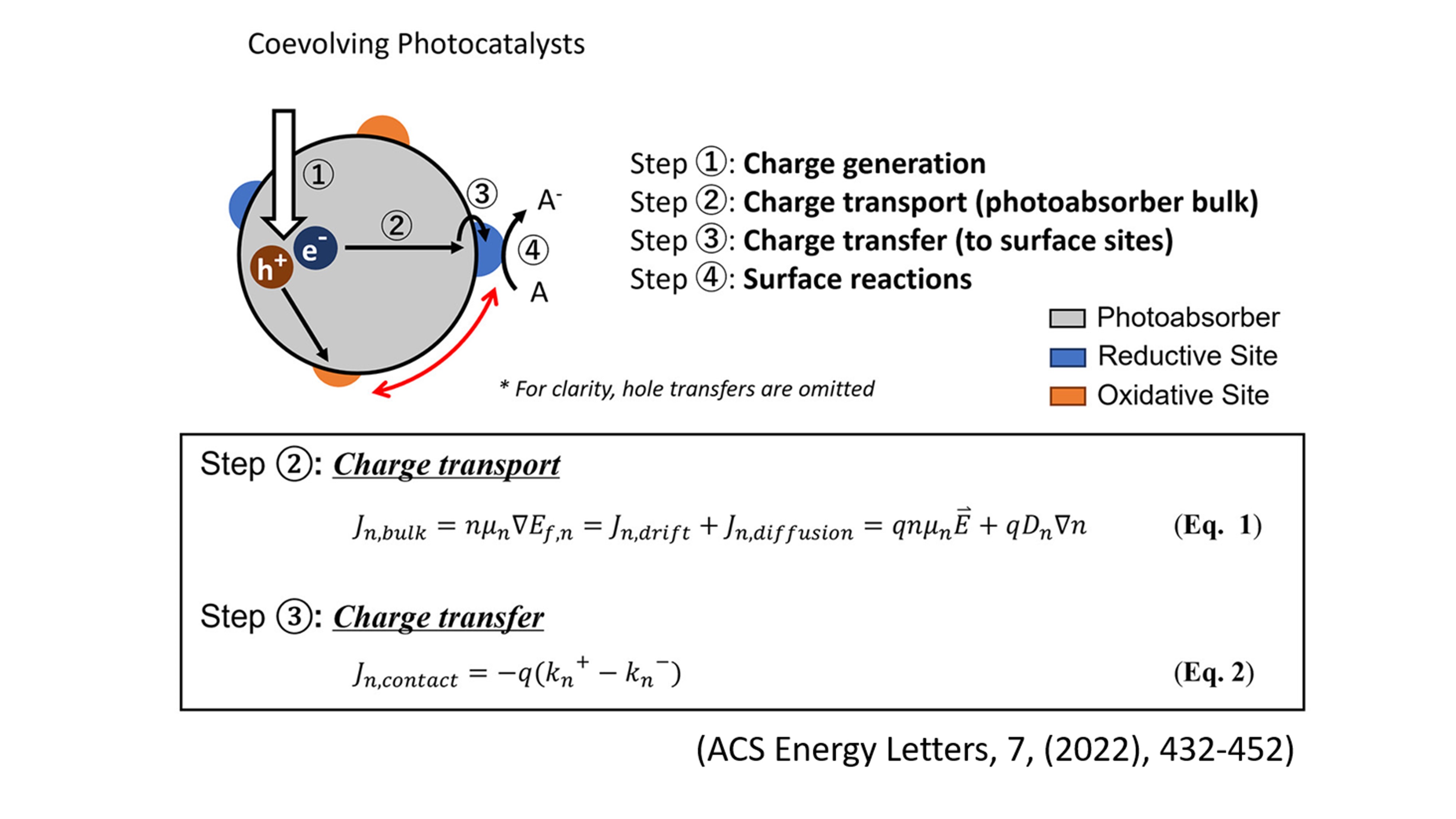
Photocatalytic reactions involve interrelated processes of charge separation within the photocatalyst and charge transfer across the photocatalyst/(co-catalyst)/water interface. Although these processes play a critical role in photocatalytic activity, they remain incompletely understood. This project plans to investigate these complex processes in detail through (photo)electrochemical and spectroscopic analysis. The ultimate goal is to provide new insight into materials development for photocatalytic reactions.