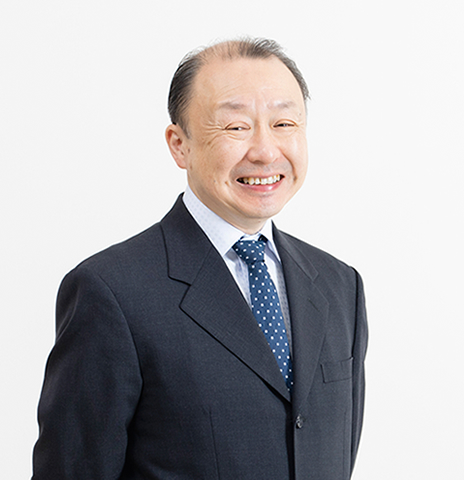
Fumiyoshi Kimura
Associate Professor | Ph.D. in Engineering
Mechanical Engineering Course
Field of Mechanical Engineering
Rather than simply following the textbook and working through example problems, lectures are designed to incorporate familiar everyday phenomena and related application fields, helping students appreciate both the importance of the subject and its intellectual appeal. Research focuses on elucidating heat transport phenomena accompanied by fluid flow and on developing methods for their passive control and enhancement. The resulting findings are further applied to actual equipment, with the aim of achieving higher performance, greater compactness, and improved energy efficiency.
Elucidating Heat Transport Phenomena in Fluid Flow
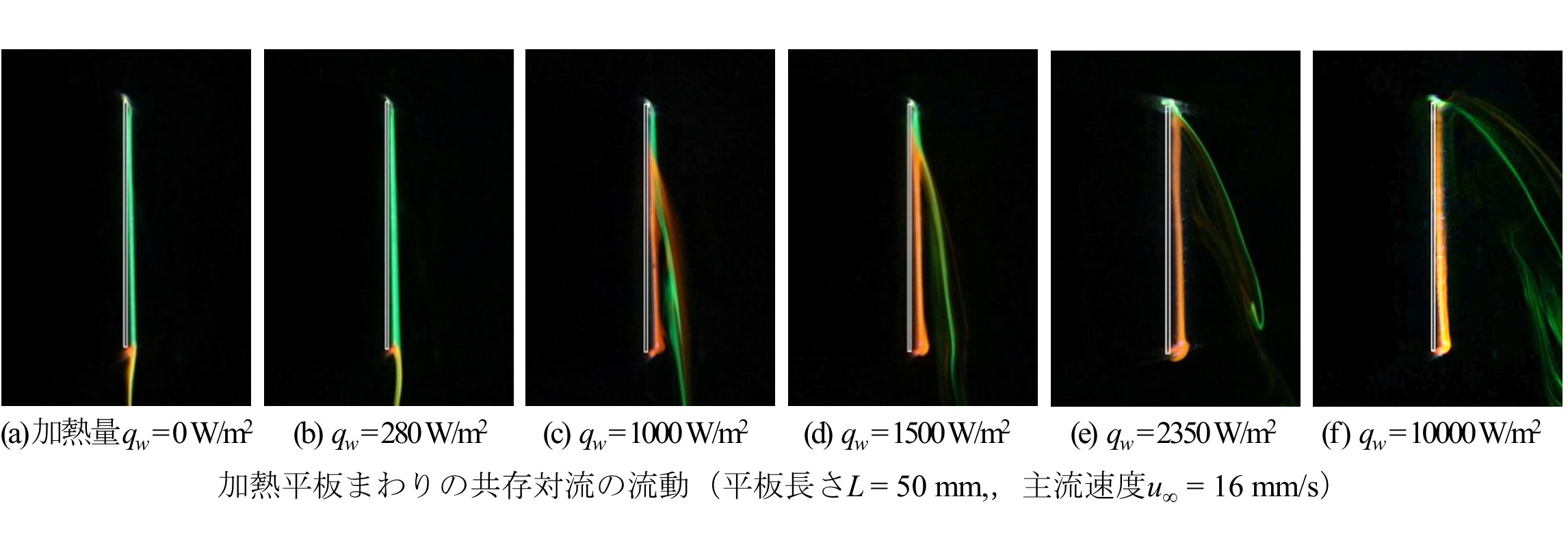
What students can learn
Students acquire the measurement techniques for fluid- and heat-related quantities in heat transport that engineers and researchers require, together with methods for visualizing fluid motion and temperature distributions.
Gases and liquids—such as air, water, and oil—are collectively referred to as fluids, and heat transport accompanied by fluid flow is known as convective heat transfer. This mode of heat transfer underlies nearly every situation requiring heat exchange, including air conditioning, water heating, drying, and the heating and cooling of various industrial equipment. This laboratory investigates, primarily through experiments, the heat transport phenomena associated with buoyancy-driven flow (natural convection), flow driven by fans or pumps (forced convection), and mixed convection, in which natural and forced convection interact with one another.
Development of Passive Thermal-Fluid Control and Enhancement Techniques
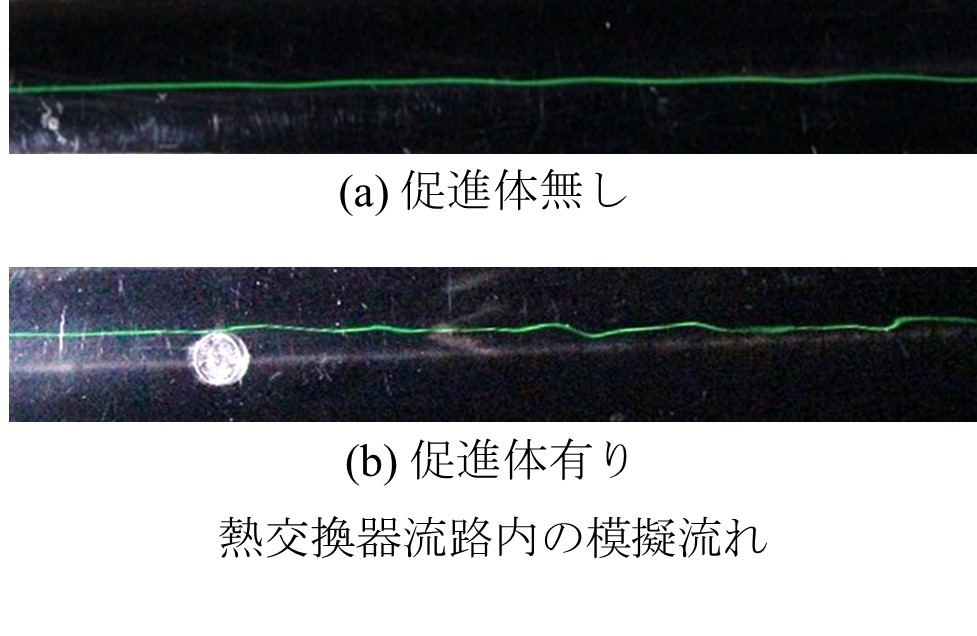
What students can learn
Through the construction of experimental apparatus and hands-on experimentation, students learn methods for designing equipment, machining components, measuring flow rate and temperature, organizing and analyzing data, and evaluating heat exchanger performance.
One effective way to increase the heat transfer rate of thermal-fluid transport equipment is to enlarge the heat transfer surface area, for example by installing fins. In practice, however, such approaches are often constrained by requirements for energy savings, compactness, and reduced material cost. Under these constraints, it becomes necessary to enhance heat transfer by passively controlling the flow of the working fluid—through separation and reattachment, turbulence promotion, longitudinal vortex generation, or the exchange of high- and low-temperature fluid—while keeping the accompanying increase in pressure loss to a minimum. This laboratory works on developing such passive thermal-fluid control and enhancement methods, including the installation of protrusions on flow-channel surfaces.