Masaaki Kimura
Associate Professor | Ph.D. in Engineering
Mechanical Engineering Course
Field of Mechanical Engineering
In his lectures, Masaaki Kimura takes care to convey fundamental concepts alongside the latest developments in the field, so that students may grasp their underlying essence. His research centers on welding and joining technologies; the name of his research group, Solid Mechanics, reflects the discipline that is indispensable for evaluating such technologies and stands as one of the foundational pillars of mechanical engineering.
Establishing Friction-Based Joining Technologies for Dissimilar Materials and Advancing Multi-Materialization
What students can learn
Students acquire machining and materials-processing techniques, design skills, and fundamental methods for mechanical and metallurgical characterization—competencies of considerable practical value to a working engineer.
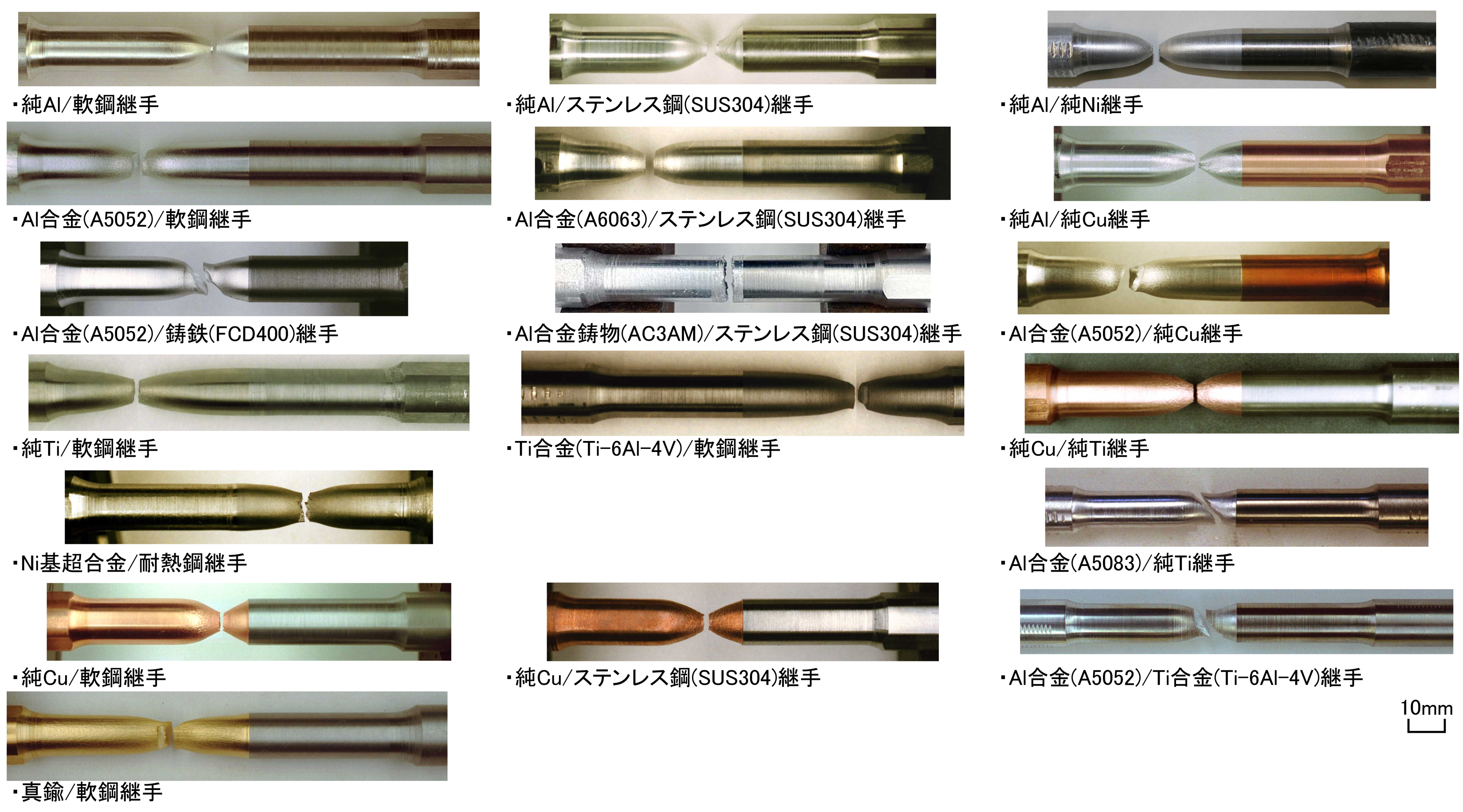
Joints combining dissimilar materials are widely valued as components in a broad range of industrial equipment. This research investigates joining methods that exploit frictional heat to fabricate such joints with relative ease. Current themes include elucidating the joining mechanisms of friction welding and friction stud welding, establishing techniques for joining both similar and dissimilar materials under low heat input, and clarifying the characteristics of the intermediate layers that form at dissimilar-material interfaces together with the mechanisms by which such joints fracture. Through this work, the research aims to produce joints that do not fail at the bond itself, thereby contributing to the advancement of manufacturing technology and to the broader shift toward multi-material design.
Proposing Joints and Structures Tailored to Diverse Requirements and Examining Their Fabrication Methods
What students can learn
Through this work, students build proficiency in machining and materials-processing methods, design practice, and the basic techniques of mechanical and metallurgical evaluation, all of direct relevance to engineering practice.
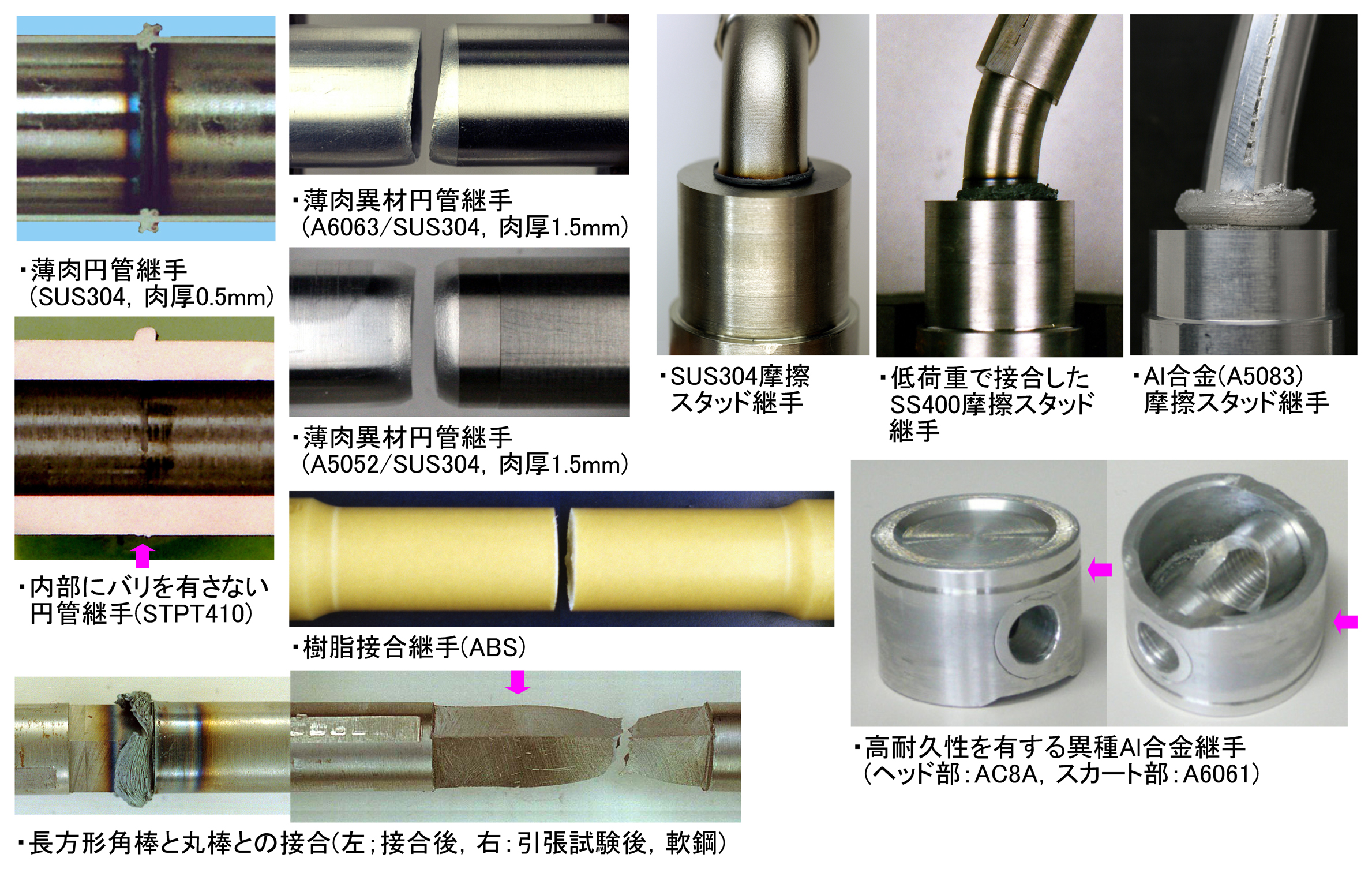
When components and joints are put to practical use, they must satisfy a wide array of demands—ranging from constraints imposed by actual construction processes to the required shapes and operating environments. This research addresses those demands through several themes: fabricating thin-walled, burr-free circular-tube joints; developing highly durable engine pistons; and proposing an insert-drive friction welding method together with its application to difficult-to-join materials. Through these themes, the research proposes fabrication methods for a variety of components and joints, contributing both to manufacturing practice and to meeting the diverse requirements such applications impose.