Naohiro Matsumoto
Associate Professor | Ph.D. in Engineering
Mechanical Engineering Course
Field of Mechanical Engineering
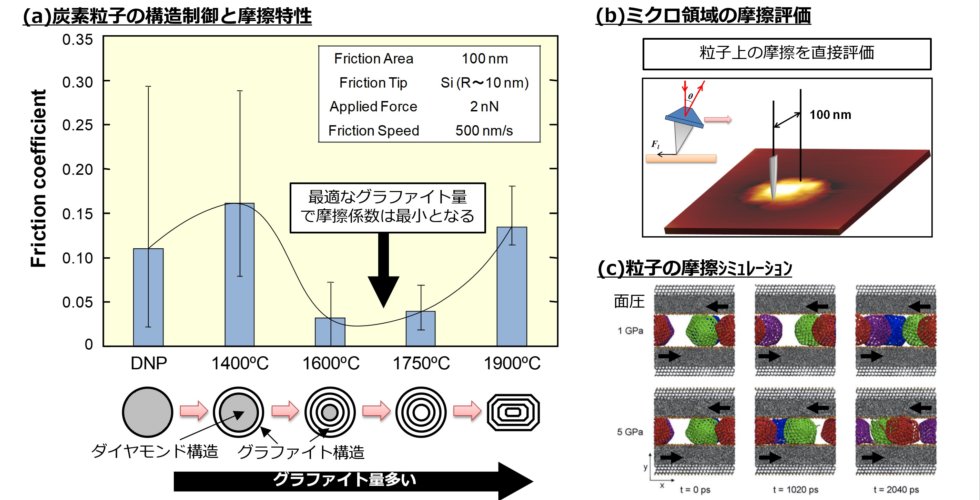
Graphite, a carbon-based material, has long served as a low-friction lubricant that improves the energy efficiency of machinery and extends its operating life. Recent advances in materials analysis techniques have made it possible to control carbon structures with atomic-level precision. Drawing on these techniques, this research investigates the conditions that yield the lowest possible friction, aiming to enhance the energy efficiency of machinery through the application of such advanced materials.
Structural Control of Carbon Particles and Their Frictional Applications
What students can learn
Knowledge of the core technologies underlying energy-efficient and stable machine operation, together with skills in analyzing dynamic friction phenomena and elucidating their underlying mechanisms.
This research examines the control of carbon structures and the mechanisms underlying friction. Because carbon can adopt a wide variety of structures, it exhibits an unusually broad range of properties. However, the relationship between these properties and the underlying structure involves highly complex factors that are not yet fully understood. A practical challenge is that structures offering low friction tend to suffer reduced durability, and elucidating the governing mechanisms is expected to help resolve this and related issues.
Controlling the Frictional Properties of Composite Materials
What students can learn
An understanding of the key technologies that support energy-efficient, stable machine operation, along with the ability to analyze dynamic friction phenomena and clarify the mechanisms behind them.
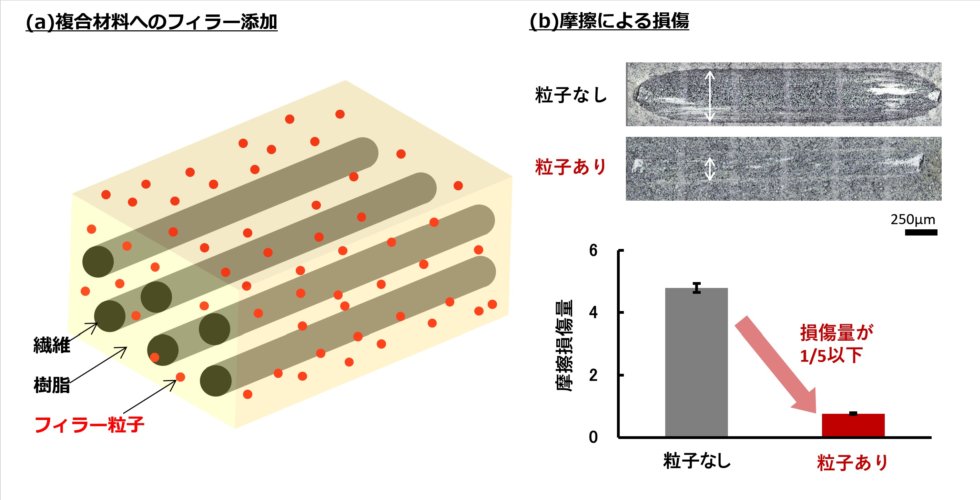
Fiber-reinforced composite materials, prized for combining light weight with high strength, are widely used as structural materials in transport machinery such as aircraft and automobiles. If such composites could also be applied to drive components where friction is a critical concern, this would enable even greater weight reduction and contribute to lowering environmental impact. This research seeks to control the frictional properties of composite materials by incorporating low-friction carbon particles as a filler.