Natsuki Kawaguchi
Assistant Professor | Ph.D. in Engineering
Mechanical Engineering Course
Field of Mechanical Engineering
In control and measurement engineering, coursework frequently addresses signal flows that abstract underlying physical quantities, with lectures built around mathematical models. To connect these models with real-world phenomena, Kawaguchi places particular emphasis on experiments and exercises that let students build a tangible, hands-on understanding of the underlying principles.
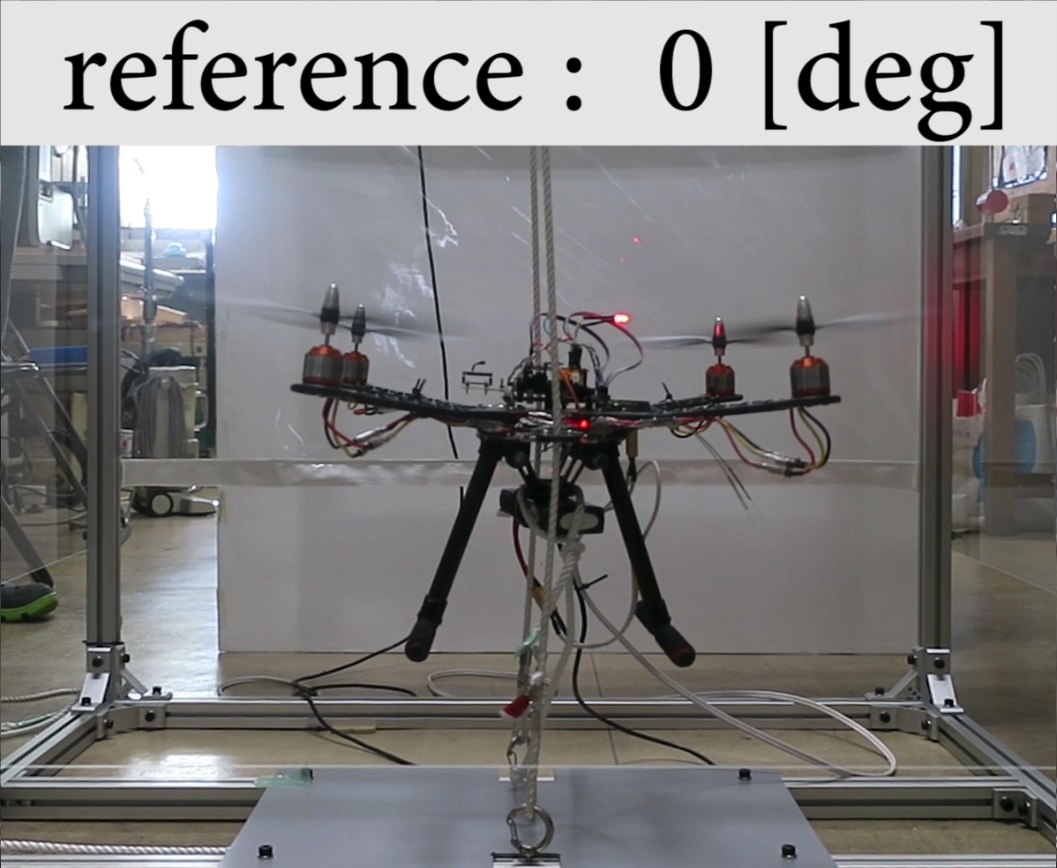
Control System Design for Efficient — or Deliberately Inefficient — Redundant Drones
What students can learn
By devising control strategies that exploit redundant rotors according to a drone's control objectives, students develop an engineering approach to problem definition grounded in both mathematical modeling and physical hardware.
This research addresses high-value control system design for redundantly actuated drive systems, using platforms such as hexarotor drones with more than four rotors. By devising strategies for combining redundant rotors, the work aims to selectively achieve either efficient control or control that trades efficiency for enhanced safety. Redundant drive systems are becoming increasingly common not only in drones but also in emerging systems such as electric vehicles, reflecting a diverse range of engineering needs. This research seeks to contribute to the design of these new, redundantly driven mechanical-electrical systems and to manufacturing that delivers high added value.
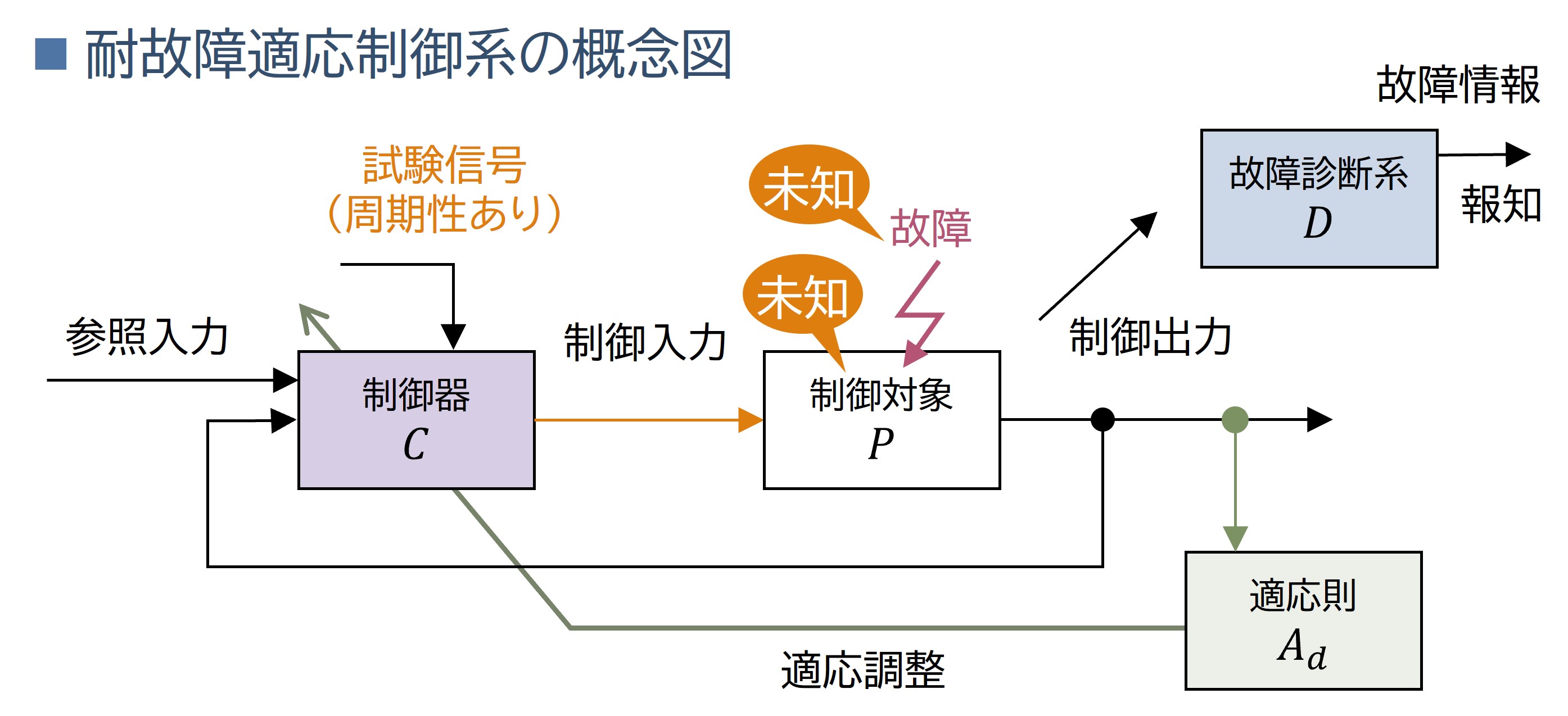
Fault-Tolerant Control System Design Combining Active Fault Diagnosis and Adaptive Control
What students can learn
Diagnosing faults from observable, available signals and devising control methods with built-in fault tolerance gives students grounding in theoretical development as well as practical experience in computer-based numerical simulation and signal processing and analysis techniques.
This research investigates active fault diagnosis methods, which deliberately inject additional signals into a controlled system—beyond the standard control input—to probe its internal state in greater detail, together with fault-tolerant control that preserves safe operation even after a fault occurs. Particular attention is given to adaptive control, which sustains desirable control performance by adjusting to changes in the external environment or to the system's fault condition. Since real mechanical-electrical systems can never be rendered entirely immune to failure, this research examines what constitutes a safe operating state and how safety can be enhanced, with the aim of contributing to its realization.