Nozomu Araki
Associate Professor | Ph.D. in Engineering
Mechanical Engineering Course
Field of Mechanical Engineering
In his lectures, Araki strives to engage students by illustrating how the subject matter is applied in research and in practice. His research draws on measurement techniques, which capture the motion of objects, and control techniques, which direct objects to move as intended, applying them across diverse fields to explore how existing systems might be endowed with greater sophistication—and even a measure of intelligence.
Engineering Applications of Measurement and Control Systems
What students can learn
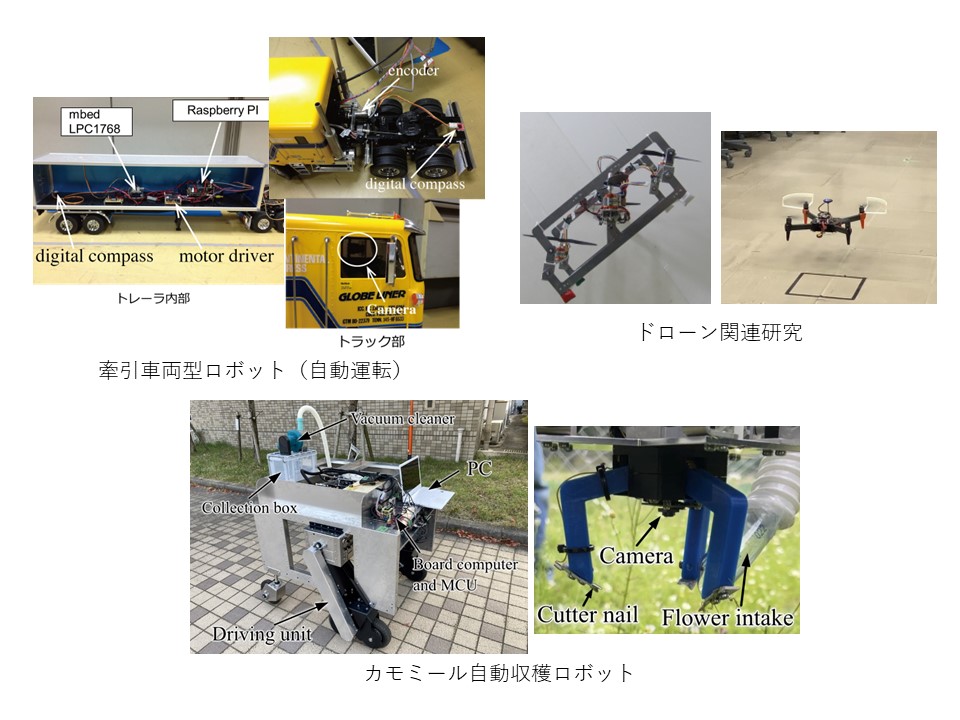
Through the hands-on construction of robots and drones, students acquire the technologies required to bring machines under automatic control.
Robots and drones behave as intended only once they are equipped with control systems that recognize their own state and surrounding conditions and adjust their actions accordingly. As vehicles become increasingly electrified, the importance of control likewise continues to grow. With real mechanical systems in mind, this research investigates control methods that enable such systems to achieve desired behavior, together with the surrounding technologies required to control complex mechanical systems in practice. Building on these techniques, the work also aims to develop new kinds of robots.
Advancing Interfaces That Connect People and Machines
What students can learn
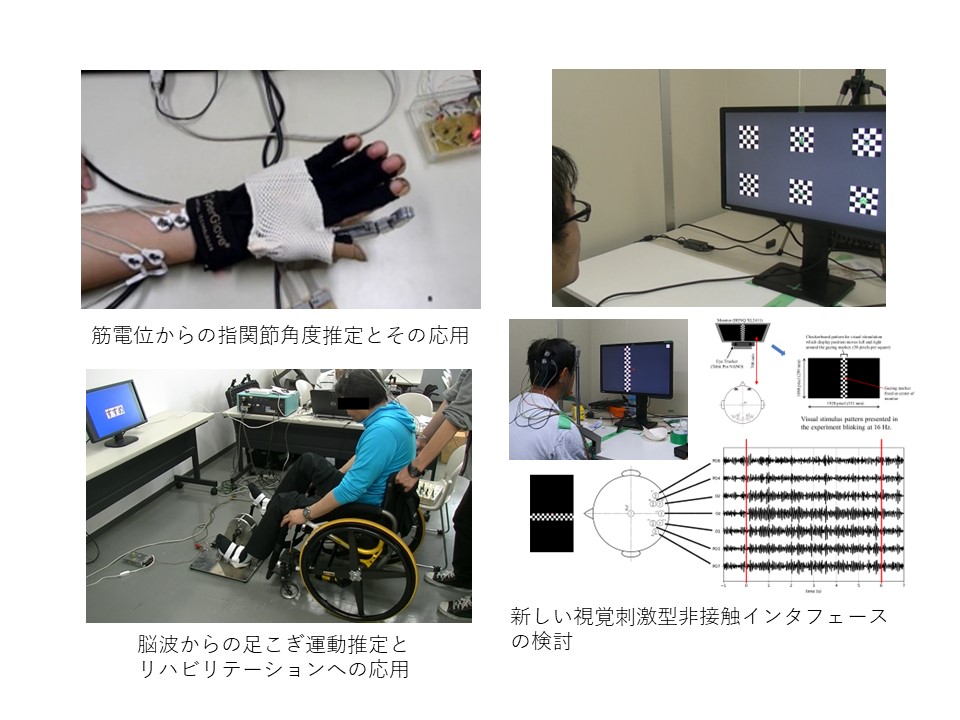
Students explore the processing of biosignals generated by human movement and the technologies for controlling devices on the basis of these signals.
Many devices are operated by hand or foot to achieve a desired action; from a control perspective, this means that the user is directly controlling the device, or supplying a target value to its controller. The link between machine and human is referred to here as an "interface." This research investigates interfaces that make devices easier to operate, as well as techniques for operating devices without the use of hands or feet by analyzing biosignals generated through human movement. Such work contributes to the design of more user-friendly machines and of devices that can be operated by people with limited use of their hands or feet.