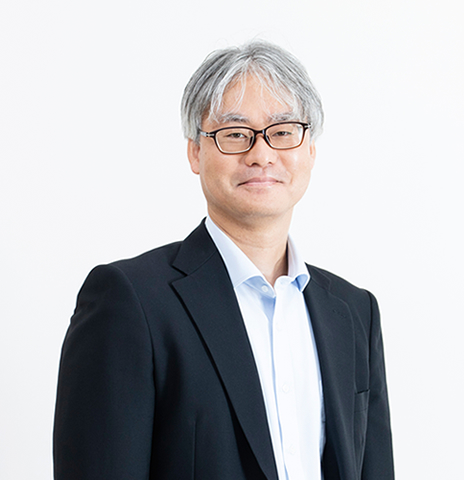
Osamu Kawanami
Professor | Ph.D. in Engineering
Mechanical Engineering Course
Field of Mechanical Engineering
In his lectures, he strives to convey not merely established formulas but the underlying reasoning and fundamental understanding behind them. His research centers on the theme of heat transfer phenomena in extreme environments, where extreme environments encompass outer space (microgravity and near-zero gravity), cryogenic temperatures, and extremely high heat flux densities. He designs and builds experimental apparatus in his own laboratory and integrates techniques such as image processing to advance this work.
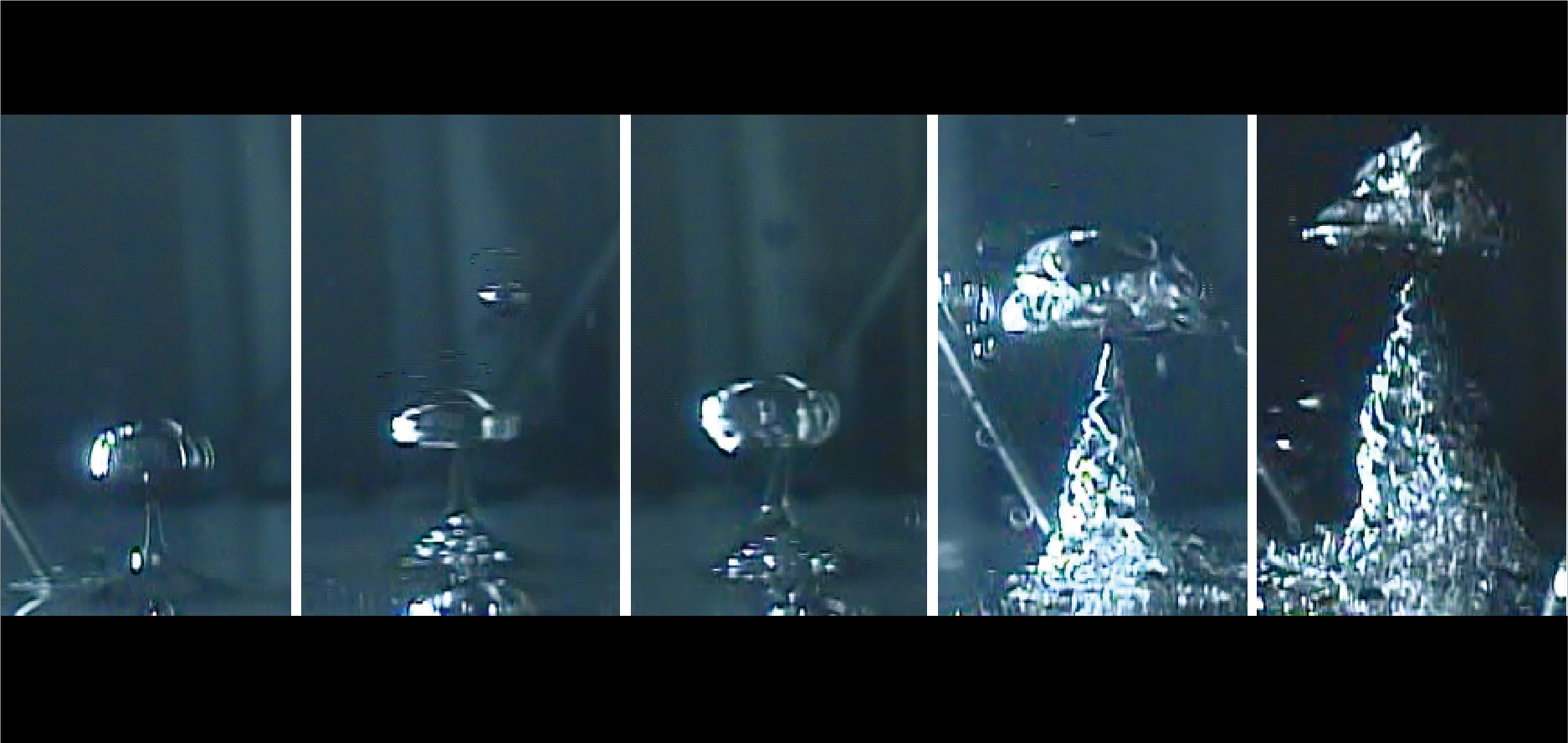
Innovative Heat-Dissipation Technology for Ultra-High Heat Flux and Large-Area Power ICs
What students can learn
Students develop the advanced experimental skills and analytical methods essential for engineers working in thermal management.
This research explores an innovative cooling method that employs two mutually immiscible fluids, a high-density, low-boiling-point medium and a low-density, high-boiling-point medium, to achieve a dramatic increase in critical heat flux, to avoid the hysteresis in surface temperature at the onset of boiling that troubles cooling systems subject to large load fluctuations, and to reduce cooling-surface temperature under positive-pressure operation so as to prevent the ingress of non-condensable gases such as air. Realizing such a cooling method could dramatically reduce the air-conditioning energy consumed in data center and server operations.
Thermal-Fluid Management Technology in the Space Environment
What students can learn
Students gain hands-on experience with the sophisticated experimental techniques and analytical approaches that underpin engineering practice.
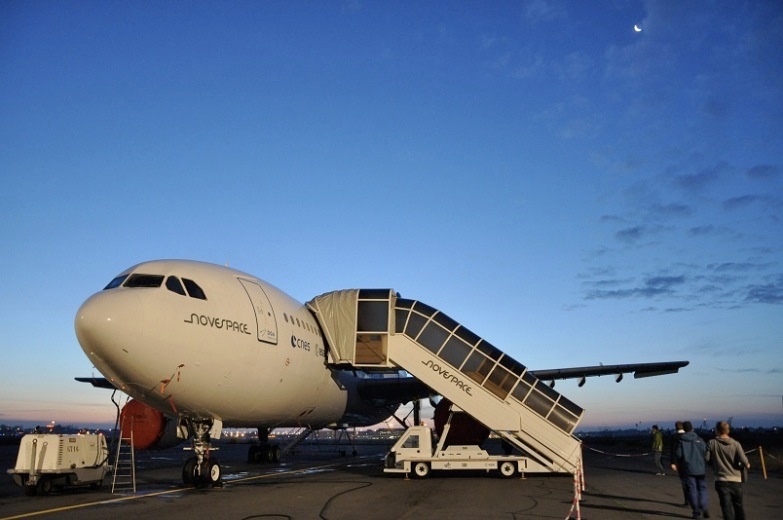
On Earth, bubbles generated by boiling liquid are carried away from the heated surface by buoyancy; in space, however, bubbles are said to remain in place and grow larger, impeding heat transfer. Yet exactly how boiling bubbles behave under microgravity, and to what extent heat transfer is impeded, remains poorly understood. To investigate this in detail, he conducts microgravity experiments aboard the International Space Station, aircraft, and drop towers. This research constitutes a foundational technology for future lunar surface activities and deep-space exploration.