Tomoki Hirokawa
Assistant Professor | Ph.D. in Engineering
Mechanical Engineering Course
Field of Mechanical Engineering
Tomoki Hirokawa’s teaching emphasizes the connection between engineering fundamentals and their real-world applications. By introducing practical examples from industry and society, he helps students understand not only the theories and methods covered in class, but also how and why they are used in practice. His research focuses on improving energy efficiency through thermal and fluid engineering, with the goal of developing technologies that contribute to a more sustainable society.
Improving Heat Exchanger Performance through Thermal-Fluid Engineering
What Students Can Learn
Students gain both fundamental knowledge and practical experience in heat transfer, heat exchanger design, heat transfer performance evaluation, thermal-fluid experiments, refrigeration cycle analysis, and computational fluid dynamics (CFD).
Research Overview
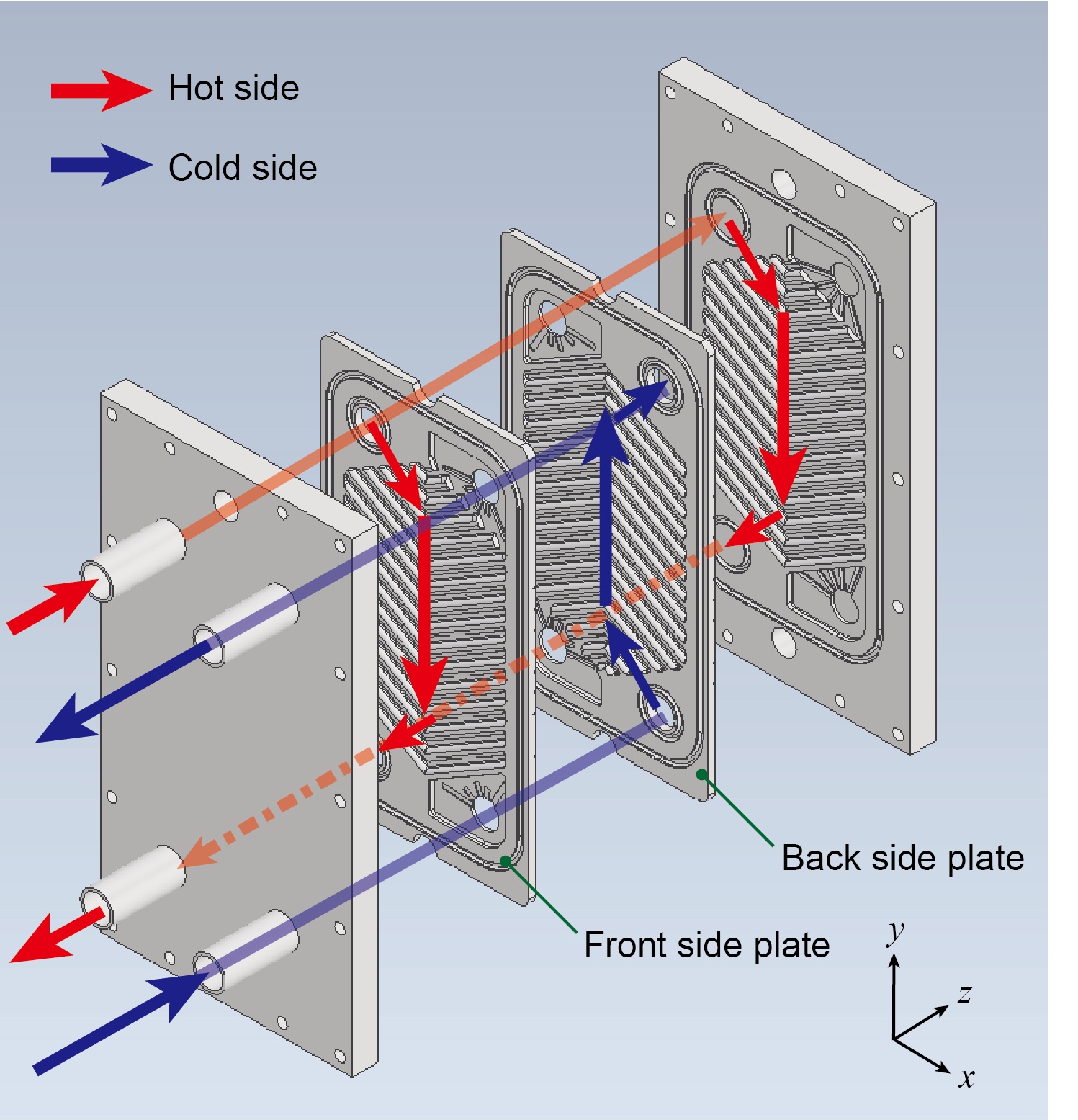
Heat exchangers are essential components in a wide range of energy systems, including automotive thermal management, air-conditioning and refrigeration systems, industrial processes, and heating and hot-water systems. His research aims to clarify the detailed thermal-fluid behavior inside heat exchangers, particularly phenomena that cannot be fully understood from overall performance measurements alone. A major focus is placed on plate heat exchangers. Using original experimental methods, he investigates local temperature distributions, heat transfer characteristics, and boiling two-phase flow inside these devices. The findings from these studies provide reliable experimental data and design guidelines for improving heat exchanger performance. Through the development of compact and highly efficient heat exchangers, his research aims to promote more effective energy use, waste-heat recovery, and energy conservation in practical systems.
Next-Generation Cooling Systems for High-Heat-Flux Electronic Devices
What Students Can Learn
Students gain both fundamental knowledge and practical experience in cooling-device design, heat transfer performance evaluation, thermal-fluid experiments, two-phase flow analysis, and computational fluid dynamics (CFD).
Research Overview
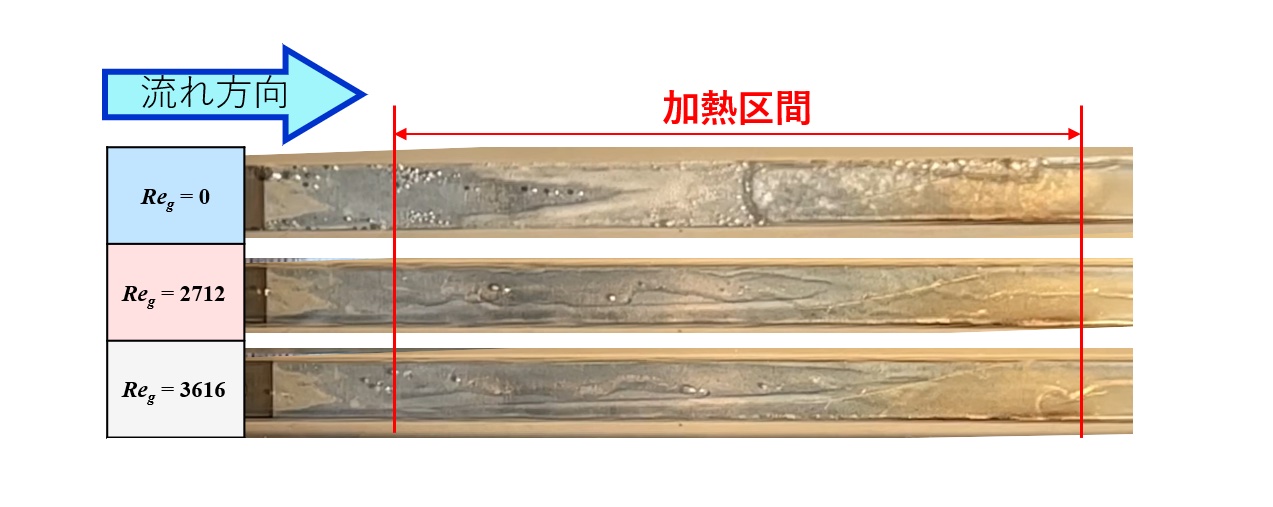
The amount of heat generated by semiconductor devices continues to increase as electronic systems become smaller, faster, and more powerful. Effective thermal management is therefore becoming increasingly important in applications such as supercomputers, data centers, electric vehicles, power electronics, and renewable-energy systems. His research focuses on cooling technologies that use boiling and other phase-change phenomena. Because boiling utilizes the latent heat of a working fluid, it has the potential to provide substantially higher cooling performance than conventional air cooling or single-phase liquid cooling. However, the associated thermal-fluid phenomena are complex, and challenges such as flow instabilities, non-uniform temperature distributions, and surface dryout must be carefully understood and controlled. Through experimental measurements, flow visualization, and numerical analysis, he investigates the fundamental mechanisms governing these cooling processes. The ultimate goal is to develop compact, reliable, and energy-efficient cooling systems that enable the safe, reliable, and energy-efficient operation of next-generation electronic devices with increasingly high heat-generation densities.