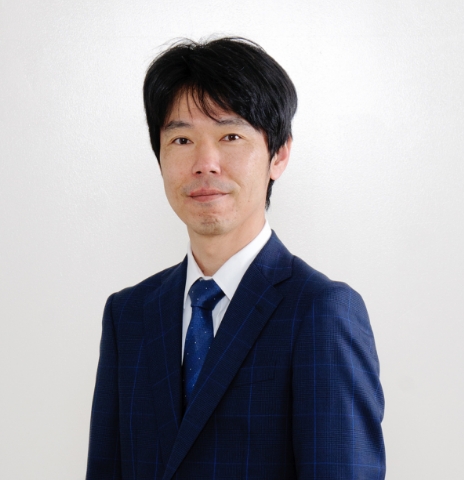
Yoshiaki Ukita
Professor | Ph.D. in Engineering
Mechanical Engineering Course
Field of Mechanical Engineering
In his lectures, Professor Ukita strives to give students a genuine sense of understanding—those "of course!" moments—by drawing connections to concepts learned in other courses. His research lies at the interdisciplinary intersection of micromachines, biology, and chemistry. Building on microfabrication techniques, he sets himself demanding research themes that challenge him to create technologies without precedent.
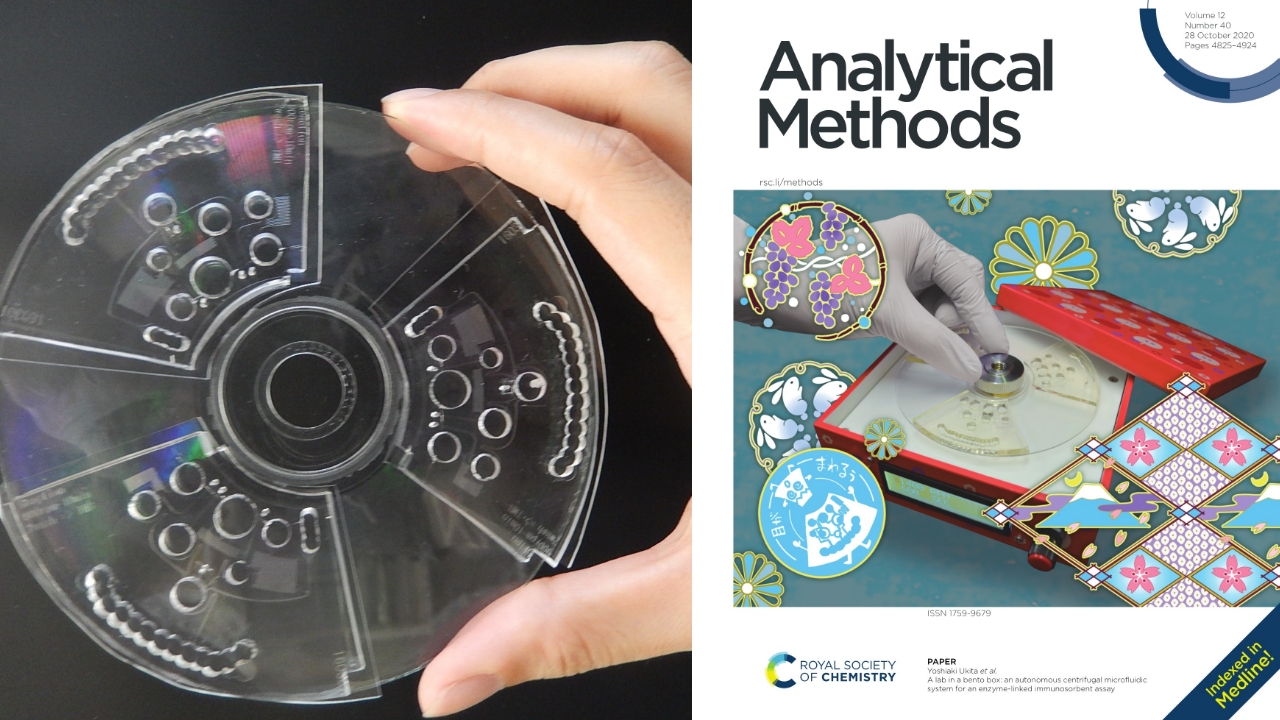
Miniaturized, High-Performance Testing Systems Based on Microfluidic Circuits
What students can learn
Students cultivate rigorous logical thinking alongside the flexible, cross-disciplinary imagination needed to bridge distinct fields of study.
This research investigates automated control of chemical processes through "CLOCK," an original concept for microfluidic control. Microchannels fabricated with microfabrication techniques give rise to "fluidic circuits" capable of freely manipulating liquids. The work seeks to miniaturize high-performance testing technologies once achievable only with large, specialized instruments, contributing to innovative testing methods accessible to anyone.
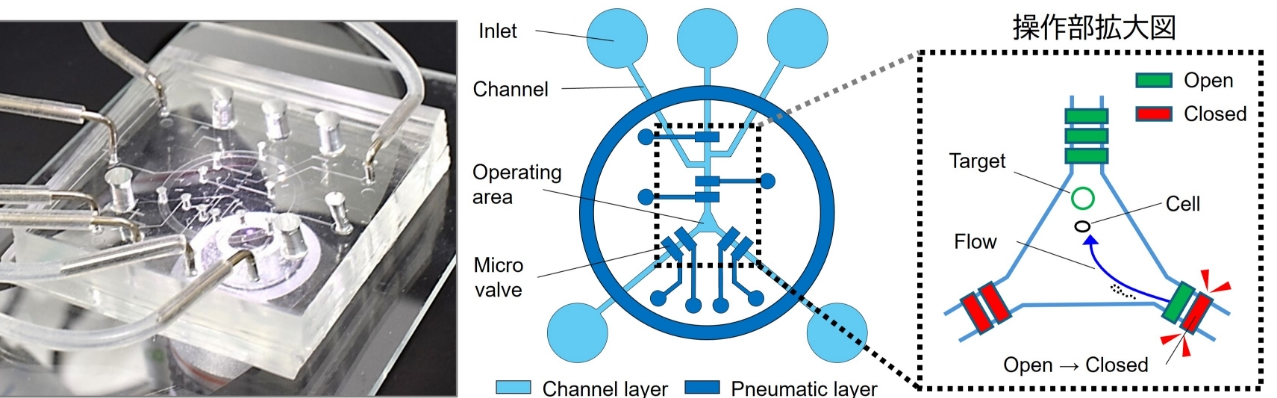
Autonomous Experimentation Robots on a Microchip
What students can learn
Students develop systematic reasoning skills together with the open-minded, cross-disciplinary creativity required to connect ideas across different fields.
This work aims to develop a palm-sized robot capable of performing experiments on a researcher's behalf. Artificial intelligence controls a microchip equipped with actuators that serve as the robot's hands, enabling it to carry out sophisticated experimental procedures. This microchip-based technician is expected to raise research productivity dramatically and to contribute to next-generation medicine, including regenerative medicine.