Yoshiyuki Yamaguchi
Associate Professor | Ph.D. in Engineering
Mechanical Engineering Course
Field of Mechanical Engineering
Lectures trace not only today's established formulations but also the scholarly debates from which they emerged, cultivating a grasp of the principles that govern physical phenomena. Research centers on the effective use of thermal energy, encompassing efforts to enhance the performance of lightweight insulating materials and to develop heat engines and heat-driven refrigeration systems capable of operating on small temperature differences.
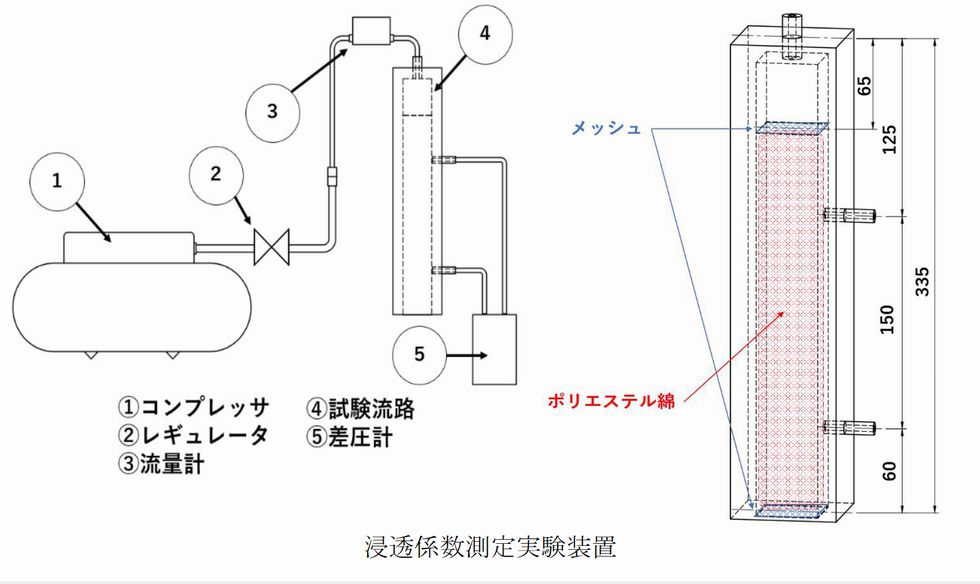
Effects of Internal Heterogeneity on the Permeability of Porous Media
What students can learn
Students acquire thermal and fluid measurement techniques that are essential in the energy field of mechanical engineering, along with a foundation in thermal and fluid analysis.
Nonwoven fiber-based porous media, formed by layering extremely fine fibers, serve as effective lightweight insulating materials. This research investigates how internal heterogeneity and anisotropy within such fibrous porous media influence flow characteristics, with the aim of developing higher-performance lightweight insulation.
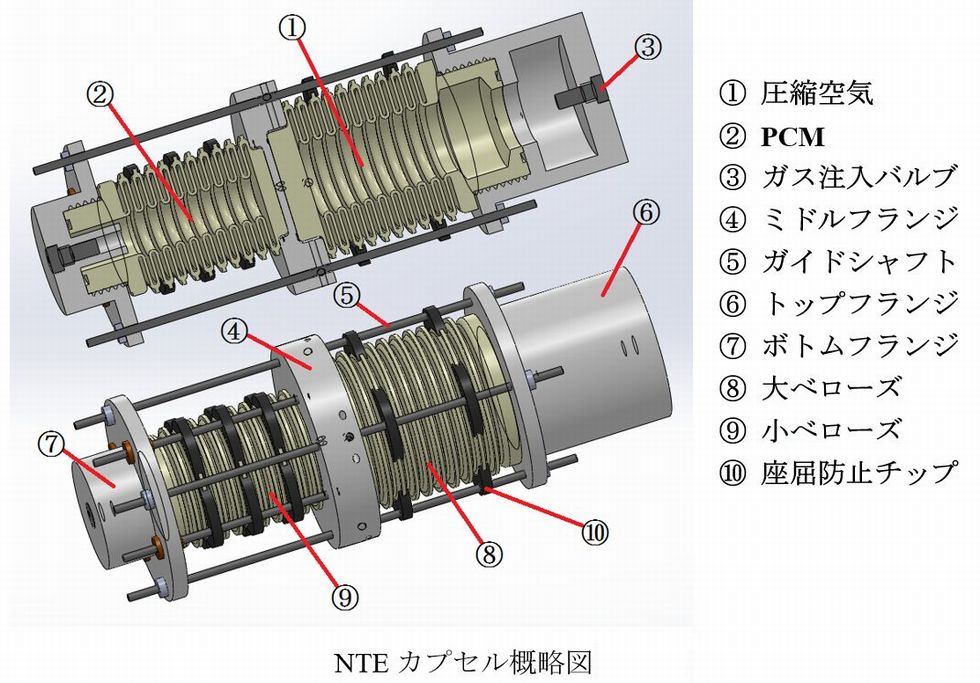
Development of NTE Capsules
What students can learn
Students gain skills in evaluating diverse materials and fabrication methods and in design and drafting using 3D-CAD as part of developing novel devices, together with a foundation in thermal and fluid analysis for predicting device behavior.
In a top-heat fluid layer, where the upper surface is heated, natural convection does not develop, and heat transport is therefore very limited. However, an object exhibiting negative thermal expansion (NTE) would sink when hot and rise when cool, enabling efficient heat transport even under top-heat conditions. This research refers to such objects as NTE capsules and seeks to demonstrate their operating principle. NTE capsules could, for example, help direct summertime cooling exhaust heat into the ground, contributing to energy conservation.