Eri Miura
Associate Professor | Ph.D. in Engineering
Department of Mechanical and Materials Engineering, Materials Course
Materials and Synchrotron Radiation Engineering Program, Materials Interface Functional Science Group
My research keywords are composite materials, interfaces, and surfaces. Using materials based on titanium, magnesium, and other metals, I study surface-treatment methods that improve biomaterial functions, develop composites that combine the advantages of metals and ceramics, and investigate what happens when corrosion-resistant titanium and aluminum or corrosion-prone magnesium undergo wear in corrosive environments. I also examine how foreign atoms and defects behave within crystals and how they alter material properties. In my lectures, I help students understand phenomena through both equations and intuitive images. On and off campus, I am also involved in supporting female students who wish to pursue science and engineering and in supporting women researchers.
Creating White Metal
What students can learn
Topics: thermodynamics and electrochemistry of crystalline materials, surface chemistry, the theory of light, reaction kinetics, and materials strength.
Skills: heat treatment of metals and ceramics, electrochemical processing, electrochemical measurement, operation of electron microscopes and surface-analysis instruments, and methods for conducting and evaluating mechanical tests.
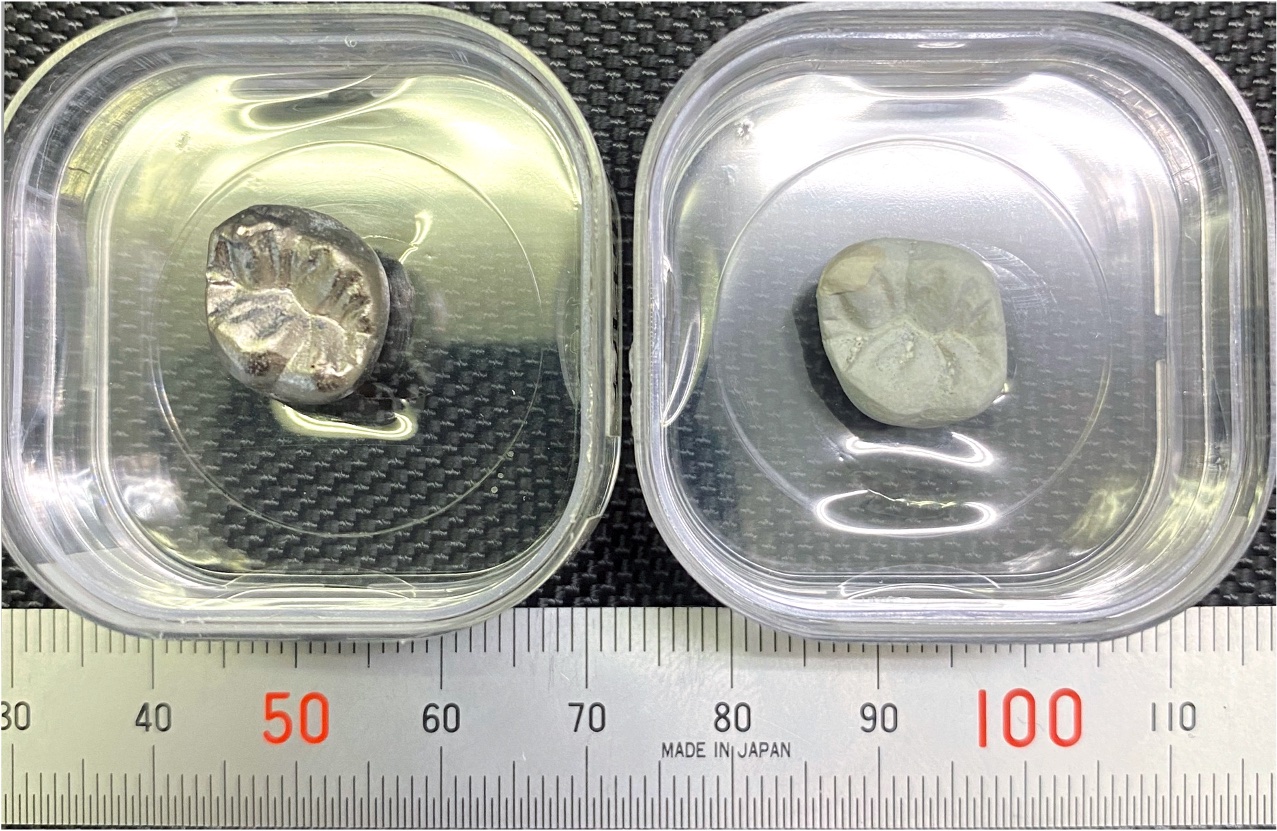
This research uses heat, electricity, and plasma to make the surfaces of titanium alloys white. The surface turns white because the titanium oxidizes—in other words, it rusts. Unlike ordinary rust, however, titanium oxide is pure white and has useful, human-safe functions: it is used in paints and food additives, exhibits photocatalytic activity, and improves cell adhesion. Our laboratory investigates methods for forming this white oxide film on titanium and evaluates its properties, with the aim of applying it to cost-effective dental devices that also have a white appearance. The photograph shows a titanium crown before whitening (left) and after whitening treatment (right).
Investigating the Mystery of Tribocorrosion
What students can learn
Topics: metal processing, materials strength, surface chemistry, and the theory of materials corrosion.
Skills: methods for conducting and evaluating mechanical tests, heat treatment of metals and ceramics, electrochemical measurement, and operation of electron microscopes and analytical instruments.
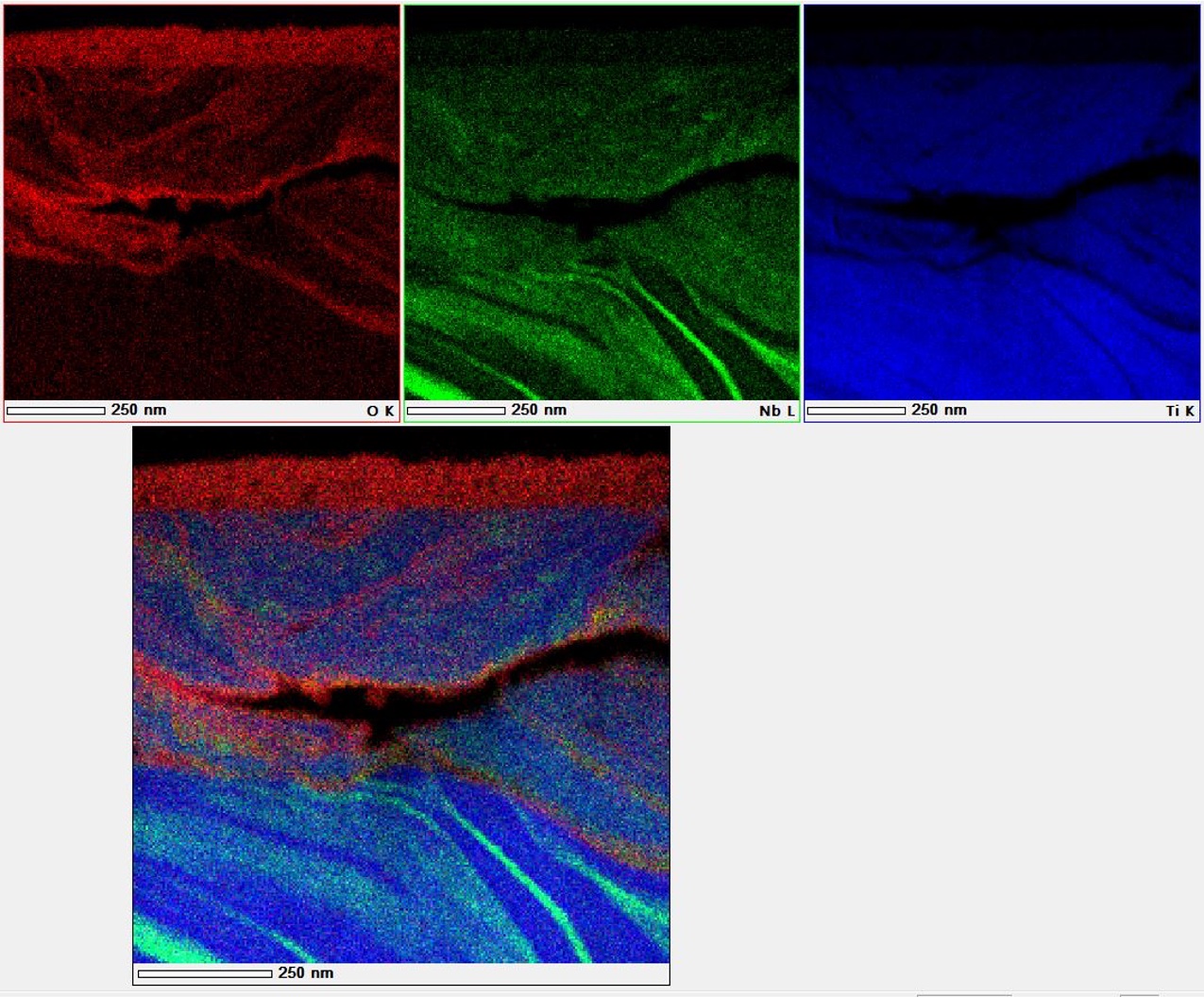
In general, when materials of different hardness are rubbed together (friction), the softer material is removed (wear). A material placed in a corrosive environment corrodes from its surface. But what happens when wear occurs in a corrosive environment? Is the result simply "corrosion plus wear," or is it "corrosion multiplied by wear"? Titanium and aluminum resist oxidation because of the passive films that form on their surfaces, whereas magnesium is a representative practical metal that corrodes readily. These materials also differ in hardness and toughness. We investigate how their material properties affect the combined action of corrosion and wear known as tribocorrosion. The photograph is a cross-sectional elemental map of a worn region of a titanium alloy; oxygen was detected at the surface (top).