For the Observation of Mesoscale Dynamics at Solid–Liquid Interfaces
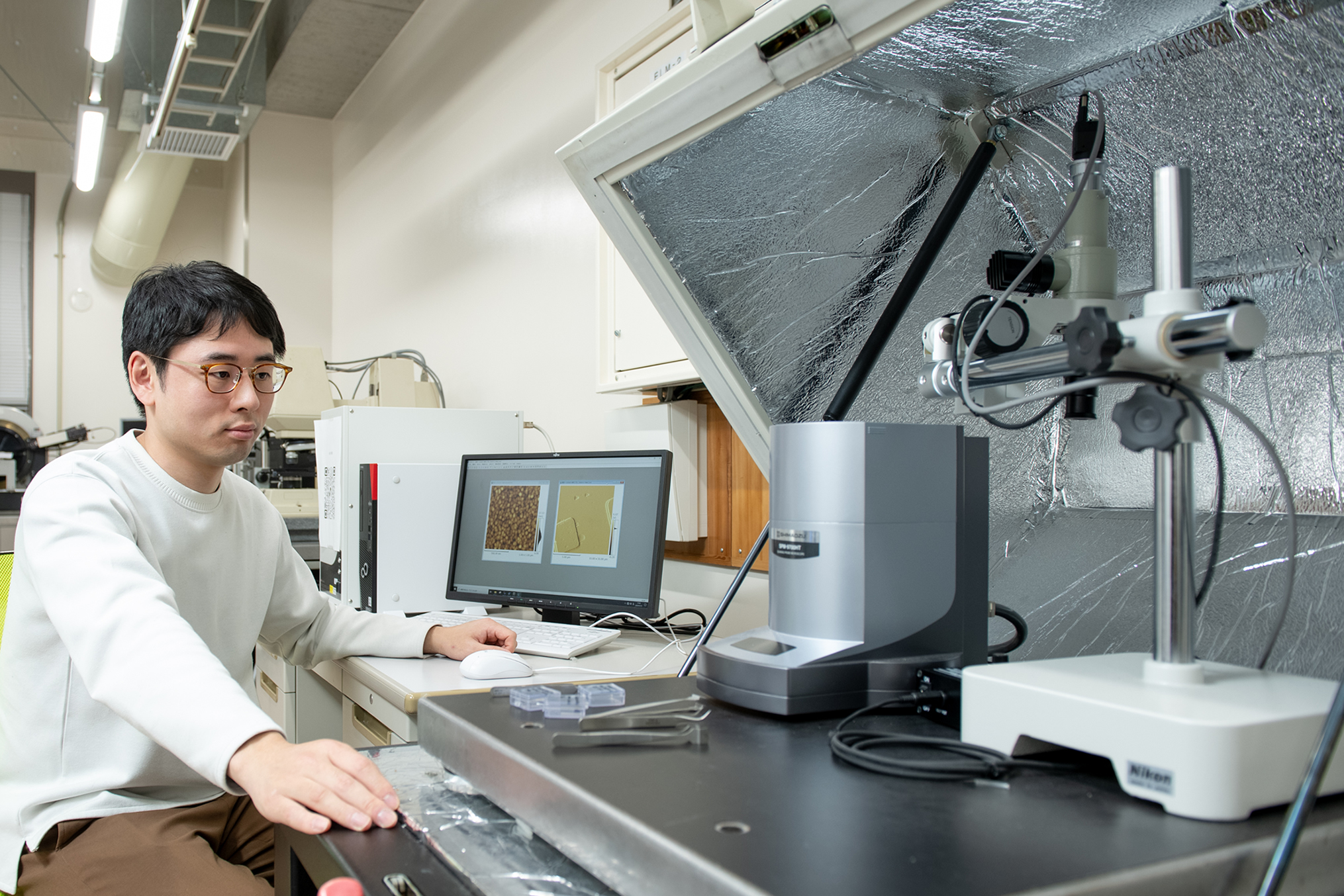
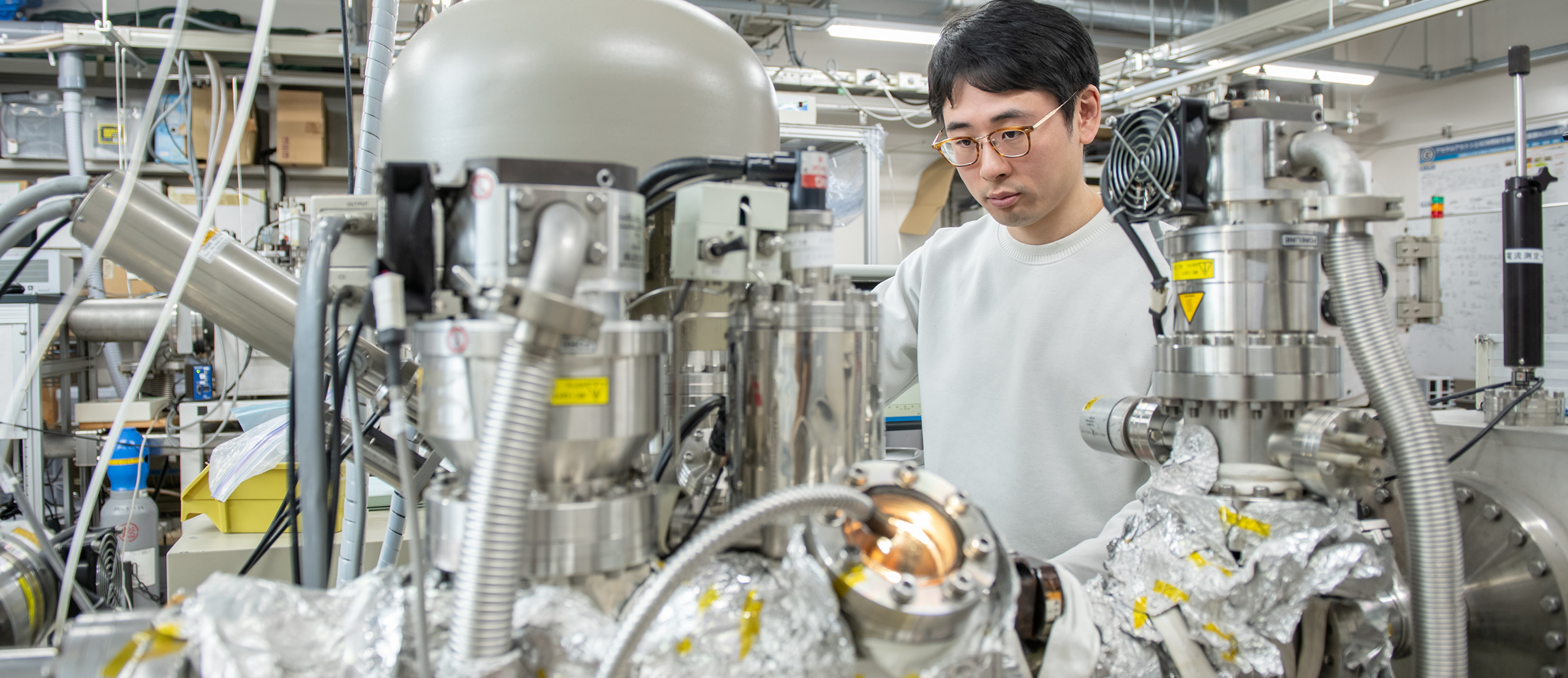
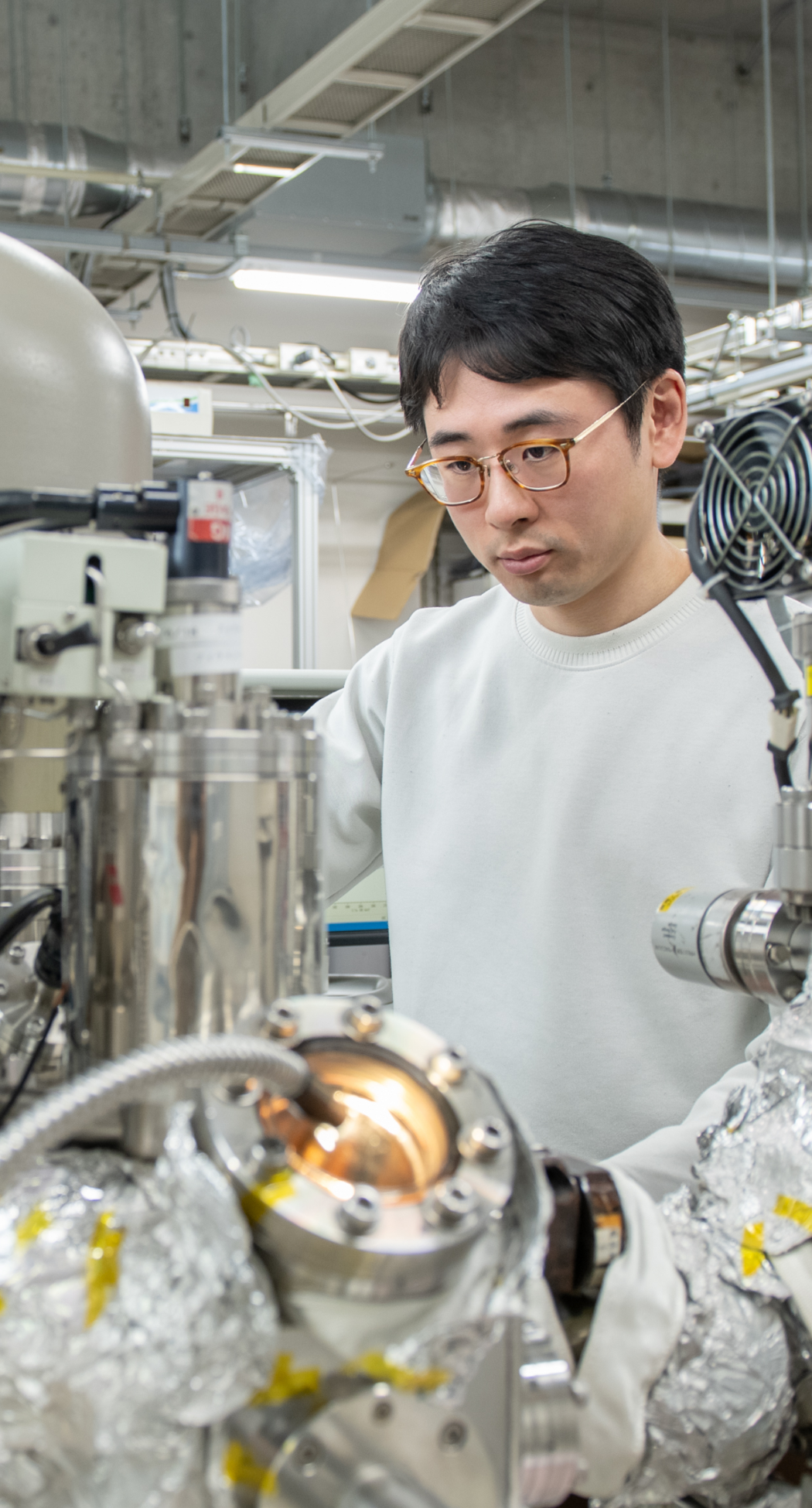
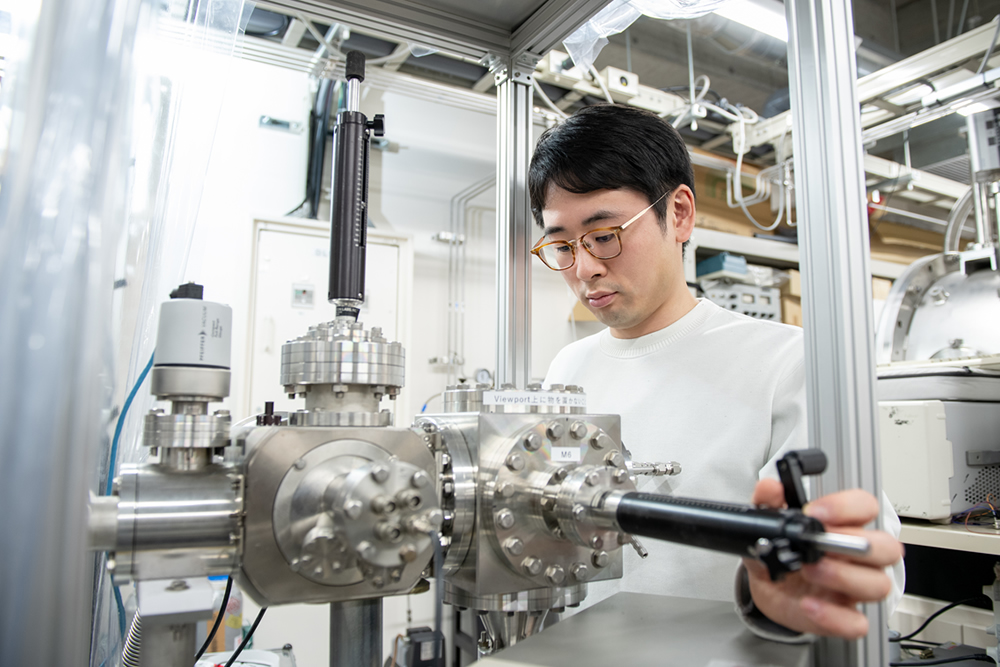
I are developing a “liquid cell” that separates liquids from the ultra-high vacuum environment, aiming to establish a novel technique for liquid-phase observation using photoelectron microscopy. This liquid cell requires a high-performance electron-transparent window with a thickness of only a few nanometers. To achieve this, I am applying the gas cluster ion beam (GCIB) technology that has been cultivated in our laboratory over many years to enhance the performance of the transmission window. In addition, I am working on multifunctionalizing the liquid cell itself, such as by integrating electrode functions into the membrane. This technology is expected to become an innovative tool for gaining new insights in a wide range of fields, including electrochemistry and catalysis research.
In recent years, the development of secondary batteries and catalysts has been actively pursued toward the realization of carbon neutrality. In these research fields, there is a growing demand for advanced techniques to analyze phenomena occurring at solid–liquid interfaces in detail. In this study, we are working on the development of a direct liquid observation technique using photoelectron emission microscopy(PEEM). PEEM detects photoelectrons emitted from sample surfaces under X-ray or UV irradiation, enabling observations with a spatial resolution on the order of several tens of nanometers and a temporal resolution of a few milliseconds. Furthermore, when combined with synchrotron radiation, it also allows spectroscopic analysis of materials. By utilizing this technique, I aim to propose a novel approach for liquid-phase observation that enables the visualization of dynamic mesoscale phenomena.
Photoelectron emission microscopy (PEEM) measurements normally require an ultra-high vacuum environment. Therefore, when investigating liquids, it is essential to develop a “liquid cell” capable of maintaining liquids under vacuum conditions. Among the components of the liquid cell, the most critical part is the electron-transparent window, which separates the vacuum from the liquid environment. Considering the inelastic mean free path of photoelectrons, the thickness of this window must be controlled to only a few nanometers. In my previous work, I developed a technique to seal liquids using 10 nm-thick silicon nitride (SiNx) membranes; however, the sensitivity is still insufficient. To achieve higher sensitivity, I am now developing a method to thin SiNx membranes with minimal damage by employing gas cluster ion beam (GCIB) technology. Moving forward, I aim to realize a multifunctional liquid cell by integrating additional functions—such as electrodes—into the SiNx membrane, thereby enabling advanced and versatile measurements tailored to the properties of the solution.
At present, the main target of my research is to elucidate the mechanism of hydrogen and oxygen bubble formation during the water electrolysis process. Recent studies have revealed that hydrogen and oxygen bubbles generated at the electrode interface form a double layer with different diameters. However, many aspects of their formation mechanism remain unclear. By employing the observation tool I am developing, I aim to contribute to a deeper understanding of the bubble formation mechanism.
| Research | ||
|---|---|---|
| Journal | Japanese Journal of Applied Physics | |
| Title | Highly sensitive electron-beam-induced X-ray detection from liquid using SiNx membrane ultra-thinned by gas cluster ion beams | |
| Author | Masaya Takeuchi, Satoru Suzuki, Masaki Nakamura, Takashi Hata, Yusuke Nishiuchi, Kaori Tada, Noriaki Toyoda | |
| Member | Masaya Takeuchi, Satoru Suzuki, Masaki Nakamura, Takashi Hata, Yusuke Nishiuchi, Kaori Tada, Noriaki Toyoda | |
| URL | https://doi.org/10.35848/1347-4065/ad555f | |
| Information on conferences, exhibitions, and other related events | High Sensitivity of Energy Dispersive X-Ray Spectroscopy Measurement Using Liquid Cell with Electron Transmittance Window Ultra-Thinned by a Gas Cluster Ion Beam, Masaya Takeuchi, Satoru Suzuki, Noriaki Toyoda, Prime2024, Oct. 8th, 2024 | |
Learn about the cutting-edge research achievements, advanced technical resources, and know-how that the Graduate School of Engineering at the University of Hyogo can provide. We welcome partners who can create the future together with us by jointly generating new ideas and technologies through collaborative research, commissioned research, and technical consultations.
More