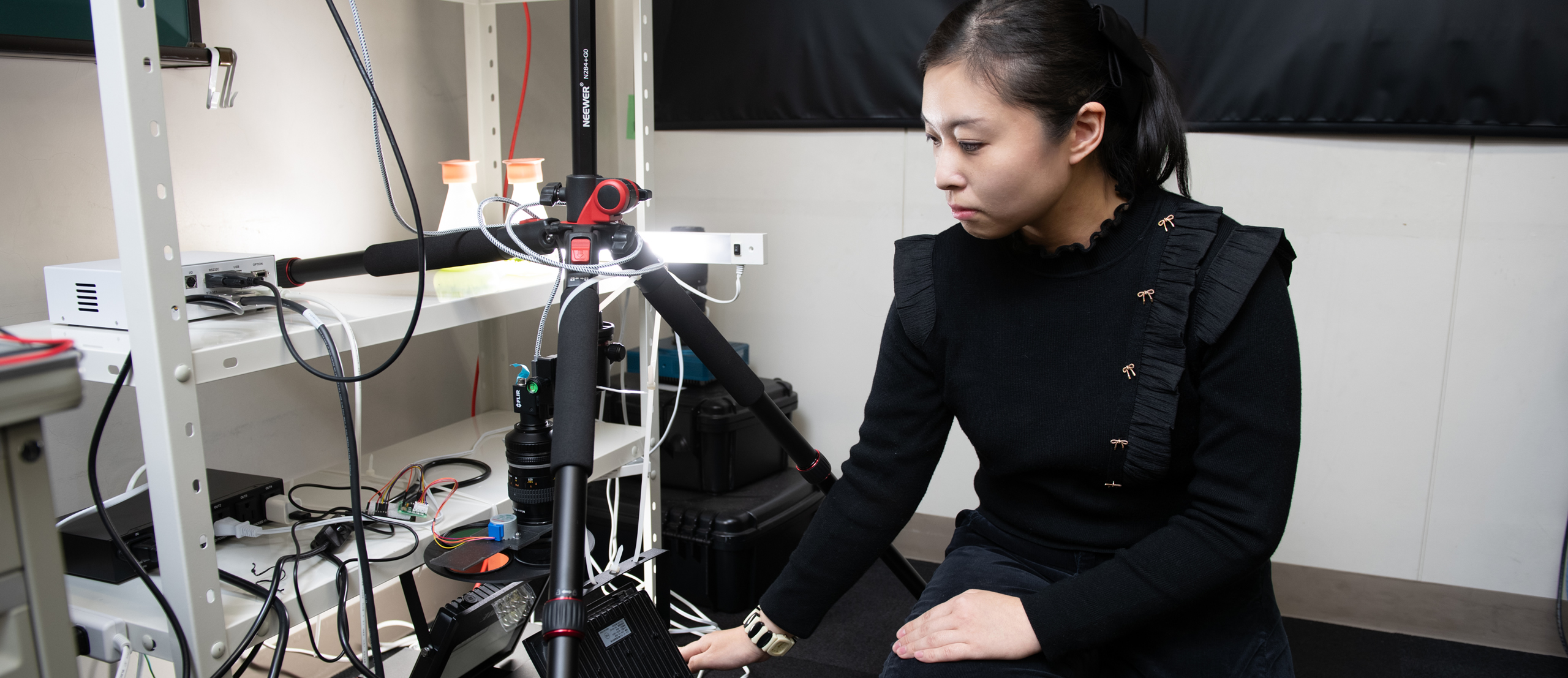
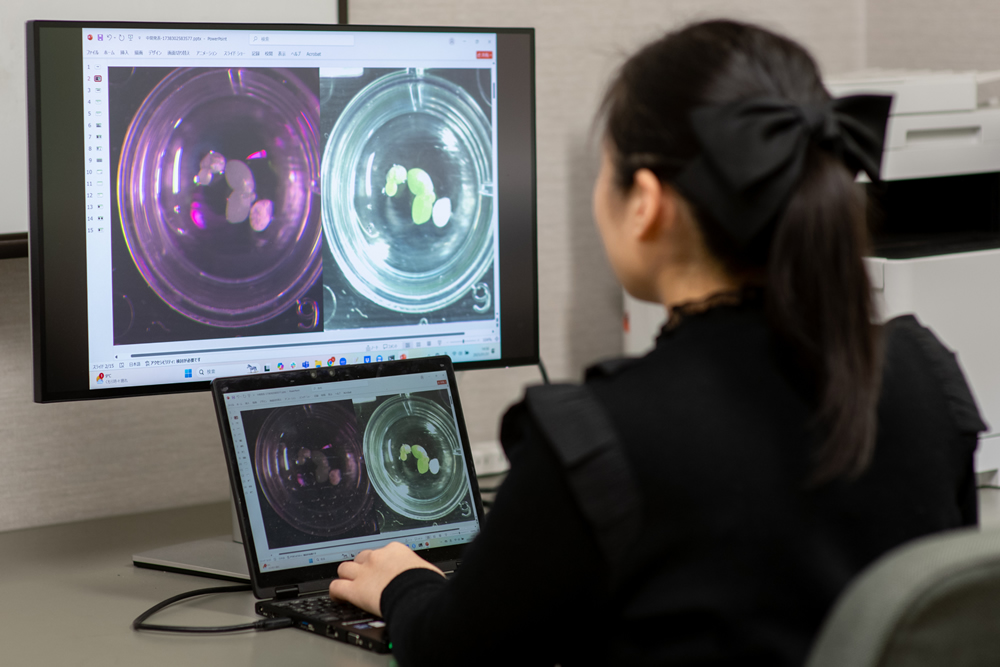
Automatically recognizing and evaluating information known only to plant experts is a highly challenging task. The aim of this study is to automate expert-level judgments about plants through image recognition.
Plant measurement is an established foundational field in plant science, known as plant phenotyping. With the recent advancement of AI technologies, research in the interdisciplinary area combining plant science and information science has become increasingly active. For example, studies have been conducted on automatic recognition of wheat regions (Toda et al., Commun Biol, 2020) and automatic estimation of petal numbers (Adamsen et al., Crop Science, 2000). I have also conducted research on estimating tree species from images of their leaves (Okuda et al., TOD, 2023) and on automatically measuring the leaf area and number of duckweed leaves (Okuda et al., IEICE, 2024 ). Duckweed is known for its remarkable growth rate, doubling in size in about two days under optimal conditions. As such, it is expected to become a useful aquatic plant for biomass production, and the development of industrial-scale cultivation and management methods is anticipated.
In my previous research, I proposed a method for estimating tree species from images of leaves. This method utilizes deep learning algorithms to learn features such as leaf shape and color, enabling the identification of tree species. I have also conducted research on the automatic measurement of leaf area and number in duckweed, which has made it possible to efficiently assess the growth status of duckweed.
However, there are still many challenges in applying AI technologies to plant evaluation and measurement. For instance, AI models are highly sensitive to image quality and lighting conditions, and there is a need for extensive and diverse training data to accommodate various plant species. Moreover, due to significant variations among individual plants and environmental conditions during the growth process, developing AI models with high generalization performance remains a critical issue.
To overcome these challenges, it is essential for experts in plant science and information science to collaborate and advance research from multiple perspectives. For example, studies on feature extraction during plant growth and on improving the robustness of AI models are particularly important. In addition, collaboration between academia and industry is crucial for the development and dissemination of practical plant evaluation systems.
In the future, we also plan to explore the possibility of estimating past environmental conditions under which a plant has grown.


| Research | |
|---|---|
| Journal | IEICE Transactions on Information and Systems |
| Title | Estimation of Surface Area and Number of Leaves on Duckweed Focused on Leaf-Shape and Leaf-Color Features |
| Author | Moeri Okuda, Hidehiro Ishizawa, Hiroaki Ohshima |
| Member | Moeri Okuda(Graduate School of Engineering), Hidehiro Ishizawa(Graduate School of Engineering), Hiroaki Ohshima(Graduate School of Information Science) |
| URL | https://cir.nii.ac.jp/crid/1390018462210569984 |
Learn about the cutting-edge research achievements, advanced technical resources, and know-how that the Graduate School of Engineering at the University of Hyogo can provide. We welcome partners who can create the future together with us by jointly generating new ideas and technologies through collaborative research, commissioned research, and technical consultations.
More