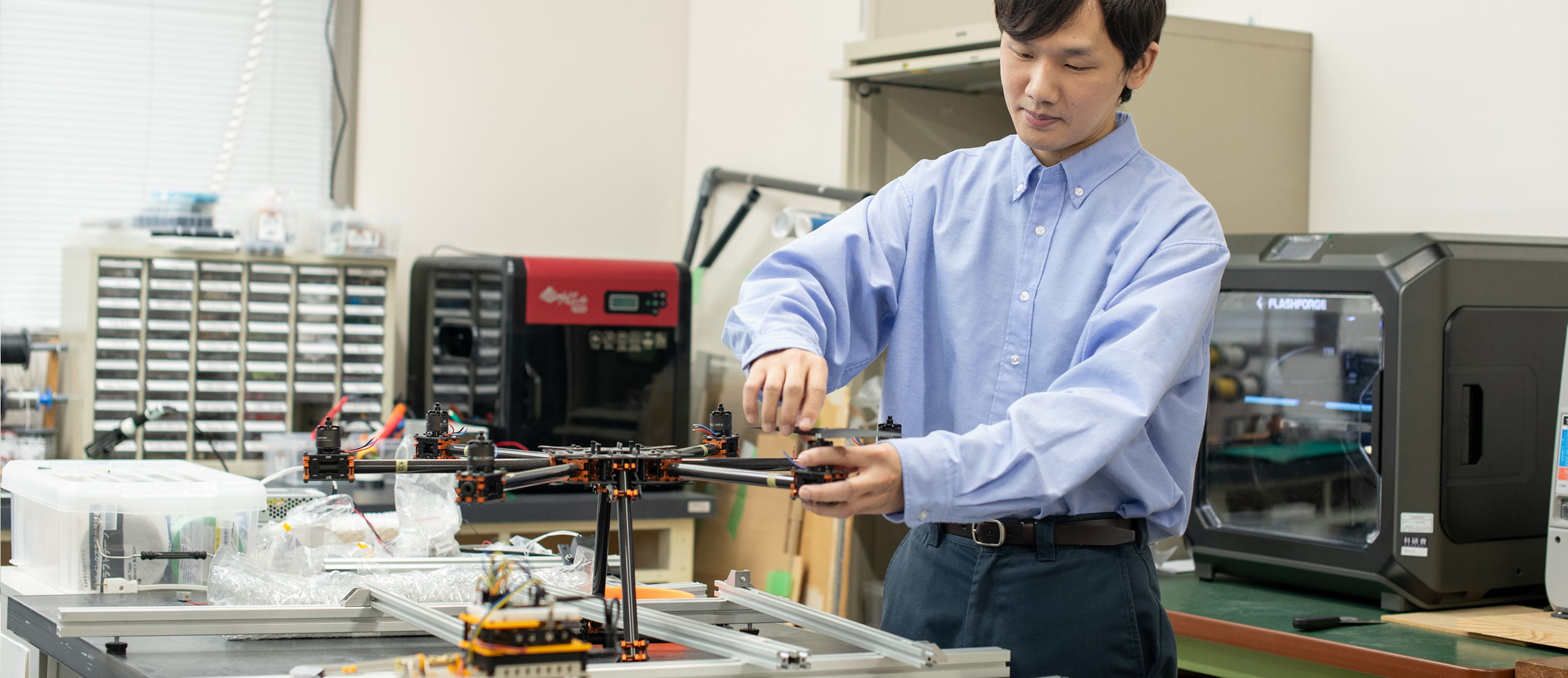
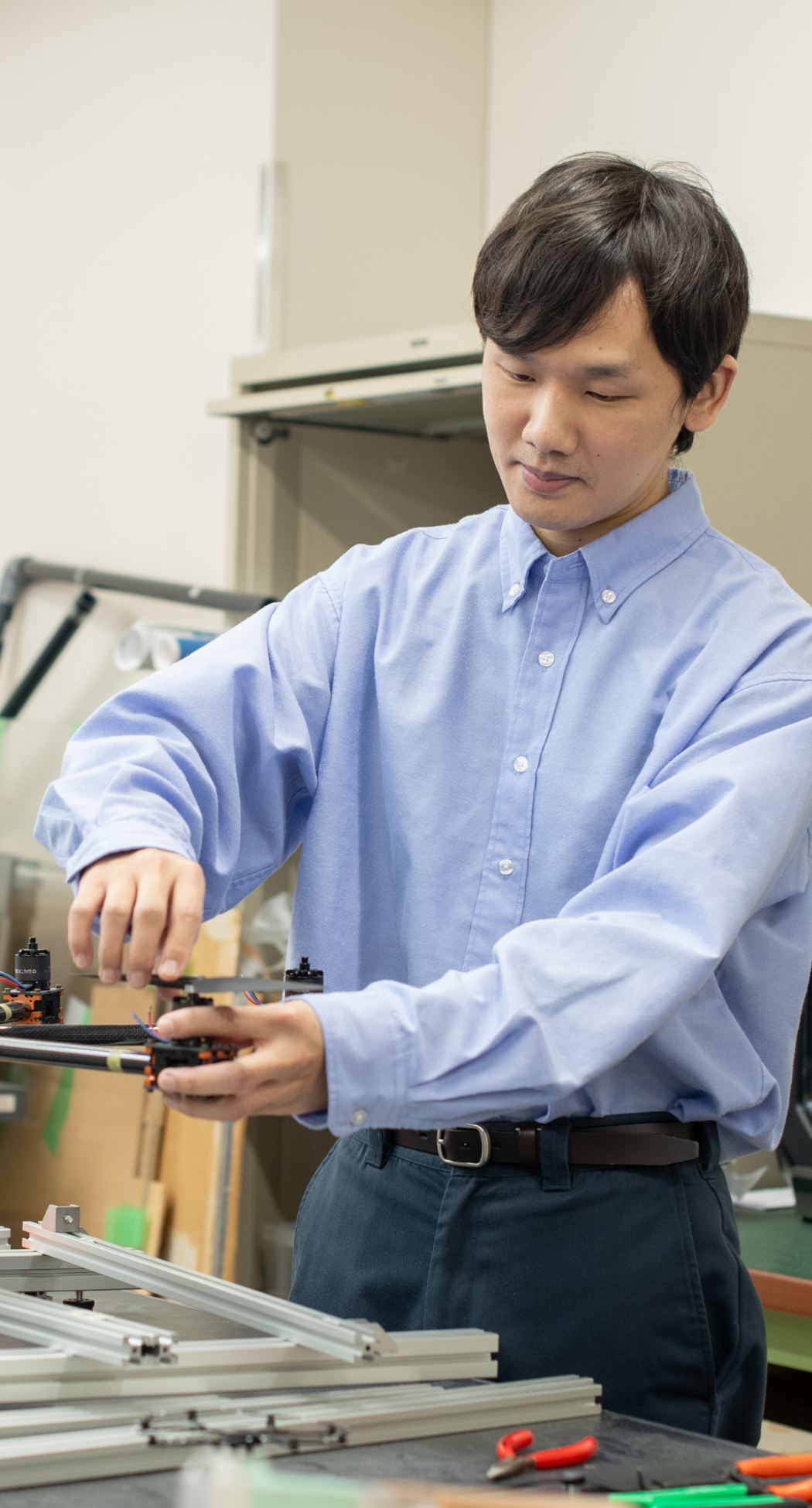
Drones with redundant actuators, such as extra motors and propellers, are now being developed. Although they offer great potential, their control design is more complex than that of conventional drones. Our research focuses on unlocking this potential and pursuing advanced control methods that provide added value, including energy efficiency.
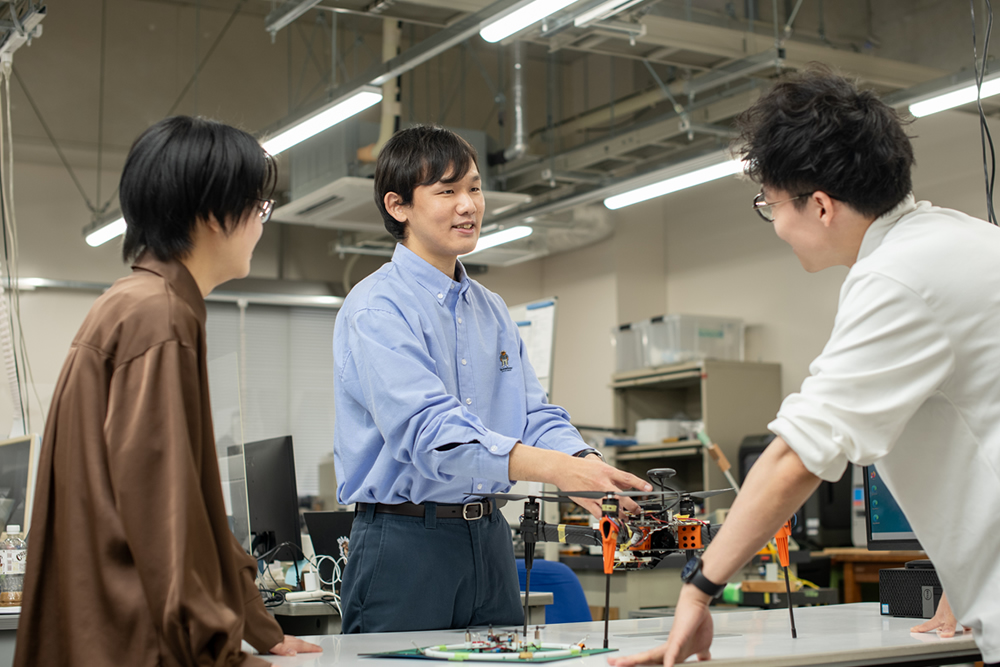
We have developed a thrust–energy model of the motors used in drone drive systems and proposed an optimal thrust allocator design based on this model. By employing this allocator, it may be possible to reduce the energy consumption of redundant drones during flight, depending on the operating conditions.
Drones are expected to play active roles in various fields such as logistics, infrastructure inspection, and disaster assessment. To increase payload capacity and flight endurance, redundant drones equipped with multiple rotors have been developed. While these redundant drones offer high potential in terms of maneuverability, their control design becomes increasingly complex and sophisticated. Thus, there is a growing need for methods to design control systems that actively exploit the redundancy of drones.
Experiments were conducted using the drive systems (motors and propellers) employed in drones, and a mathematical model was developed to capture the relationship between generated thrust and energy consumption. Based on this model, we proposed a method for designing an allocator—a mechanism that determines various thrust distribution patterns required during drone control. Through numerical simulations, it was demonstrated that the proposed allocator can reduce energy consumption by more than 10% under certain operating conditions.
Beyond drones, many products can be regarded as redundant systems, such as hybrid vehicles, electric vehicles, and active vibration isolation platforms. The outcomes of this study may therefore be applicable to a wide range of redundant systems in general.

| Research | |
|---|---|
| Journal | Journal of Robotics and Mechatronics |
| Title | Design of an Optimal Allocator for Power Consumption Minimization in Hexarotor Drone Control Systems |
| Author | Natsuki Kawaguchi, Haruka Maruyama |
| Member | Natsuki Kawaguchi |
| URL | https://doi.org/10.20965/jrm.2024.p1255 |
Learn about the cutting-edge research achievements, advanced technical resources, and know-how that the Graduate School of Engineering at the University of Hyogo can provide. We welcome partners who can create the future together with us by jointly generating new ideas and technologies through collaborative research, commissioned research, and technical consultations.
More