In-situ X-ray diffraction measurement of high-temperature deformation by synchrotron radiation X-rays
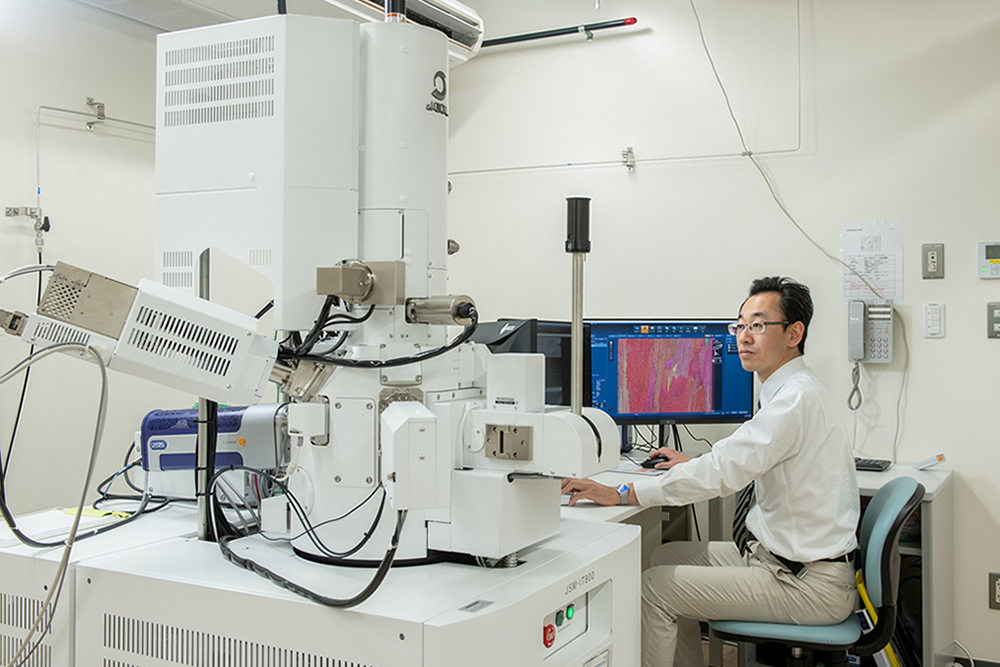
We investigate the state of dislocations in Ni-based superalloys from room temperature to high temperatures, and aim to reveal their mechanical properties and mechanism. Using a tensile testing machine with a heating device at SPring-8, in-situ X-ray diffraction measurements during high-temperature deformation are carried out, and the state of dislocations is determined from the diffraction profile. Using the obtained dislocation information, the mechanical properties of materials at high temperatures are examined, with the aim of explaining strength from dislocation density. This is expected to contribute to materials design and development.
Metallic materials are widely used as structural materials, that are strongly required sperior mechanical properties. In terms of mechanical properties, dislocations, a type of crystal lattice defect in a material, strongly influences the deformation in metallic materials. Therefore, examining the state of dislocations is effective in predicting mechanical properties. The state of dislocations are mainly examined by electron microscopy observation or diffraction profile measurements using X-rays or electron beams. X-ray diffraction measurement has advantage to obtation data in wide volume compared with electron microscopy observation. Furthermore, X-ray diffraction can be performed at high temperature and in deformation.
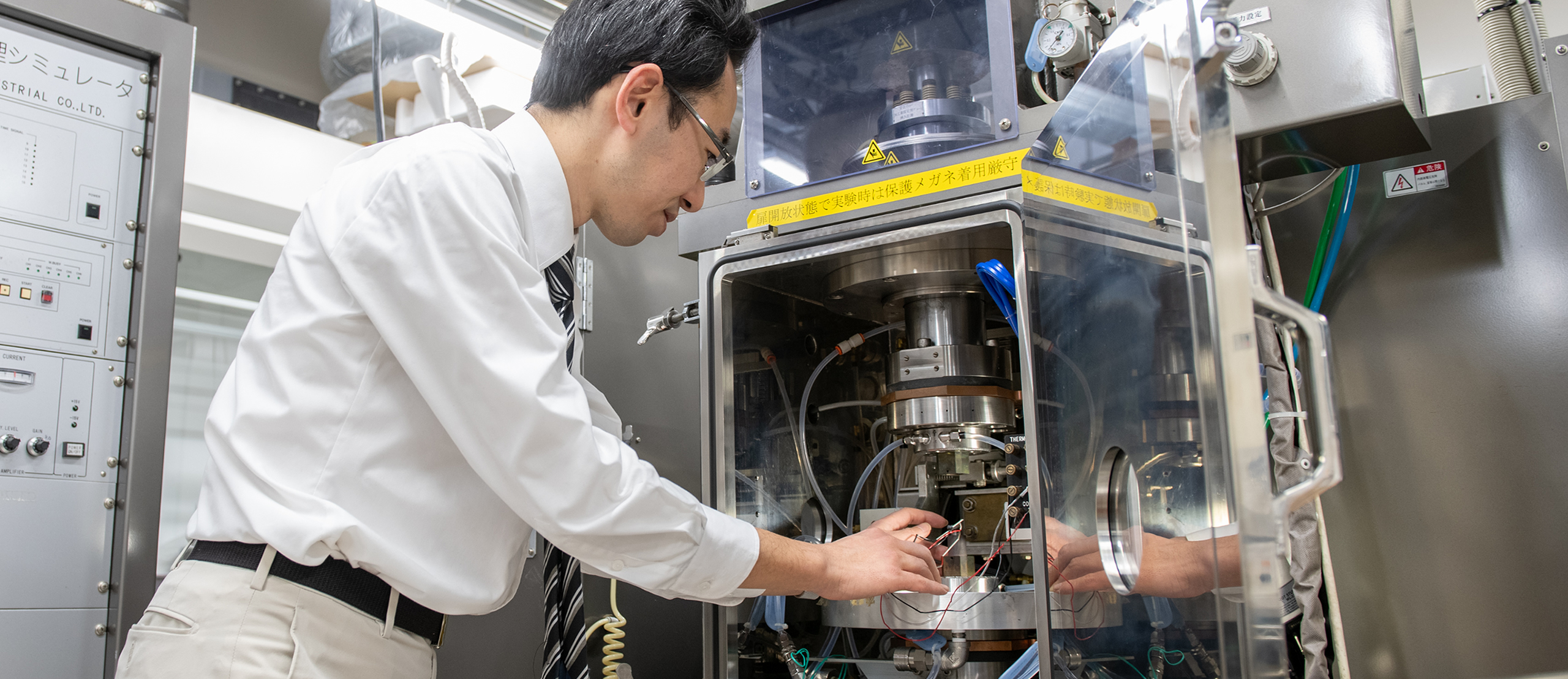
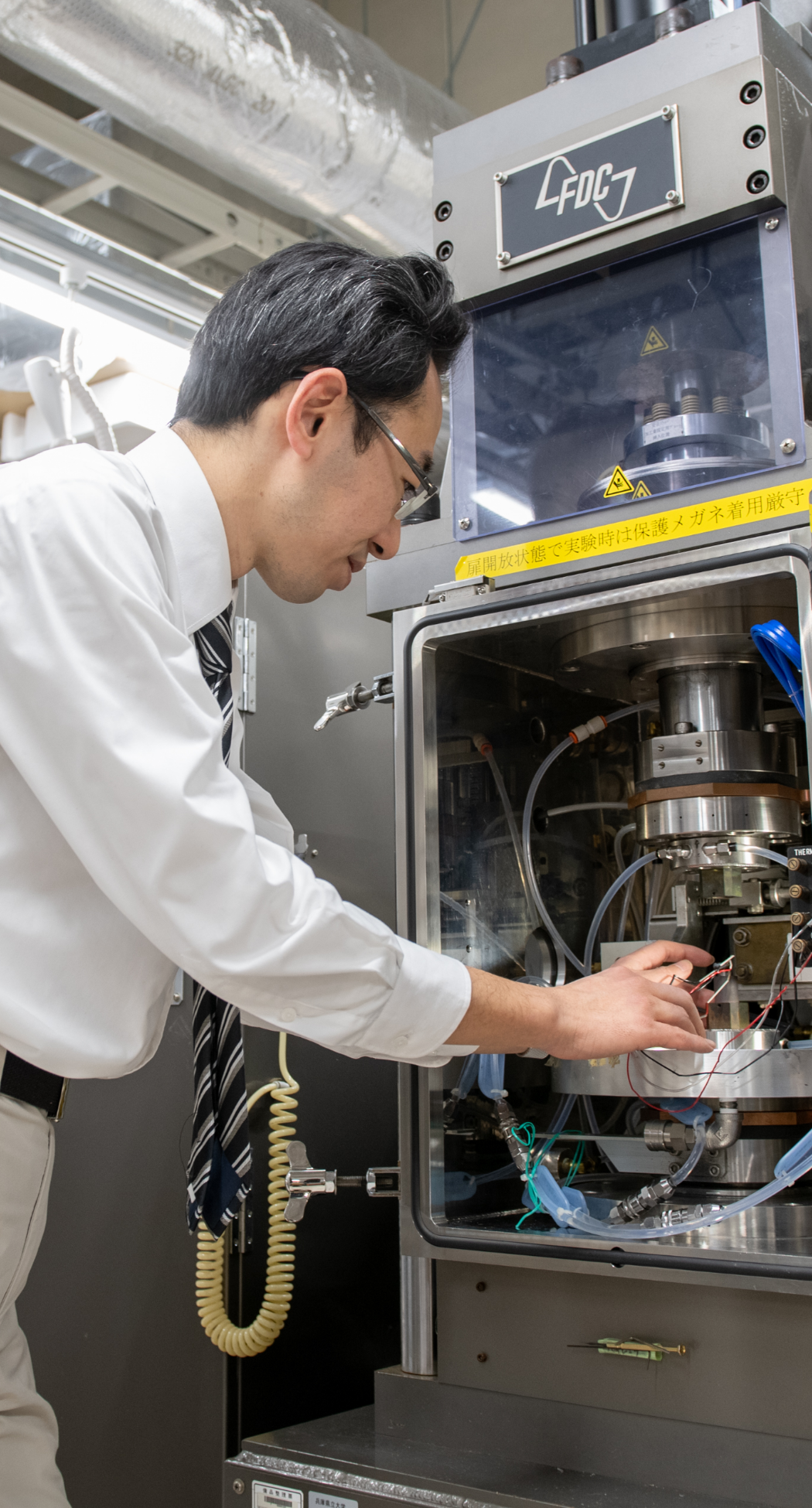
We investigate state of dislocations primarily in Ni-based superalloys at high temperature by high-brilliance synchrotron X-rays in SPring-8. To obtain X-ray diffraction profiles during deformation from room temperature to high temperatures, we utillized a unique tensile testing machine equipped with a heating device. This device can heat plate type tensile test specimens for transmission X-ray diffraction at high temperatures of up to 1000 °C while tensile test, allowing for the acquisition of transmission X-ray diffraction profiles. Since Ni-based superalloys is composed of various phases, diffraction profile on the target phase is separated using Rietveld analysis and numerical calculations. The state of dislocations is determined by the Convolutional Multiple Whole Profile Fitting (CMWP) method for the diffraction profile of the objective phase.
The strength and ductility of metallic materials depend not only on the state of dislocations but also on the state of the material microstructure. Thus, we will obtain structural information through electron microscope observations. These datum will enable us to determine the parameters and theoretical equation that predict mechanical properties at high temperature. Furthermore, with regard to ductility, we explore the factors that determine ductility from the state of dislocations. Through these efforts, we aim to contribute to materials engineering development.

| Research | ||
|---|---|---|
| Journal | Materials Characterization | |
| Title | On the dislocation storage capacity of additively manufactured Hastelloy X: In situ synchrotron diffraction study | |
| Author | Kartik Prasad, Atsushi Ito, Shiro Torizuka | |
| Member | Shiro Torizuka | |
| URL | https://doi.org/10.1016/j.matchar.2024.114573 | |
| Information on conferences, exhibitions, and other related events | The Iron and Steel Institute of Japan, The Japan Institute of Metals and Materials, The Japan Society for Technology of Plasticity | |
Learn about the cutting-edge research achievements, advanced technical resources, and know-how that the Graduate School of Engineering at the University of Hyogo can provide. We welcome partners who can create the future together with us by jointly generating new ideas and technologies through collaborative research, commissioned research, and technical consultations.
More