Smartphones and electric vehicles run on rechargeable batteries. To make charging faster, it is essential to design battery materials that can handle high-speed charging. Our research focuses on discovering which factors in battery materials affect their reaction rate, with the goal of providing guidelines for designing better, faster-charging batteries.
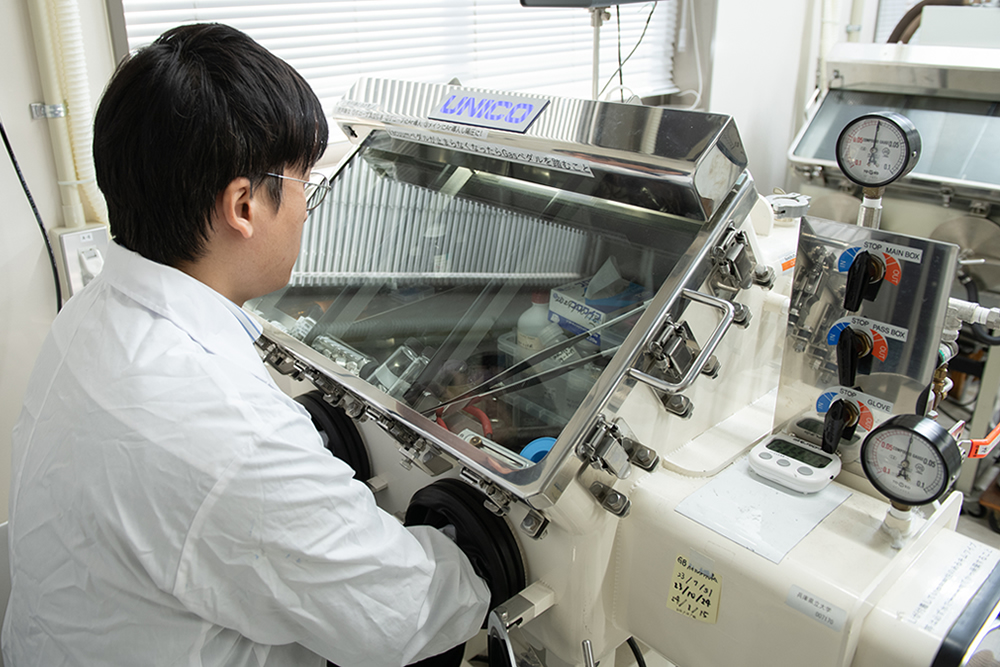
In recent years, rechargeable batteries have become widely used in electric vehicles and energy storage systems. One of their key performance features is how quickly they can be charged and discharged, and many efforts have been made to improve this speed. In our research, we identified the factors that affect the speed of the electrode reaction, which is known as electrochemical intercalation, inside the host materials. Based on this, we have proposed design guidelines for host materials that are essential for creating rechargeable batteries capable of fast charging and discharging.
In many rechargeable batteries, including lithium-ion batteries, the main electrode reaction involves ions being intercalated into layered inorganic compounds, which serve as the host materials. The rate of this reaction directly determines how fast a battery can charge and discharge, making it a critical factor. However, until now, very little was known about which properties of the host materials actually affect this reaction rate. By uncovering these factors, we can establish clear guidelines for designing host materials that enable faster charging and discharging batteries.
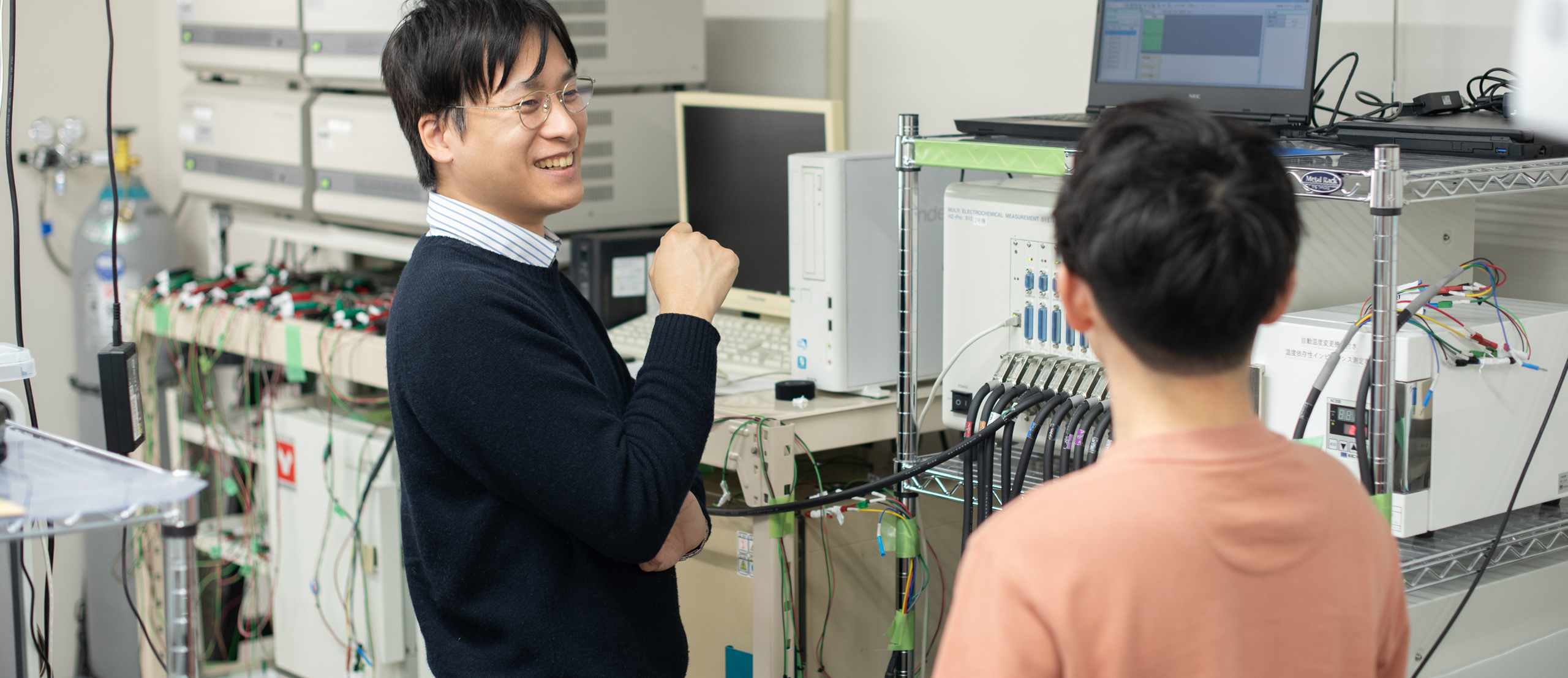
In our laboratory, we have developed techniques to create different types of carbon materials with distinct chemical and structural features. By making a variety of carbon materials with slightly different properties and testing them as host materials, we set out to see which factors influence the rate of ion intercalation reactions. To do this, we used a method called electrochemical impedance analysis, which allows us to measure reaction rates in a quantitative way, and we calculated the activation energy of the intercalation of anions. Our experiments and analyses revealed two key findings: the larger the spacing between carbon layers, the lower the activation energy, while the higher the amount of oxygen atoms introduced into the material, the higher the activation energy became.
From our results, we have clearly identified, for the first time, which factors in host materials affect the activation energy of intercalation reactions. In recent years, many research efforts have focused on speeding up battery charging and discharging through the development of new electrolytes and improved electrode fabrication techniques. Once these approaches are fully optimized, differences in the properties of host materials, which have so far remained unclarified, may become a significant factor influencing reaction rate. Our findings provide a fundamental and important guideline for designing host materials that can contribute to faster charging and discharging in rechargeable batteries.

| Research | |
|---|---|
| Journal | ACS Applied Energy Materials, 7(22), 10701-10709. |
| Title | Unraveling the Factors of Host Materials Affecting the Kinetics of Electrochemical Anion Intercalation Reaction |
| Author | Junichi Inamoto, Shoya Enoki, Tatsuki Miyamoto, Akane Inoo, and Yoshiaki Matsuo |
| Member | Junichi Inamoto, Shoya Enoki, Tatsuki Miyamoto, Akane Inoo, and Yoshiaki Matsuo |
| URL | https://pubs.acs.org/doi/10.1021/acsaem.4c02440 |
Learn about the cutting-edge research achievements, advanced technical resources, and know-how that the Graduate School of Engineering at the University of Hyogo can provide. We welcome partners who can create the future together with us by jointly generating new ideas and technologies through collaborative research, commissioned research, and technical consultations.
More