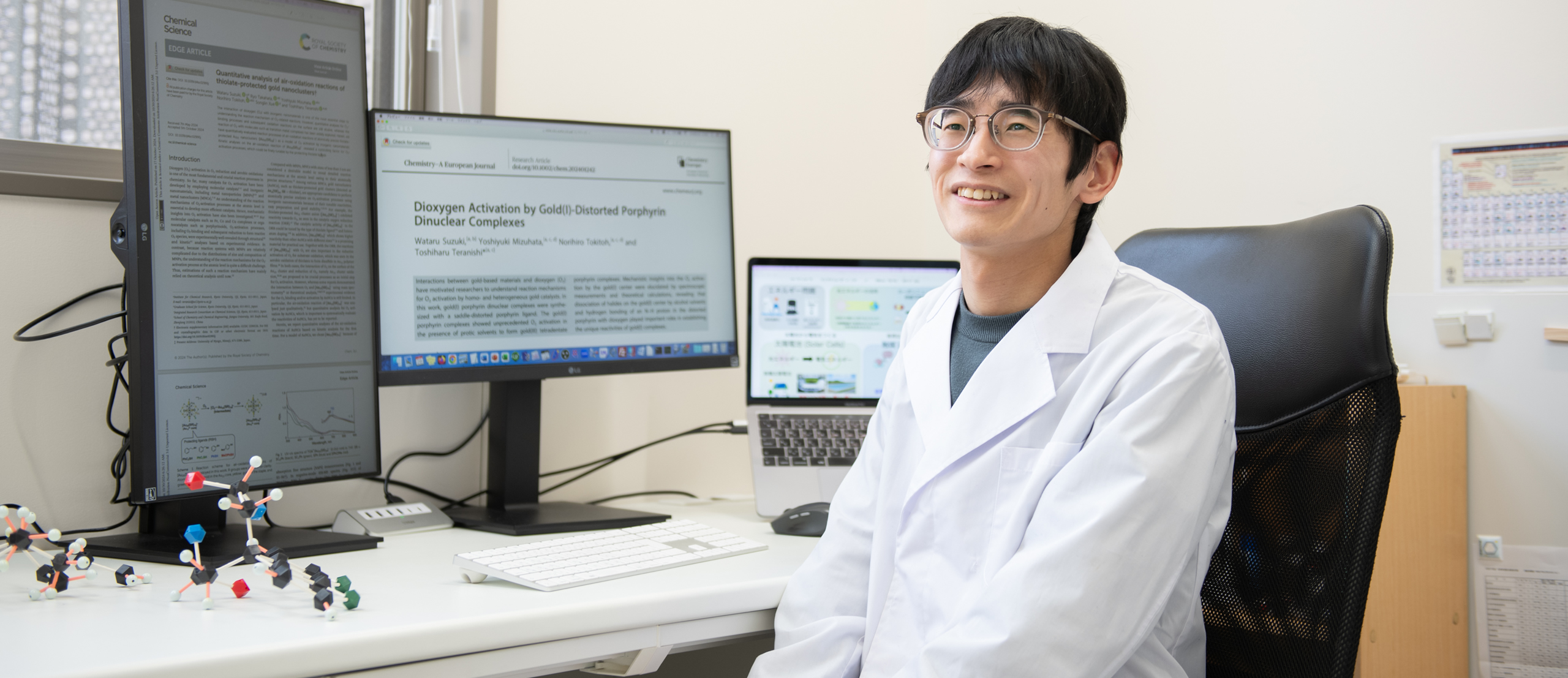

Meatal nanoclusters with the size of less than 2 nm exihibit unique reactivity and photophisical properties that are distinctly different from those of metal nanoparticles. Our target is developing novel metal nanocluster-based functional materials through atomic level structural engineering.
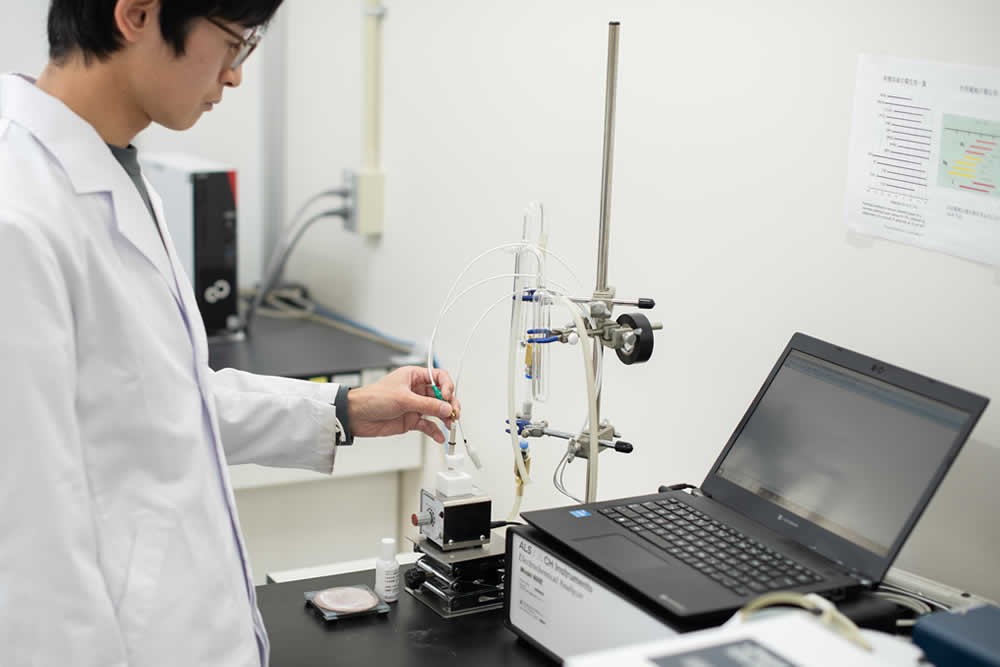
We successfully revealed the atomic level reaction mechanisms of the oxygen reduction reaction by gold nanoclusters based on molecular chemistry approach.
Gold nanoclusters showed unique catalytic activity toward oxygen or carbon dioxide reduction reaction. However, lack of experimental evidences on the reaction mechanism at the atomic level are remain elusive, which hampered ratianal catalysis designs.
Molecular chemistry approach was employed to reveal the reaction mechanism of the oxygen reduction reaction by gold nanoclusters. As a result, we succesfully disclosed the active site of oxygen reduction reaction at atomic level and quantified tbinding constants and following electron transfer rates for the first time. Especially, steric effects of protecting ligand significantly affect the reactivity, suggesting the importance of surrface ligand design for the development of highly tuned nanocatalysts.
Based on our dicovery, we can propose rational design of nanocatalysts at the atomic level, which is essential to precisely tune the activity and product selectivity during the catalysis. Our reserch would also be apllied to prepare carbon dioxide reduction catalysts.


Learn about the cutting-edge research achievements, advanced technical resources, and know-how that the Graduate School of Engineering at the University of Hyogo can provide. We welcome partners who can create the future together with us by jointly generating new ideas and technologies through collaborative research, commissioned research, and technical consultations.
More