
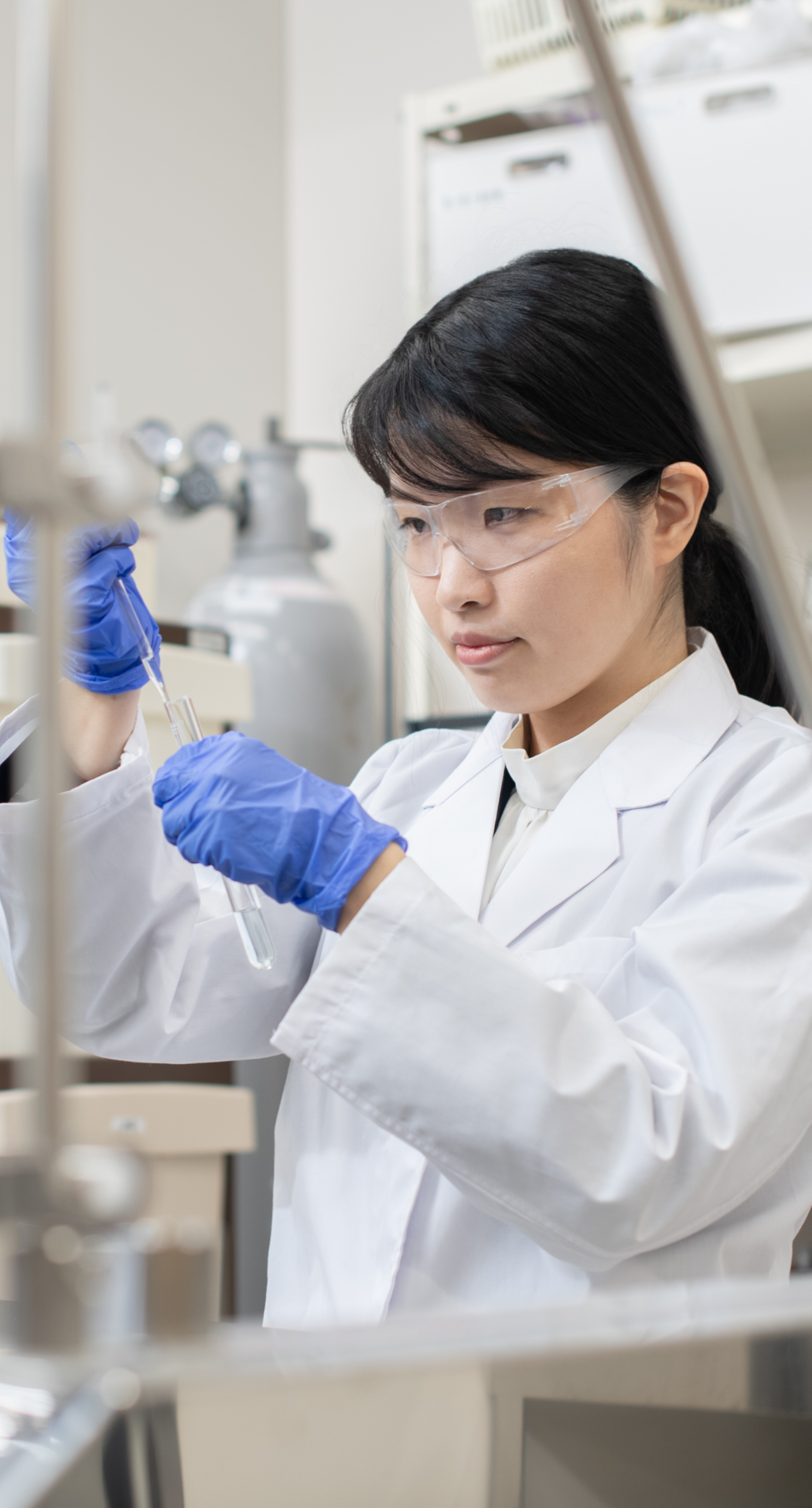
Porous catalyst materials are developed by utilizing the structure of alloys. Catalytic materials with different properties could be prepared by varying the constituent elements, composition ratios, structures and preparation conditions of the precursor alloys.
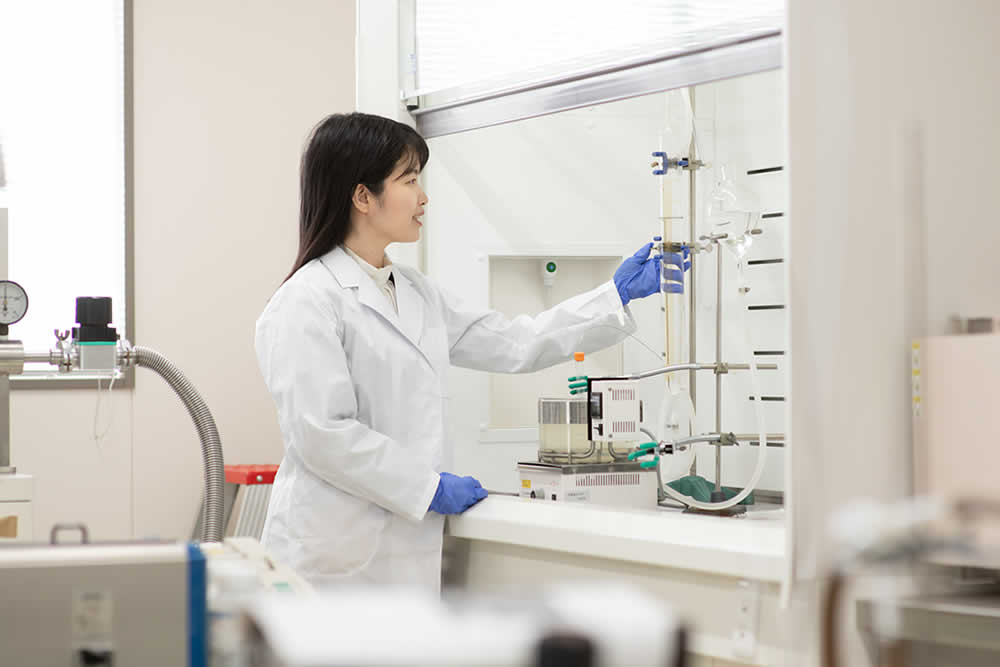
Ultrafine, high-surface-area porous metal oxides have been developed through the preparaation from amorphous alloy1) precursors.Using these metal oxides as catalyst supports2), these materials exhibited superior catalytic activity in the oxidative decomposition of toxic gases and in hydrogen production from hydrogen carrier compounds.
Porous inorganic and metal oxides with high surface area are widely utilized as supports for metal catalysts. Such porous, high-surface-area metal oxides can be prepared by applying the dealloying method to bulk solid alloys as raw materials. While the dealloying method has been extensively employed to fabricate porous metal catalysts that function as active catalysts themselves, its application to the preparation of porous metal oxide supports remains limited.The structural characteristics and catalytic support properties of these materials remain largely unexplored, making them exceptionally intriguing.
By using amorphous alloys as precursors and applying the dealloying method, we successfully prepared extremely fine, high-surface-area porous metal oxides. When utilized as catalyst supports, these materials indicated exceptional catalytic activity in applications such as the oxidative decomposition of toxic gases and hydrogen production from hydrogen carrier compounds, which have recently attracted attention as promising energy sources. These porous metal oxides exhibited superior catalytic performance compared to those prepared from crystalline alloy precursors and conventional synthesis methods.
The development of high-performance catalysts can contribute to energy-saving processes and reducing environmental impact, ultimately leading to a better quality of life. Traditionally, precious metals have been widely used as metal catalysts; however, advancing the development of catalysts utilizing abundant and inexpensive metals will help address issues related to resource sustainability, the environment, and energy.

| Research | |
|---|---|
| Journal | Industrial & Engineering Chemistry Research, 57, 5599 (2018); doi:10.1021/acs.iecr.8b00927 |
| Title | Oxidation of Benzyl alcohol over nanoporous Au-CeO2 catalysts prepared from amorphous alloys and effect of alloying Au with amorphous alloys |
| Author | A. Nozaki, T. Yasuoka, Y. Kuwahara, T. Ohmichi, K. Mori, T. Nagase, H. Y. Yasuda and H. Yamashita |
| Member | A. Nozaki(Chemical Engineering), T. Nagase(Materials Science) |
| URL | https://pubs.acs.org/doi/10.1021/acs.iecr.8b00927 |
| Journal | Materials Transactions, 60, 845 (2019); doi: 10.2320/matertrans.M2019017 |
| Title | Hydrogen generation from ammonia borane over Ru/nanoporous CeO2 catalysts prepared from amorphous alloys |
| Author | A. Nozaki, C. Ueda, R. Fujiwara, A. Yamashita, H. Yamamoto and M. Morishita |
| Member | A. Nozaki(Chemical Engineering), H. Yamamoto(Chemical Engineering) |
| URL | https://www.jstage.jst.go.jp/article/matertrans/60/5/60_M2019017/_html/-char/en |
Learn about the cutting-edge research achievements, advanced technical resources, and know-how that the Graduate School of Engineering at the University of Hyogo can provide. We welcome partners who can create the future together with us by jointly generating new ideas and technologies through collaborative research, commissioned research, and technical consultations.
More