I am engaged in the development of functional membrane materials using molecular assemblies such as phospholipid membranes. These assemblies are composed of amphiphilic phospholipids, which are the main components of biological membranes. They are expected to play important roles not only in the pharmaceutical field but also as soft materials for applications such as catalysis, adsorption, and crystallization.
As part of our evaluation approach, we characterize the physical properties of molecular assemblies at low concentrations. Based on this analysis, we are able to control the morphology of the assemblies.
Functional materials based on molecular assemblies are actively being developed, particularly for use in the pharmaceutical field. In addition, molecular assemblies have contributed to a wide range of applications, such as the synthesis of porous microparticles utilizing their supramolecular structures. These assemblies, formed in aqueous solutions, can adopt various morphologies depending on factors such as the molecular structure, temperature, and the presence of counterions. By controlling these factors, it is possible to design and fabricate functional materials.
I am engaged in the development of membrane materials focusing on the morphological instability of bilayer molecular assemblies composed of long-chain lipids and short-chain surfactants. Inspired by the human digestive process, I am working on controlling the morphology of molecular assemblies derived from fatty acids, aiming to apply them as functional materials.
As an evaluation method, I particularly focus on analyzing physical properties at low concentrations. When molecular assemblies are diluted, phenomena such as the desorption of lipids and changes in morphology and internal properties can occur. Since these changes influence the retention and release rates of encapsulated drugs or other substances, this evaluation method is considered highly suitable.
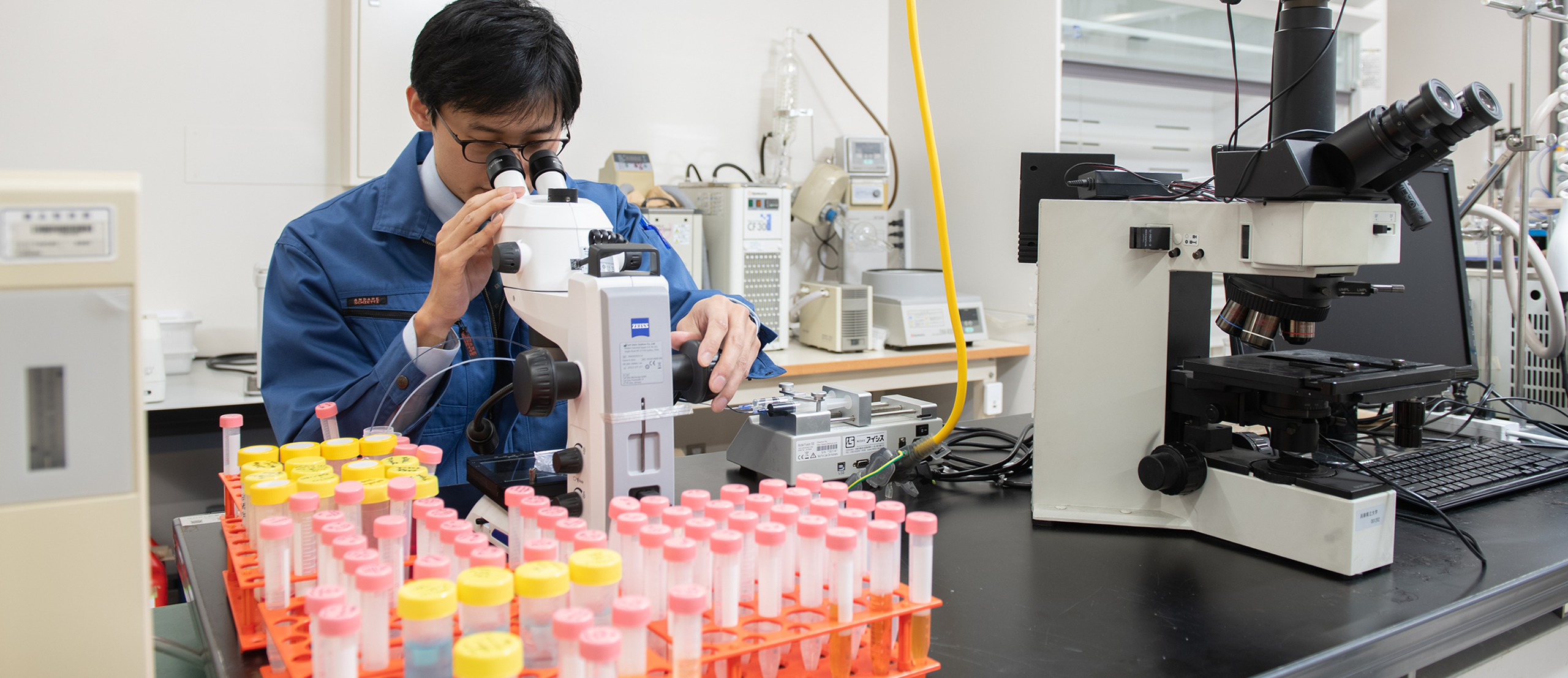
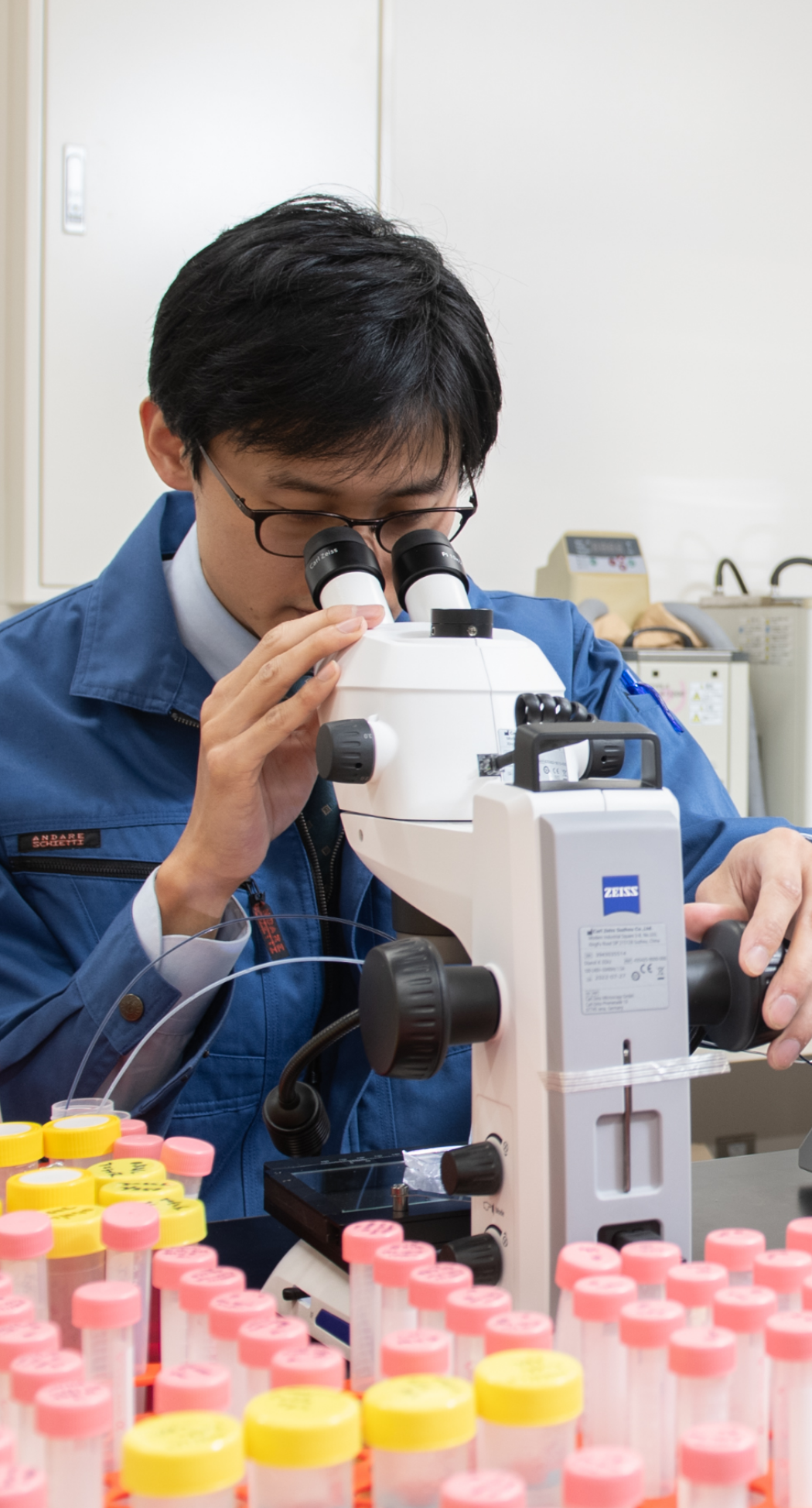
Techniques such as dynamic light scattering (DLS) allow measurement of particle size distributions, and spectroscopic analysis using fluorescent probe molecules enables the evaluation of molecular packing and internal fluidity even at concentrations below 1 mM.
Furthermore, I have developed a simple microfluidic system with a channel width of approximately 0.6 mm, which enables continuous preparation of molecular assemblies.
Specifically, this work is expected to contribute to research areas such as the continuous preparation of drug-loaded carriers like lipid nanoparticles, as well as the synthesis of porous microparticles using molecular assemblies as templates.


| Research | |
|---|---|
| Journal | Journal of Oleo Science, 73(6), 887-894 (2024); doi.org/10.5650/jos.ess24006 |
| Title | Concentration of Diynoic Acids in Bicellar Mixtures Derived from Those Phase Separation |
| Author | Shogo Taguchi, Soh Hamanishi, Hiroshi Satone, Takuji Yamamoto |
| Member | Shogo Taguchi, Hiroshi Satone, Takuji Yamamoto |
| URL | https://doi.org/10.5650/jos.ess24006 |
Learn about the cutting-edge research achievements, advanced technical resources, and know-how that the Graduate School of Engineering at the University of Hyogo can provide. We welcome partners who can create the future together with us by jointly generating new ideas and technologies through collaborative research, commissioned research, and technical consultations.
More