

DNA possesses molecular recognition and self-assembly capabilities, while metallic nanoparticles generate near-field light through interactions with photons. We are developing a “photonic DNA sensor” that integrates these two features to enable highly sensitive and rapid nucleic acid detection. In parallel, we are investigating the photocurrent amplification and molecular detection functions that emerge from this integration, aiming to apply them to next-generation diagnostic technologies.
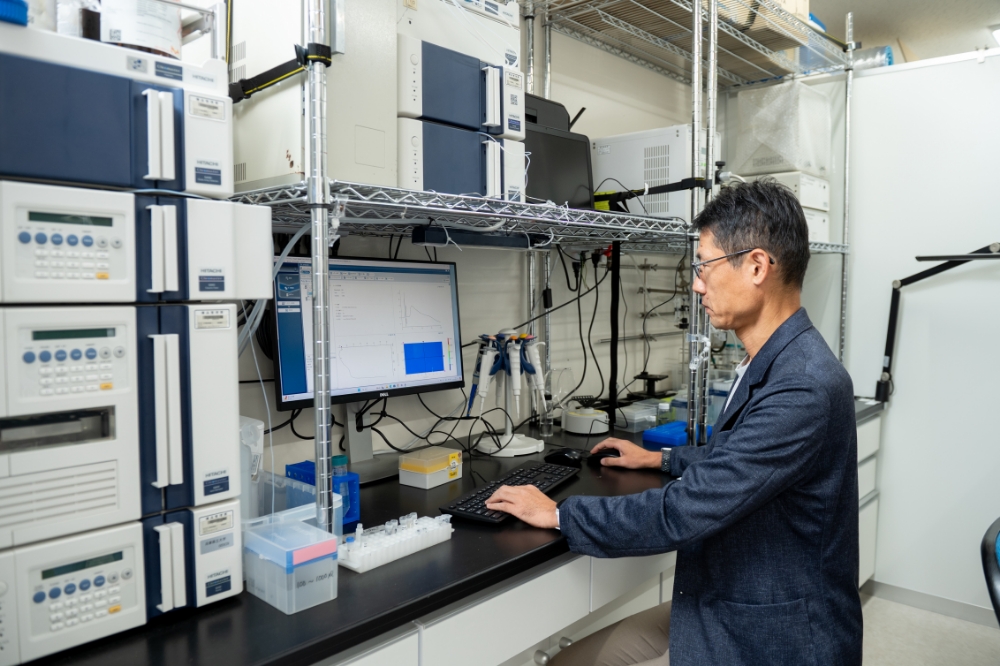
The early diagnosis of infectious diseases and cancer, as well as genetic analysis, requires technologies capable of rapidly and sensitively detecting trace amounts of DNA and RNA. Conventional methods depend on PCR amplification and large analytical instruments, which pose challenges in terms of time and cost. In this study, we are developing a “photonic DNA sensor” that combines the molecular recognition ability of DNA with the near-field optical effect of gold nanoparticles (AuNPs), enabling photocurrent amplification while suppressing background noise. This approach aims to establish a new detection principle that allows direct identification of trace nucleic acids without PCR. If successfully advanced, this technology will lead to compact diagnostic devices capable of on-site biomarker analysis, contributing significantly to personalized medicine and infectious disease control.
DNA and RNA analysis is vital for infectious disease diagnosis, early cancer detection, and precision medicine. While real-time PCR and next-generation sequencing (NGS) are widely used, they remain time-consuming, costly, and require complex sample preparation. Thus, technologies that directly and sensitively detect trace nucleic acids without PCR are strongly needed. We propose a photoelectrochemical approach using gold nanoparticles (AuNPs) that generate near-field light. Combining the strong light-harvesting properties of AuNPs with DNA’s molecular recognition enables highly sensitive and selective detection beyond conventional electrochemical methods. By designing nanoscale structures, optical signals can be amplified to achieve rapid nucleic acid detection, paving the way for practical point-of-care testing (POCT).
In this study, we developed a technique to greatly amplify photocurrent by constructing gold nanoparticle (AuNP)–DNA complexes and utilizing near-field light generated under photoirradiation. By introducing photoresponsive chromophores into DNA and precisely positioning them around AuNPs, we controlled electron transfer pathways and achieved efficient charge separation. Furthermore, by exploiting the double-helix formation of DNA to organize AuNPs at the nanoscale, we confirmed the enhancement of localized electric fields through multilayer nanostructures. As a result, this approach enables rapid and highly sensitive nucleic acid detection without PCR, demonstrating its potential for the development of next-generation medical diagnostic devices.
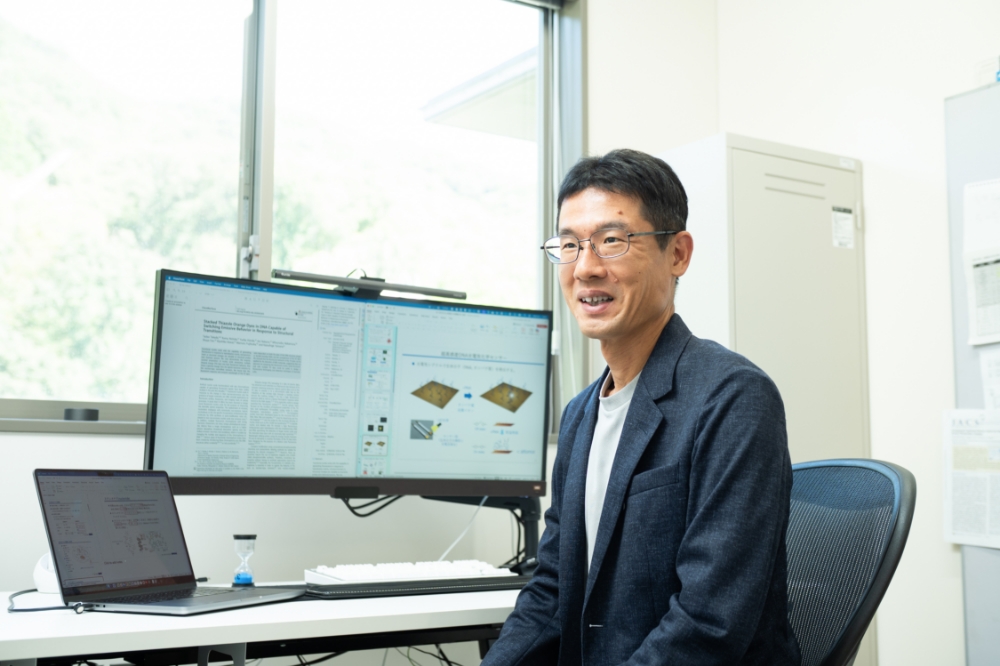
Specifically, this research is expected to lead to the following developments:
• Rapid and highly sensitive diagnostic technologies for infectious diseases without the need for PCR
• Personalized medical devices targeting biomarkers in body fluids
• Compact and low-cost next-generation liquid biopsy systems

Learn about the cutting-edge research achievements, advanced technical resources, and know-how that the Graduate School of Engineering at the University of Hyogo can provide. We welcome partners who can create the future together with us by jointly generating new ideas and technologies through collaborative research, commissioned research, and technical consultations.
More