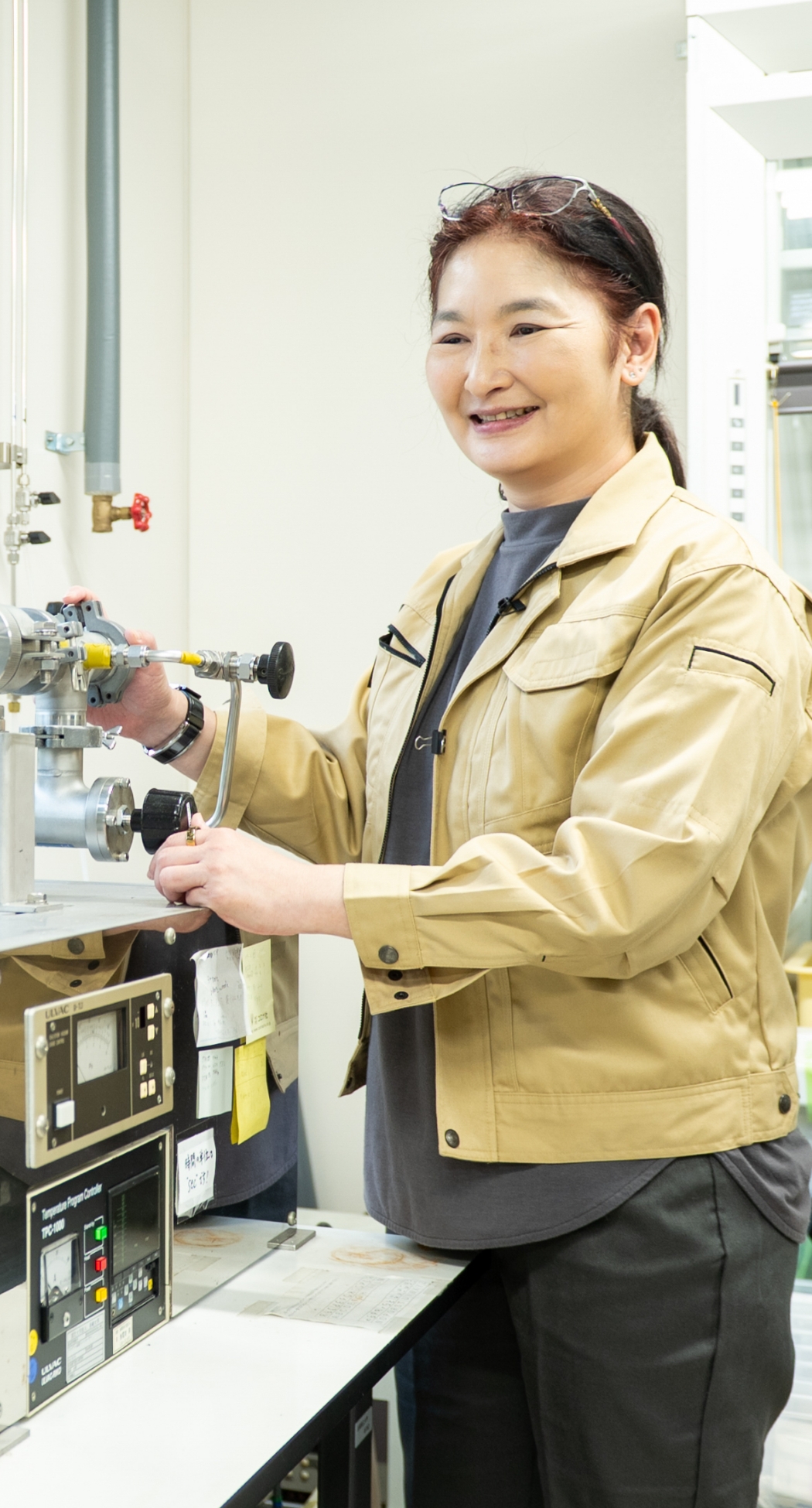
Research on improving the functionality of material interfaces
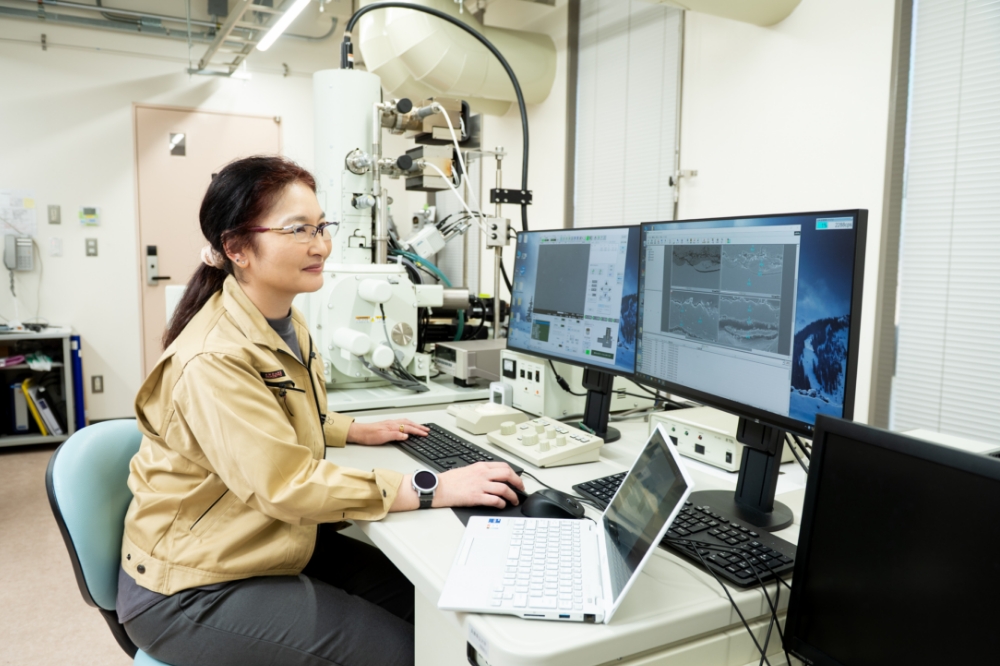
A specific biological titanium alloy (Ti-Nb-Ta-Zr system) was subjected to thermal oxidation treatment to investigate the properties of the formed white oxide layer. The new Ti alloy oxide layer exhibited extremely high peel resistance of up to 70 MPa, comparable to epoxy adhesives, compared to pure titanium (CP Ti). This high adhesion was found to be due to the interface structure having a compositional gradient that occurs between the high density of fine particles of the oxide layer and the substrate. Furthermore, it has been revealed that in this Ti alloy both introverted and outtroverted diffusion occurs during oxidation. This result provides important insights into biomaterial surface design, which requires high durability, such as artificial tooth coatings.
Titanium alloys are essential for artificial bone and implants due to their excellent biocompatibility and mechanical properties. However, the long-term stability of an implant is heavily dependent on the properties of the surface that contacts the biological tissue. The oxide layers formed by thermal oxidation treatment have a low adhesion effect on wear resistance and bone bonding ability, and there is a risk of peeling during use. This research focuses on new Ti-Nb-Ta-Zr alloys and aims to contribute to improving implant durability by elucidating the oxide formation mechanism that provides surface peeling resistance due to thermal oxidation treatment and high adhesion. In particular, it is expected to be applied in applications where abrasion resistance is required.
"This study focuses on a new titanium alloy (Ti–Nb–Ta–Zr system) that is promising as a biomaterial, and investigates in detail the properties of the white oxide layer formed on the surface by thermal oxidation treatment in comparison with pure titanium (CP Ti). The main focus is on evaluating the peel resistance of the oxide layer to the substrate and elucidating the mechanism for achieving its high adhesion.
As a result, the oxide layer of Ti–Nb–Ta–Zr alloy exhibited extremely high peel stress of up to 70 MPa. This is orders of magnitude higher than the CP Ti layer (less than 7 MPa) and is comparable to epoxy adhesives. This high peel resistance was found to be due to the fact that the oxide layer has a high density structure made up of fine particles, and the interface with the substrate has a compositional gradient, which reduces stress concentration. Furthermore, observations using the Au marker method confirmed that during the oxidation process of Ti alloys exhibiting high resistance, not only the outward diffusion of titanium atoms, but also the inward diffusion of alloy elements, which showed that this is important for the formation of dense interface structures.

The highly adhesion white oxide layer of Ti-Nb-Ta-Zr alloys shown in this paper has the prospect of dramatically improving the durability and reliability of existing implants. The high peel resistance of up to 70 MPa is promising as a surface treatment technology for biomaterials that require wear resistance and long-term stability, such as artificial tooth coatings that are frequently subjected to loads and sliding parts of artificial joints. As a highly abrasion-resistant implant surface, it can contribute to the longevity of implants, as a result of the highly abrasion-resistant implant surface. Furthermore, the highly adhesive oxide layer can also serve as an ideal foundation for stable fixation of substances with osteoinduction and antibacterial properties. This will contribute to the realization of safer and more efficient medical devices as a multifunctional implant that combines infection prevention and early zodiac binding.

| Research | |
|---|---|
| Journal | Materials |
| Title | Exfoliation Resistance, Microstructure, and Oxide Formation Mechanisms of the White Oxide Layer on CP Ti and Ti–Nb–Ta–Zr Alloys |
| Author | Miura-Fujiwara, Eri, Soichiro Yamada, Keisuke Mizushima, Masahiko Nishijima, Yoshimi Watanabe, Toshihiro Kasuga, and Mitsuo Niinomi |
| Member | Miura-Fujiwara, Eri |
| URL | https://doi.org/10.3390/ma14216599 |
| Patent Information | |
| Patent Number | Patent No. 6991480 |
| Application Number | 2017-244190 |
| Application Date | 2017/12/20 |
| Publication Date | 2021/12/10 |
| Title of the Invention | White structure and manufacturing method thereof |
| Applicant | University of Hyogo, Kitami Institute of Technology |
| Inventor | Eri Miura, Kyohei Uchida, Naofumi Otsu |
| Joint and Contract Research Achievements | |
| Theme | Research on dental applications of titanium alloy oxide coatings. |
| Partner | Metal product manufacturers, dental laboratory, dental material manufacturers, etc. |
Learn about the cutting-edge research achievements, advanced technical resources, and know-how that the Graduate School of Engineering at the University of Hyogo can provide. We welcome partners who can create the future together with us by jointly generating new ideas and technologies through collaborative research, commissioned research, and technical consultations.
More