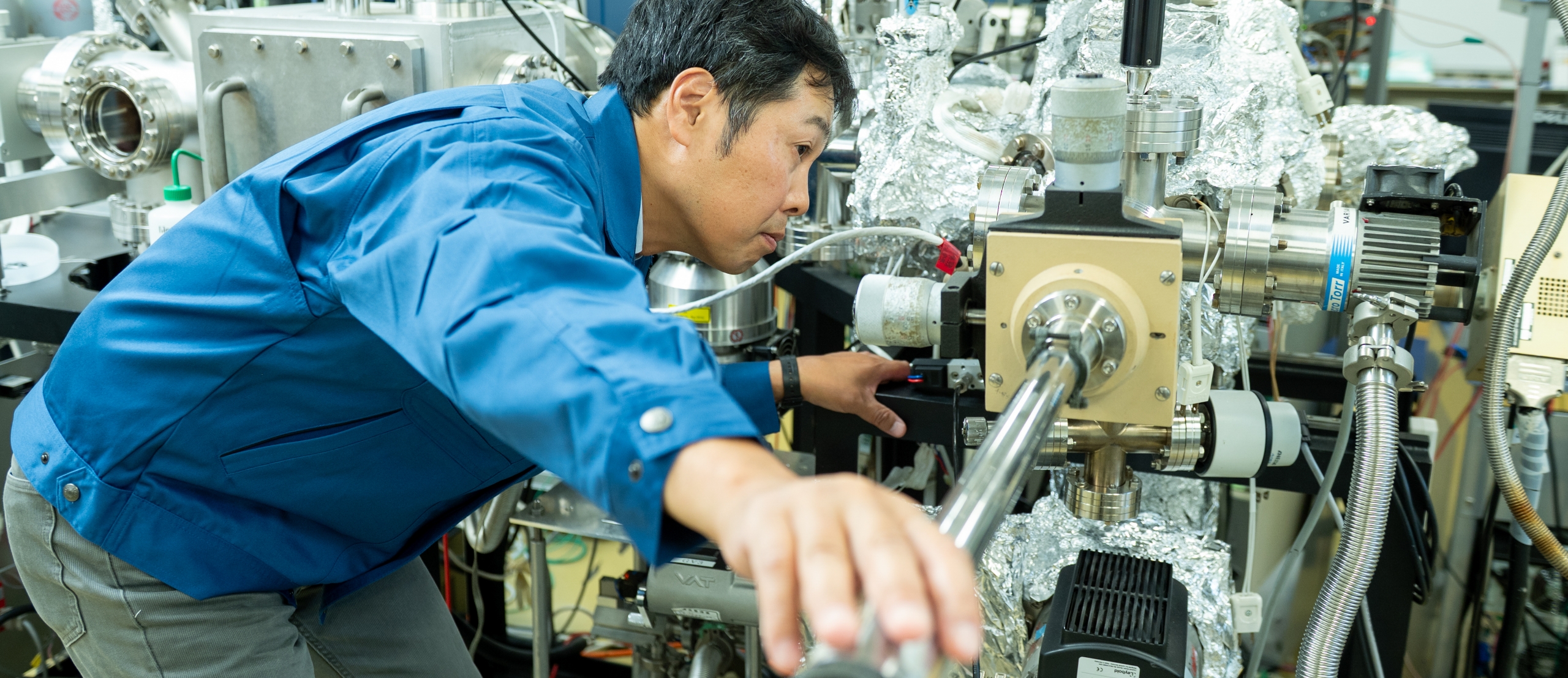
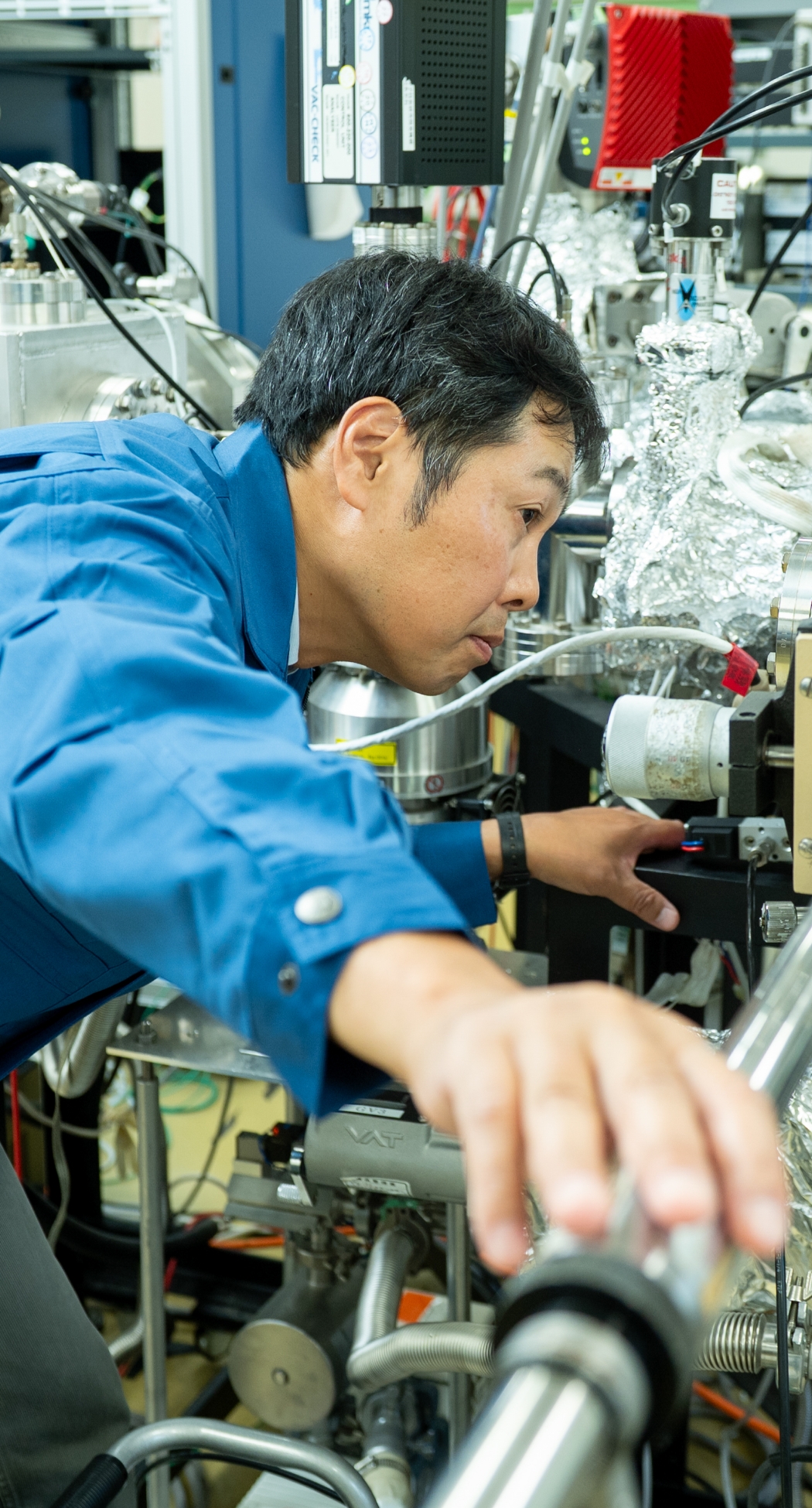
High-speed collisions of gas cluster ions with material surfaces result in the emission of surface atoms, molecules, and cluster fragments. Investigating these emitted species enables the characterization of the surface state of the material.
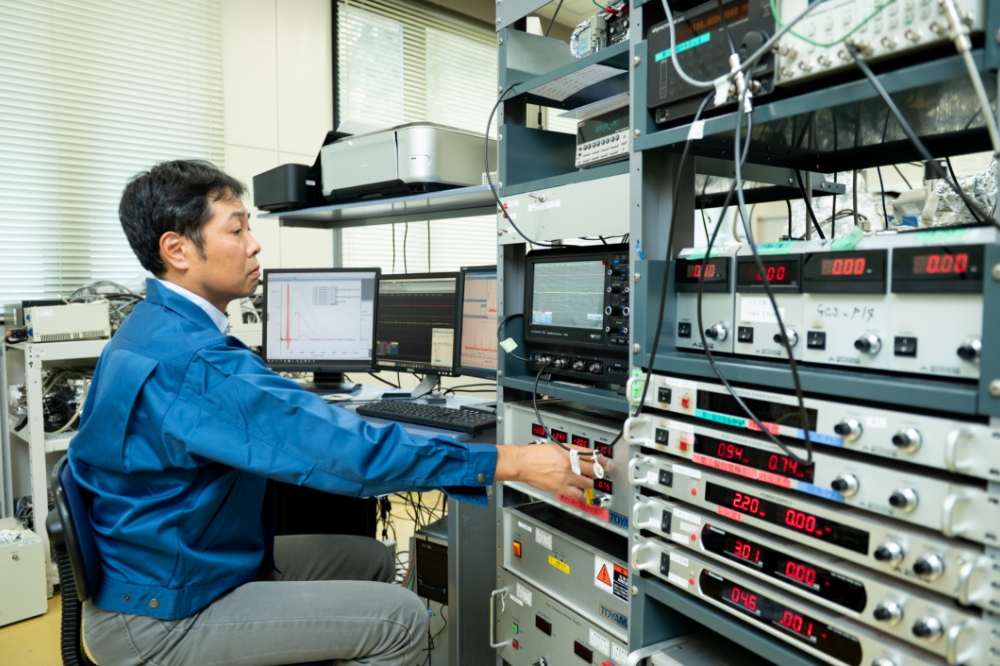
When we want to understand the properties of a material, we sometimes tap its surface and infer its properties from the response. In our research, we employ gas clusters. When gas clusters collide with a surface at high velocity, atoms and molecules are ejected through sputtering, while the clusters themselves may dissociate and scatter. By analyzing these emitted particles, we can obtain both chemical information and mechanical properties of the material. In essence, GCIB enables us to “knock” on the surface and interpret the response, enabling exploration of the otherwise invisible nanoscale world. To achieve more precise and detailed analyses, however, it is essential to understand how the emitted particles are influenced by the surface properties and the underlying reactions. Our goal is to elucidate these mechanisms and apply them to the development of next-generation surface analysis technologies.
Secondary Ion Mass Spectrometry (SIMS) is a surface analytical technique in which an ion beam irradiates a sample surface and the ejected secondary ions are analyzed by mass spectrometry to identify the constituent materials. Since the early 2000s, the introduction of Gas Cluster Ion Beams (GCIB) into SIMS has enabled revolutionary progress, particularly in the analysis of organic materials. More recently, novel approaches have been proposed that utilize dissociative scattering spectra of gas clusters to probe the physical properties of surfaces. To further advance these analytical capabilities with higher sensitivity and precision, it is indispensable to elucidate the underlying physicochemical mechanisms of cluster collisions and to achieve a deeper understanding of both secondary ion generation and dissociation scattering processes.
We have developed a size-selected GCIB-SIMS apparatus capable of generating various types of gas cluster ion beams (GCIBs). Using this apparatus, we have conducted experiments with precise control over the cluster impact energy (E/n), enabling systematic investigation of secondary ion yields, fragmentation behavior, and the characteristics of cluster dissociative scattering. In addition to argon (Ar), we have generated diverse clusters composed of water molecules, alcohols, and other species to examine their chemical effects on secondary ion generation. Through these experiments, we aim to understand the fundamental mechanisms of cluster-surface collision processes and to develop a novel analytical technique that enables simultaneous, high-sensitivity evaluation of both the chemical and physical properties of material surfaces.
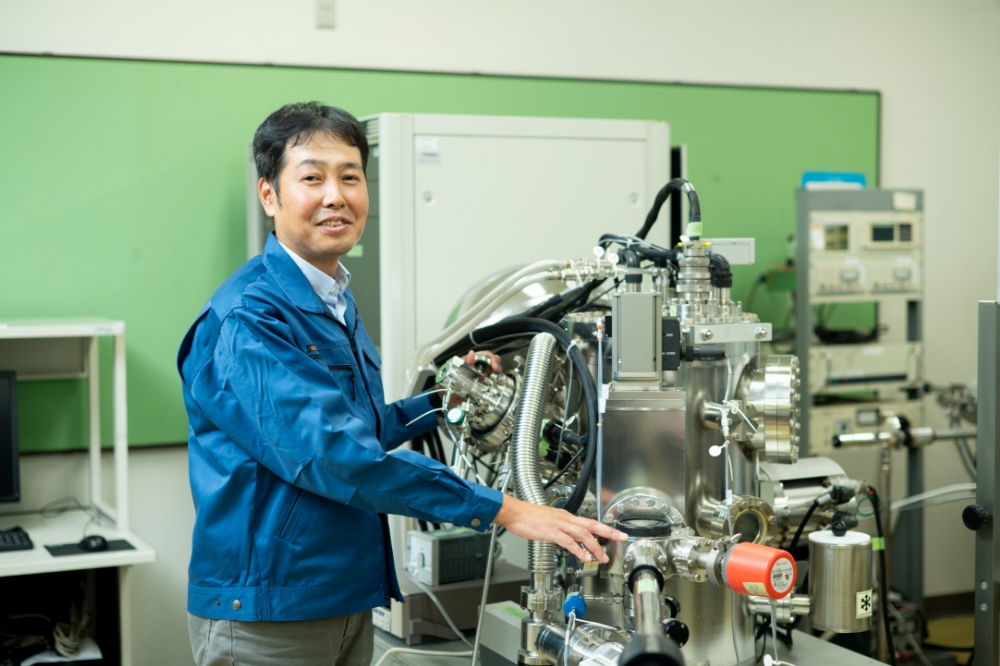
To apply SIMS to more advanced analytical applications, enhancing sensitivity—particularly by improving ionization efficiency—is essential. If the principles behind secondary ion generation through cluster collisions can be elucidated, it will open the door to developing new technologies aimed at higher sensitivity. Moreover, the ability to simultaneously evaluate both chemical information and physical properties is expected to contribute to the advancement of cutting-edge technologies that support our lives across diverse fields, including advanced materials science, medical biology, environmental science, and energy.
| Research | |
|---|---|
| Journal | Nuclear Instruments and Methods in Physics Research Section B: Beam Interactions with Materials and Atoms |
| Title | Internal energy evaluation of sputtered molecule under size-selected argon cluster ion bombardment onto soft or hard sample |
| Author | Taisei Toku, Kousuke Moritani, Yudai Tanaka, Norio Inui |
| Member | Taisei Toku, Kousuke Moritani, Yudai Tanaka, Norio Inui |
| URL | https://doi.org/10.1016/j.nimb.2024.165381 |
Learn about the cutting-edge research achievements, advanced technical resources, and know-how that the Graduate School of Engineering at the University of Hyogo can provide. We welcome partners who can create the future together with us by jointly generating new ideas and technologies through collaborative research, commissioned research, and technical consultations.
More