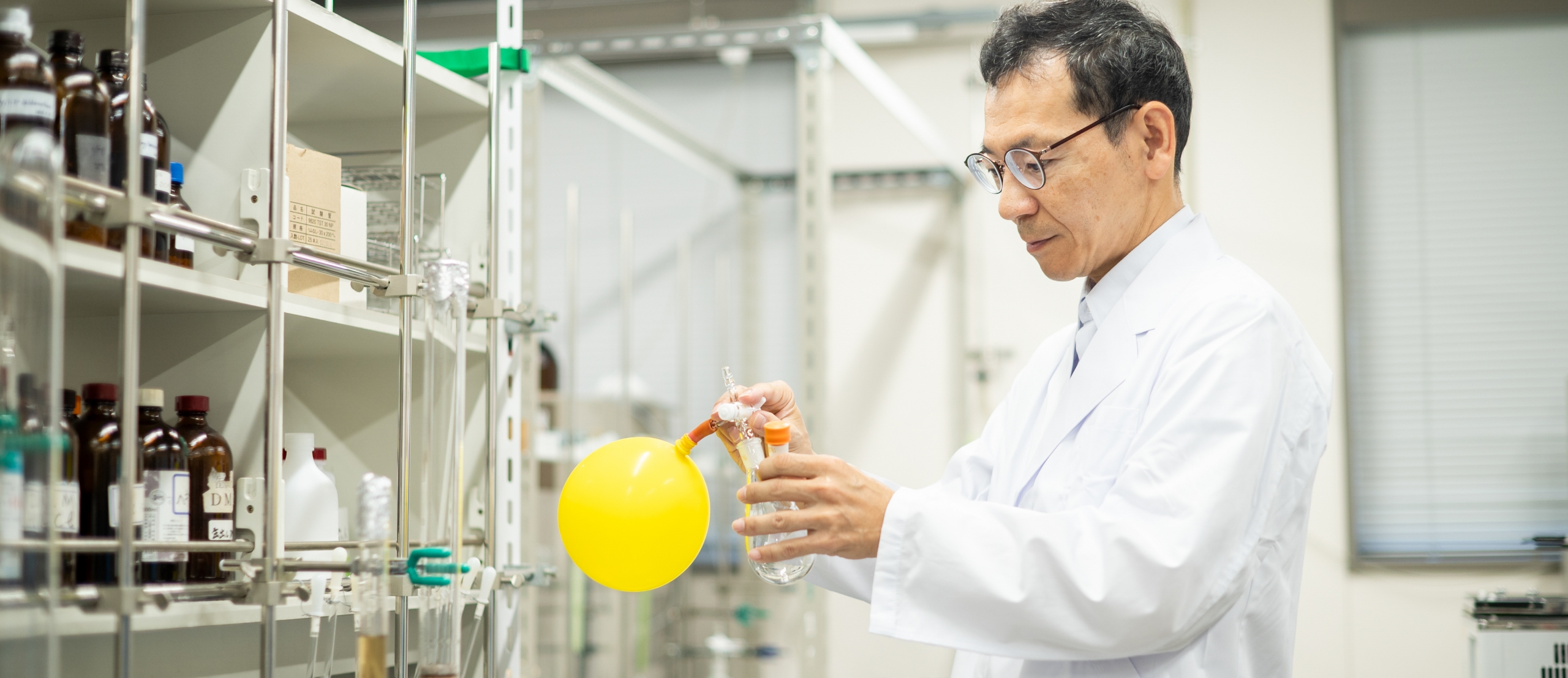
By skillfully combining carbon and typical elements, we are developing new functional organic materials that are useful to society.
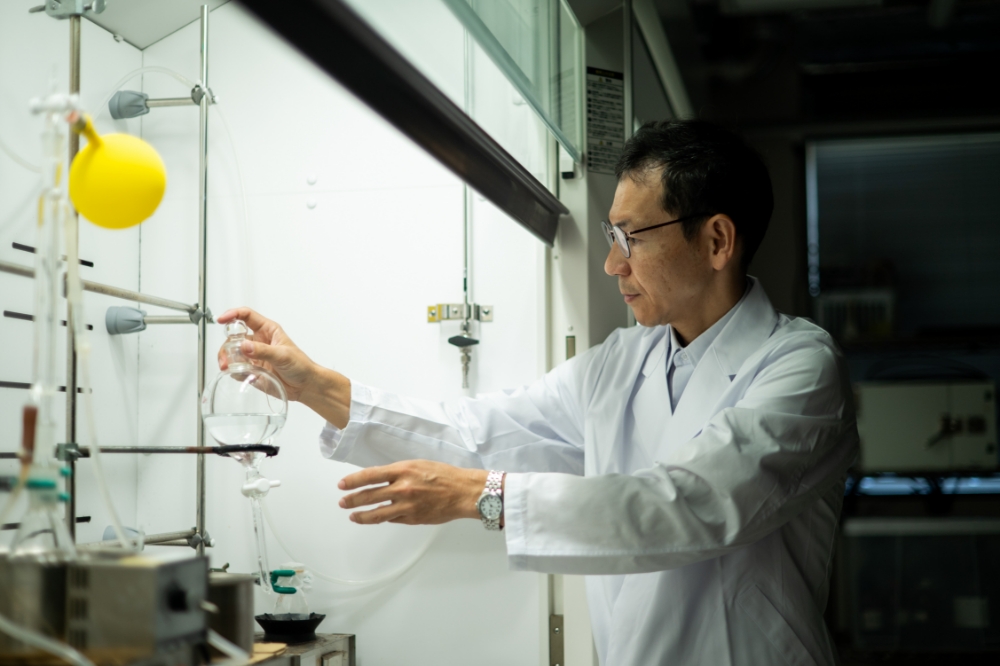
Research and development of materials using organic compounds has advantage that there are no resourch constraints and the molecular design is diverse, making it easy to control physical properties and create multi-functionality. By linking carbon ring units such as benzene with multiple bonds, and by tinkering with the carbon connections and introducing atoms other than carbon, we are developing new semiconductors and dyes that exhibit high elecrical conductivity and vivid colors.
Electronic devices made from organic materials have the advantages of being light and flexible, having abundant carbon resources as raw materials, and having a wide variety of structures and fuctions for the compounds used. The development of organic semiconductors with high charge mobility that enable high-performance transistors, and organic light-emitting compounds that increase the efficiency of organic light-emitting devices, are strongly required for the development of the electronics industry.
We have succeeded in developing n-type organic semiconductors capable of fast electron transport by constructing electron-deficient carbon skeletons by incorporating nitrogen-and oxygen-containg multiple bond units into the carbon skeleton and introducing fluorine-based terminal fuctional groups. Because the physical properties of organic semiconductors are strongly related to molecular arrangement, we are conducting reseach aimed at developing compounds with high dimensional intermolecular interactions. We have also succeeded in assembling asymmetric compounds with dipole moments in the same direction, and are applying this to optical sensor-type semiconductor devices and mechanoluminescent materials. In parallel with these studies, we are also actively working on the development of clean organic synthesis reactions that utilize electricity and light.
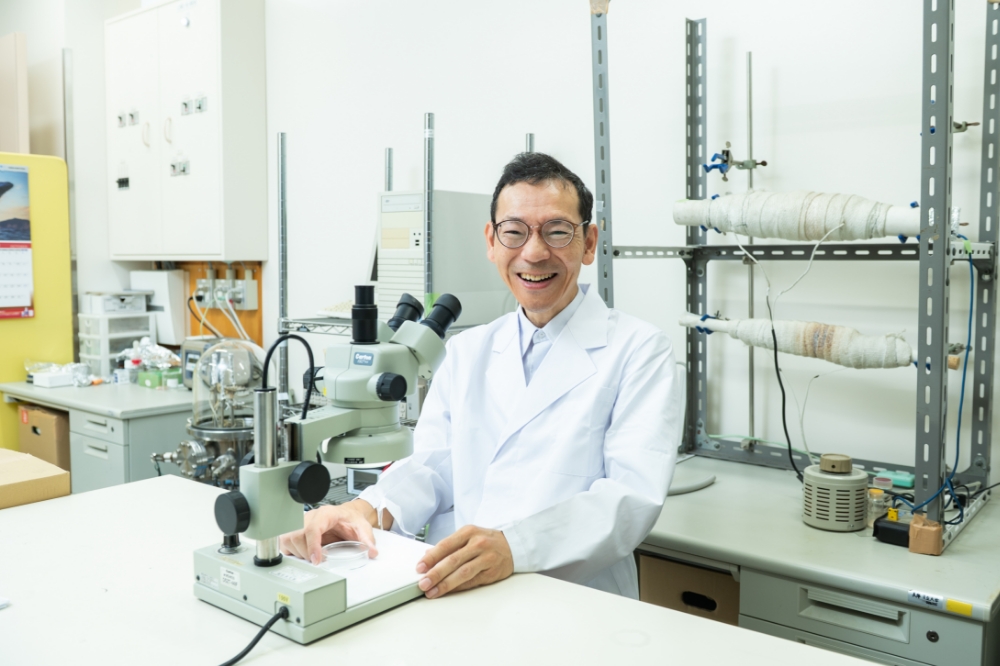
Specifically, this research is expected to lead to the following reserch areas: ・High-performance,energy-efficient organic transistors. ・Light-sensitive molecular sensors and highly efficient chiral light-emitting devices. ・Efficient and clean organic synthesis using visible light or electricity.
| Research | |
|---|---|
| Journal | Materials Advances |
| Title | Synthesis and electron-transport properties of N-trifluoromethylphenyl-phthalimides containing selenophene substituents |
| Author | Jun-ichi Nishida, Yoshiki Morikawa, Akito Hashimoto, Yasuyuki Kita, Hiroshi Nishimoto, Tomofumi Kadoya, Hiroyasu Sato, Takeshi Kawase |
| URL | https://pubs.rsc.org/en/content/articlelanding/2021/ma/d1ma00716e |
| Remarks | Open Access |
Learn about the cutting-edge research achievements, advanced technical resources, and know-how that the Graduate School of Engineering at the University of Hyogo can provide. We welcome partners who can create the future together with us by jointly generating new ideas and technologies through collaborative research, commissioned research, and technical consultations.
More