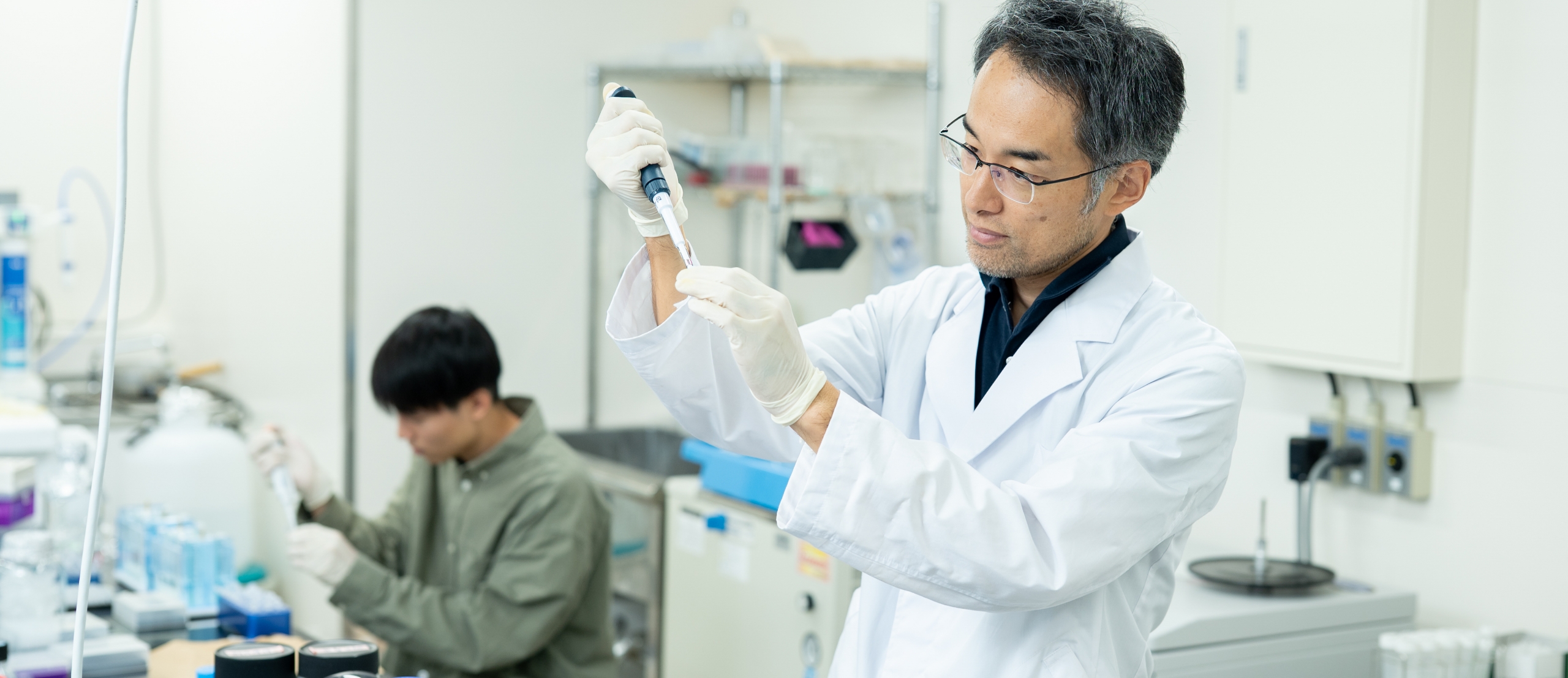
Our research focuses on developing a next-generation protein synthesis platform based on the 'human PURE system' to serve diverse needs from mechanistic basic science to drug discovery and industrial-scale bioproduction.
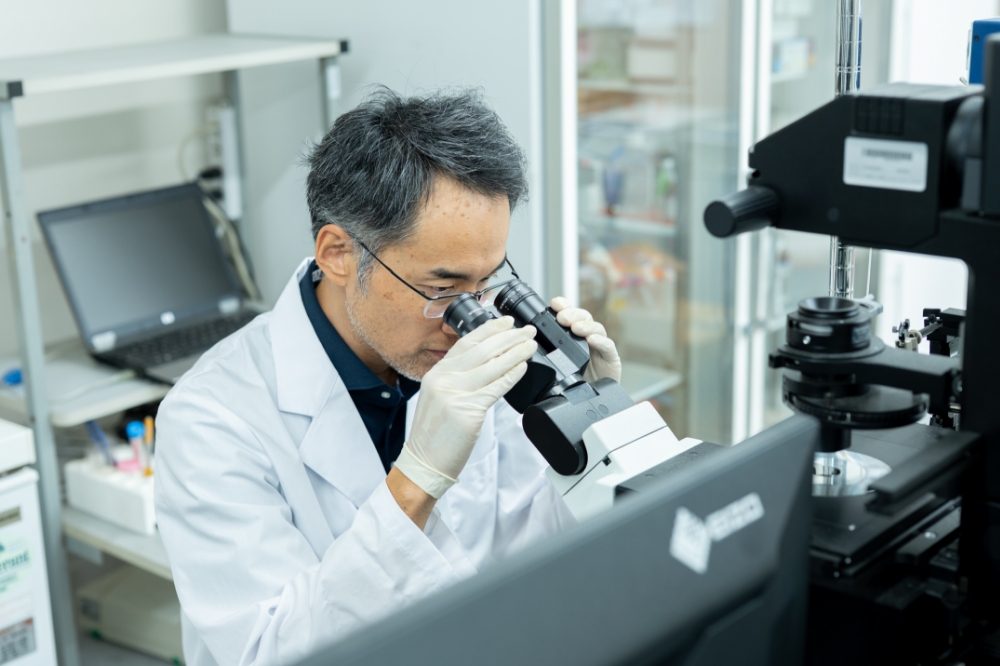
Genetic mutations, viral infections, and various forms of cellular stress can disrupt the functional homeostasis of intracellular proteins, particularly within key systems such as metabolism. Such disruptions are closely linked to the onset and progression of many human diseases. To develop effective strategies for disease prevention and treatment, it is essential to gain a detailed understanding of the mechanisms underlying protein synthesis in human cells, as well as the structural and functional alterations that occur under pathological conditions. To address this need, I have developed a human cell-free protein synthesis system reconstituted with purified translation components. This in vitro system enables precise reconstruction of human protein synthesis without the use of living cells, providing a highly controllable platform for mechanistic studies. Using this approach, I am investigating the molecular mechanisms of viral replication, screening for candidate antiviral compounds, and analyzing the function and regulation of proteins implicated in various human diseases.
A reconstituted cell-free protein synthesis system enables protein translation in vitro by combining multiple purified translation factors. This system is called the PURE system (Protein synthesis Using Recombinant Elements), and an E. coli-based version is commercially available and widely used for analyzing translation mechanisms. However, because there are significant differences between E. coli (a prokaryote) and humans (eukaryotes) in translation mechanisms, protein folding, and post-translational modifications, certain processes such as eukaryote-specific modification reactions and viral protein synthesis of viruses infecting eukaryotic cells cannot be reproduced using the E. coli PURE system. This limitation has posed a serious barrier to advancing research by restricting the in vitro study of key translation steps unique to eukaryotes. This has slowed the development of new insights into viral infections and protein functions involved in human diseases.
I established a method for expressing and purifying human translation-related factors and became the first to develop two versions of the human PURE system. The first is an IRES-dependent protein synthesis system that utilizes the internal ribosome entry site (IRES) of the hepatitis C virus, enabling translation without the need for canonical initiation factors. The second is a cap-dependent protein synthesis system, a fully reconstituted system containing all essential human initiation factors. Because translation consists of initiation, elongation, termination, and recycling steps, these two reconstituted systems allow for detailed molecular-level analysis of each stage of human translation. By applying this technology, I have provided a new platform for fundamental studies of protein translation mechanisms, established disease models using the human PURE system, and conducted analyses of pathogenic virus replication mechanisms as well as screening for antiviral inhibitors. Currently, I am working on developing a system reconstituted to simulate the environment of the endoplasmic reticulum, aiming to enable the synthesis of membrane proteins such as GPCRs, which are important drug targets.
Proteins are essential components of living organisms and are widely used in pharmaceuticals, food, detergents, and other industries. Therefore, developing efficient protein production technologies holds great social importance. I have contributed to human protein synthesis (translation) research by developing the human PURE system. Currently, I am developing a hybrid cell-free system that combines the high-yield protein production capability of E. coli with the complex folding and trafficking mechanisms of human cells. This novel approach will enable both large-scale production and functional reconstitution of complex proteins, establishing a versatile manufacturing platform for basic research and industrial applications.
| Research | |
|---|---|
| Journal | The Journal of Biological Chemistry |
| Title | A translation system reconstituted with human factors proves that processing of encephalomyocarditis virus proteins 2A and 2B occurs in the elongation phase of translation without eukaryotic release factors |
| Author | Kodai Machida, Satoshi Mikami, Mamiko Masutani, Kurumi Mishima, Tominari Kobayashi, Hiroaki Imataka |
| Member | Kodai Machida, Satoshi Mikami, Mamiko Masutani, Kurumi Mishima, Tominari Kobayashi, Hiroaki Imataka |
| URL | https://www.sciencedirect.com/science/article/pii/S0021925820332841?via%3Dihub |
Learn about the cutting-edge research achievements, advanced technical resources, and know-how that the Graduate School of Engineering at the University of Hyogo can provide. We welcome partners who can create the future together with us by jointly generating new ideas and technologies through collaborative research, commissioned research, and technical consultations.
More