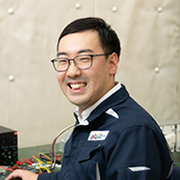
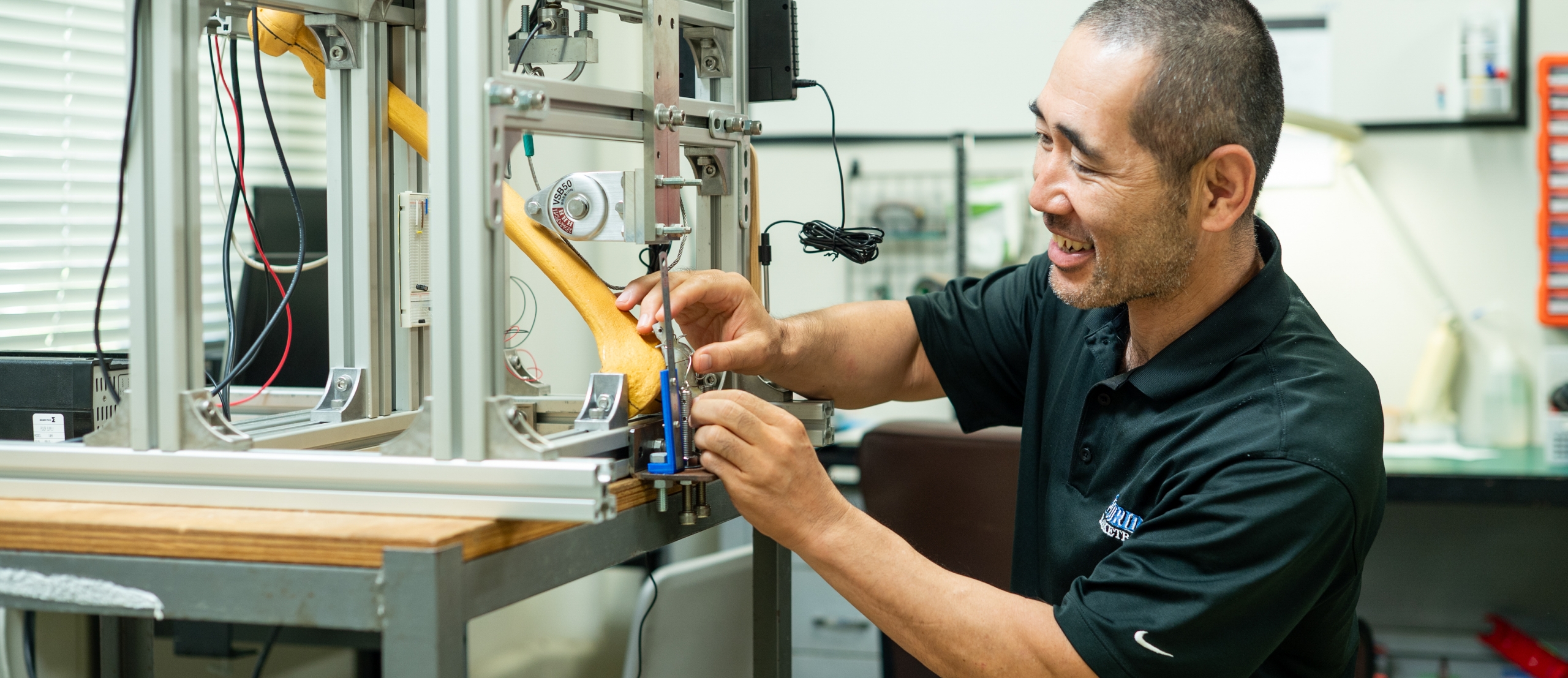
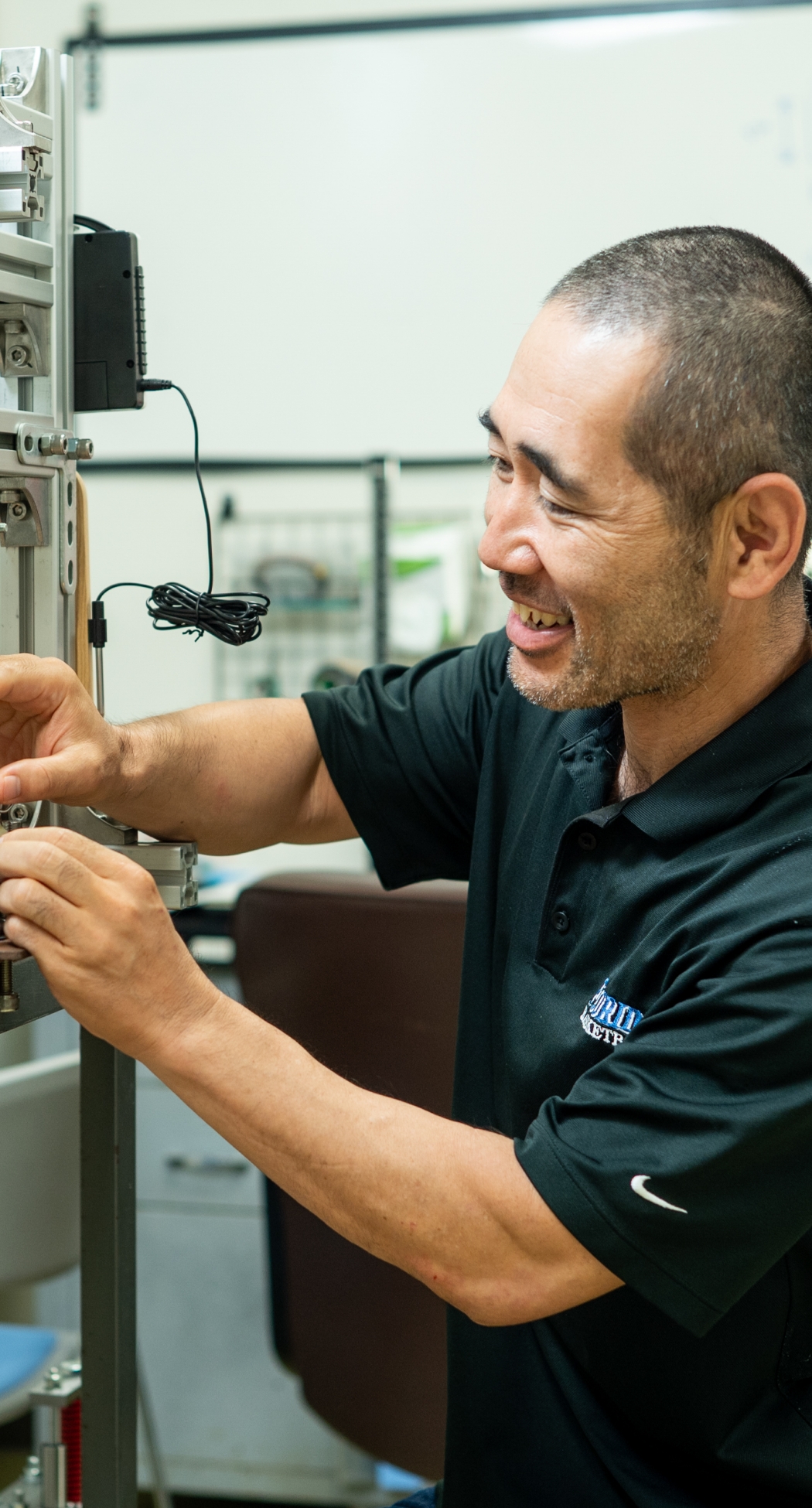
Intraoperative joint reaction force measurements using an instrumented prosthesis.
My research focuses on understanding an analyzing human motion and function from a mechanical engineering perspective.
The number of patients undergoing total joint arthroplasty has been increasing, and revision surgeries are also rising. One of the reasons for revision surgery is joint dislocation. Dislocation could be caused by improper joint positioning or abnormal external forces, but soft-tissue laxity also plays an important role. Since soft-tissue laxity is determined during surgery, it would be valuable for surgeons to assess it intraoperatively.
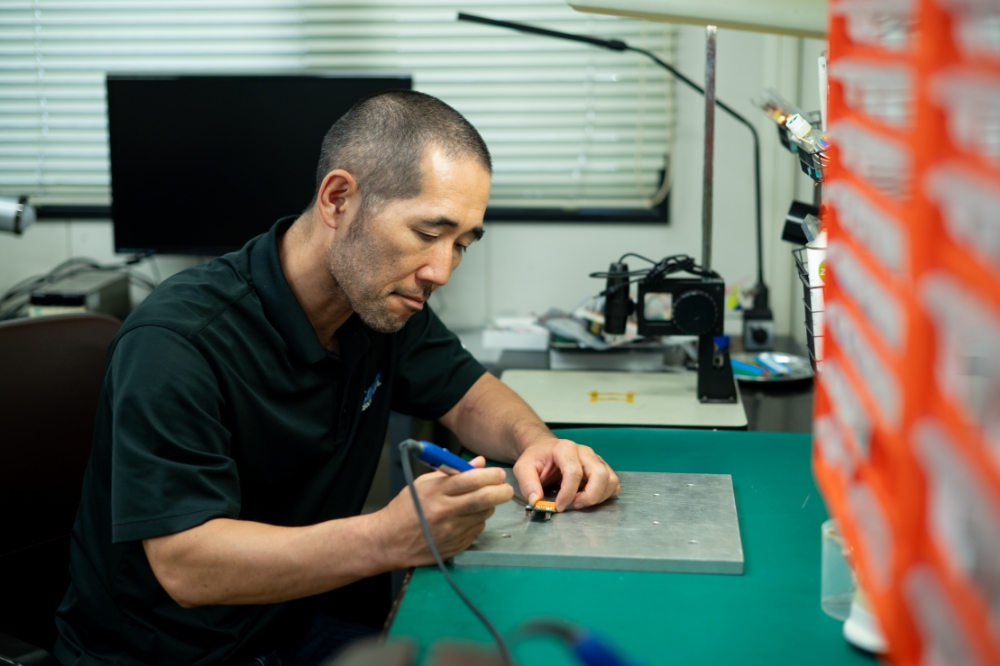
To quantify joint laxity, we measured the joint reaction force—the compressive force between prosthetic components—using a force sensor instrumented prosthesis. We developed a three-axis force sensor that can be embedded within the prosthesis. The sensor uses strain gauges, Hall effect sensors, magnets, or capacitive sensors for force detection. The prosthesis also incorporates electronic circuit boards and batteries to support real-time measurement.
In the near future, our devices may enable surgeons to determine appropriate intraoperative laxity settings and adjust them during surgery. In the distant future, this approach has a potential to improve clinical outcomes by reducing dislocations and other postoperative complications.

| Research | |
|---|---|
| Journal | Sensors and Materials |
| Title | Design and Calibration of a Three-axis Intraoperative Force Sensor for Reverse Total Shoulder Arthroplasty |
| Author | Yusuke Hirai, Yuta Onishi, Masaru Higa |
| Joint and Contract Research Achievements | |
| Period | 2017 |
| Theme | An intraoperative sensor system for total shoulder arthroplasty |
| Partner | Orthosensor, Inc. |
| Budget | $20K |
Learn about the cutting-edge research achievements, advanced technical resources, and know-how that the Graduate School of Engineering at the University of Hyogo can provide. We welcome partners who can create the future together with us by jointly generating new ideas and technologies through collaborative research, commissioned research, and technical consultations.
More