Innovative Semiconductor Formation and Surface Modification for a Safe, Secure, and Sustainable Future Society
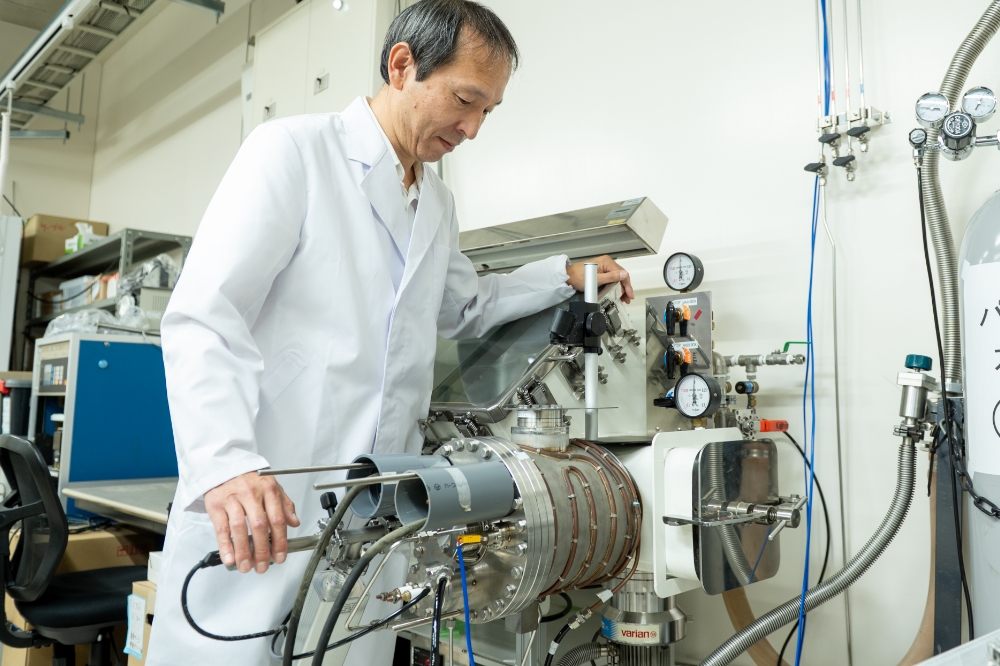
This study establishes a novel method for efficiently generating various radicals (deposition precursors) through catalytic decomposition of gaseous and solid raw materials. Using pentacene, a small molecule with a benzene-ring structure, as a precursor, polymerization enables the creation of graphene nanoribbons (GNRs) and other next-generation semiconductor materials, leading to the development of low-power-consumption semiconductor devices. Furthermore, employing hydrogen gas as a raw material produces highly reactive atomic hydrogen, which can be utilized for surface modification and functionalization of diverse materials. The development of these innovative semiconductor formation techniques and advanced surface modification methods is expected to contribute to the realization of a safe, secure, and sustainable society.
The realization of a safe, secure, and efficient society in the era of advanced information requires the development of high-performance, low-power-consumption computers. However, conventional semiconductor devices based on silicon face inherent limitations in performance, which can potentially be overcome only through the development of new materials. In particular, two-dimensional (2D) materials, in which atoms are bonded in a planar structure, exhibit unique electronic properties distinct from silicon, and are therefore highly promising as next-generation materials for enabling high-performance, low-power-consumption computing.
We have developed a novel method for synthesizing graphene nanoribbons (GNRs) with a width of ~1.2 nm by polymerizing pentacene(Pn), a molecule composed of five linearly fused benzene rings. These GNRs are expected to exhibit a band gap comparable to silicon,making them promising semiconductor materials. The method involves generating dihydropentacene (DHP) via hydrogen reaction on a heated catalytic surface, which then reacts with Pn to form GNRs, representing a reaction pathway distinct from conventional organic synthesis. Additionally, we utilize atomic hydrogen for surface functionalization of semiconductors, metals, and polymers, elucidating reaction mechanisms and enabling prediction and mitigation of material degradation. This research contributes to the development of low-power semiconductor devices and supports the realization of a sustainable hydrogen-based society.
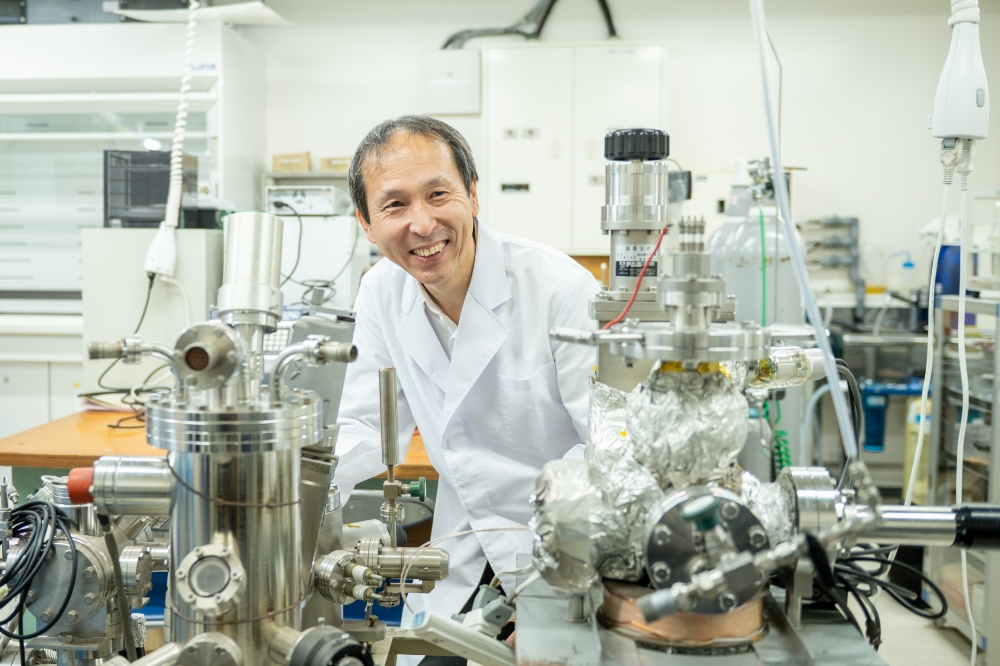
Specifically, this research is expected to lead to the following areas:
・Development of next-generation electronic devices with high speed and low power consumption
・Creation of functional organic molecules based on novel organic synthesis methods
・Establishment and application of key technologies supporting the realization of a hydrogen-based society"
| Research | |
|---|---|
| Journal | Journal of Photopolymer Science and Technology 36(4) 253-259 |
| Title | Surface Modification of Fluoropolymers by Atomic Hydrogen |
| Author | Akira Heya, Hideo Otsuka, Koji Sumitomo |
| Patent Information | |
| Patent Number | 2005-351599 |
| Application Number | 2005/12/5 |
| Application Date | 2007/6/21 |
| Title of the Invention | Plastic Surface Treatment Method for Functionalization |
| Applicant | Hyogo Prefecture |
| Inventor | Akira heyae, Naoto Matsuo |
Learn about the cutting-edge research achievements, advanced technical resources, and know-how that the Graduate School of Engineering at the University of Hyogo can provide. We welcome partners who can create the future together with us by jointly generating new ideas and technologies through collaborative research, commissioned research, and technical consultations.
More