
Elucidation of hydrogen-related problems in plating and hydrogen embrittlement of substrate metals
Electro and electroless plating are techniques for forming thin metal films on material surfaces in aqueous solutions, which are used to surface treatment of electronic components and machine parts. In these applications, hydrogen co-deposited in the plating films causes blisters, cracks and nanovoids in the films as well as hydrogen embrittlement of the substrate metals, which are problems that need to be solved. It has been difficult to analyze the trace amount of diffusible hydrogen in the plating films up until now. However, it has recently become possible to clarify the existing state and behavior of hydrogen in plating films by making full use of analytical technics such as thermal desorption spectroscopy, electrochemical hydrogen permeation method, X-ray crystallography, and transmission electron microscope observation.
Plating is widely used in a variety of applications, including forming copper wiring on LSIs and printed circuit boards inside electronic devices such as personal computers and smartphones, surface treatment for mounting fine electronic components, surface treatment for corrosion prevention and surface hardening of large machine parts, and in the manufacture of jewelry. In the plating process, hydrogen is generated concurrently with the deposition of metal atoms, and some of these hydrogen atoms co-deposits in the films, which causes cracks, blisters, and nanovoids, as well as changes in physical properties of films over time and hydrogen embrittlement of the substrate metals. To solve these problems, it is necessary to elucidate the behavior of hydrogen in the plated films.
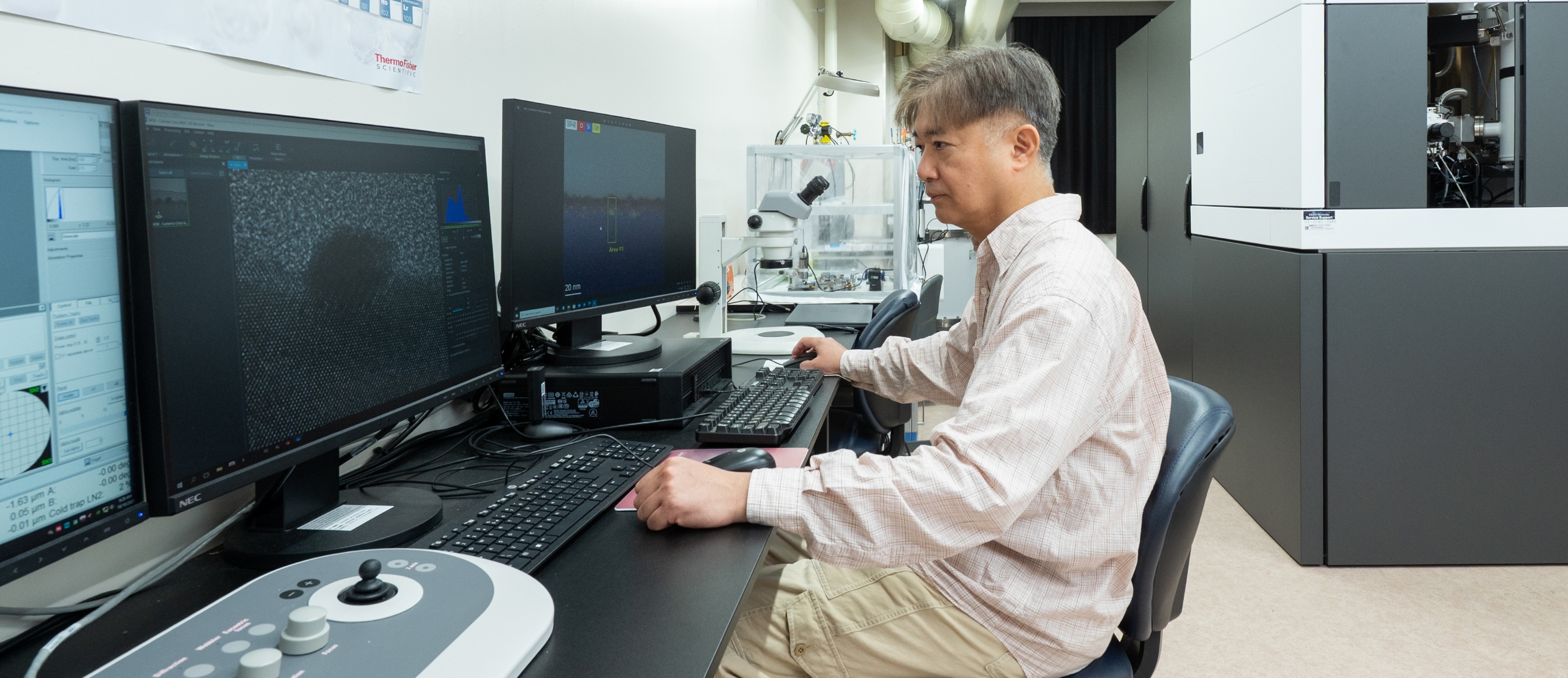
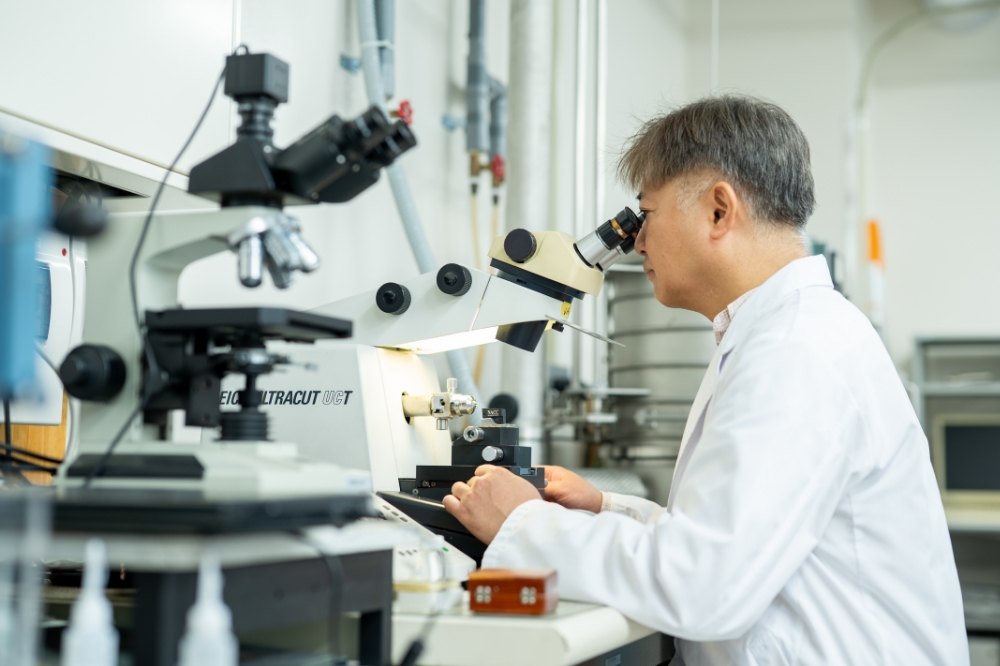
In our laboratory, we analyze the amount and existing states (interstitial site, vacancy, grain boundary, nanovoid) of hydrogen co-deposited in plated films using thermal desorption spectroscopy, crystallographic structure analysis by X-ray diffraction, and the nanostructure observation by transmission electron microscope. We have previously clarified that the large number of atomic vacancies generated with the co-deposition of hydrogen promotes room-temperature grain growth in electroplated Cu films, that interstitial hydrogen generates compressive stress in electrolessly plated Cu films, and that vacancy-hydrogen clusters remaining in aluminum alloys after electroless Ni-P plating cause hydrogen embrittlement.
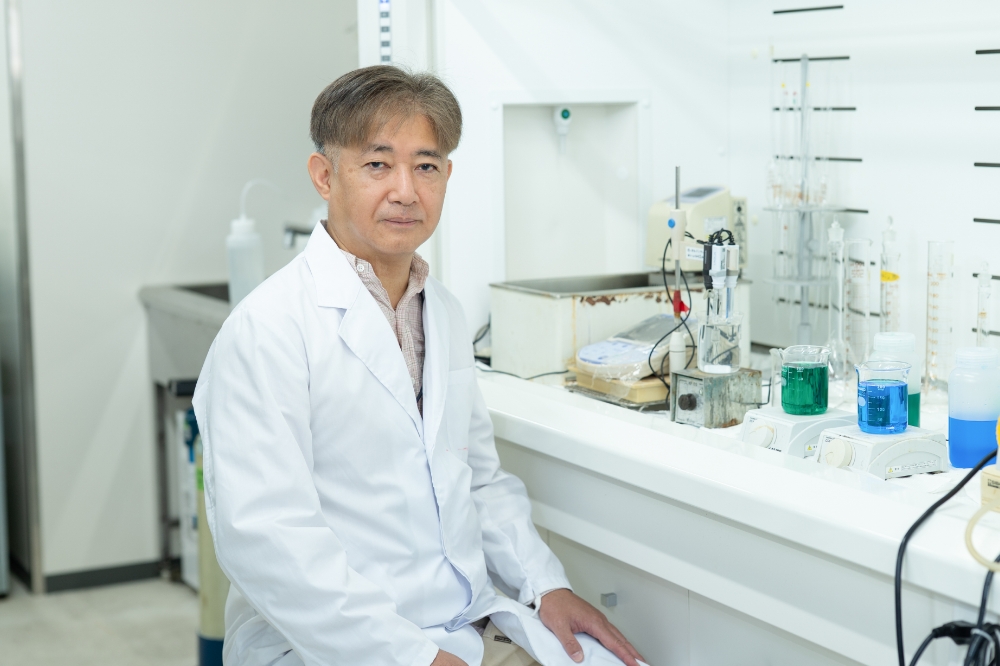
Recently, we have introduced a special specimen holder for observing electrode surfaces in liquid using a transmission electron microscope, and are attempting to observe the hydrogen generation process during electro and electroless plating. We aim to clarify the behavior of hydrogen in plating films and solve various hydrogen-related problems and hydrogen embrittlement. Further, it is expected that these results will contribute to the development of next-generation high-speed communication devices and the construction of a safe hydrogen infrastructure.
| Research | ||
|---|---|---|
| Journal | Journal of the Japan Institute of Metals and Materials, 88, 233-238 (2024). | |
| Title | Influence of Co–Deposited Hydrogen on Microstructure of Electrodeposited Platinum Films from Chloro–Complex Solution | |
| Author | N. Fukumuro, T. Kinoshita, T. Hashimoto and S. Yae | |
| Member | N. Fukumuro, T. Hashimoto and S. Yae | |
| URL | https://doi.org/10.2320/jinstmet.J202407 | |
| Joint and Contract Research Achievements | ||
| Period | Apr. 2019 ~ Mar. 2021 | |
| Theme | Improvement of resistance for hydrogen embrittlement by means of precise surface modification in aluminum alloys | |
| Partner | The Light Metal Educational Foundation, Inc. | |
| Budget | Total: 24,000,000 JPY(Contribution: 7,000,000 JPY) | |
| Remarks | Joint research with Osaka University and Hiroshima Institute of Technology | |
| Information on conferences, exhibitions, and other related events | The Japan Institute of Metals and Materials, The Surface Finishing Society of Japan, The Japan Institute of Light Metals | |
Learn about the cutting-edge research achievements, advanced technical resources, and know-how that the Graduate School of Engineering at the University of Hyogo can provide. We welcome partners who can create the future together with us by jointly generating new ideas and technologies through collaborative research, commissioned research, and technical consultations.
More