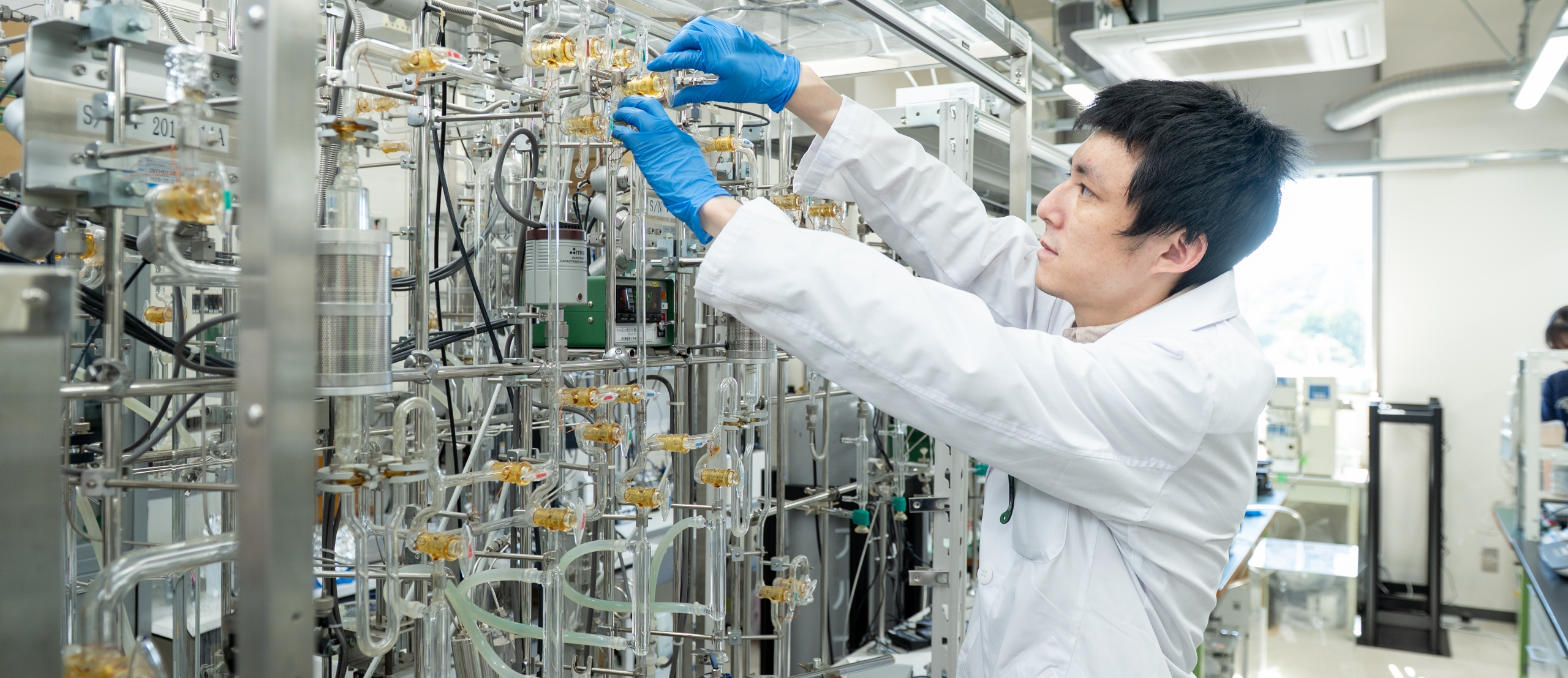
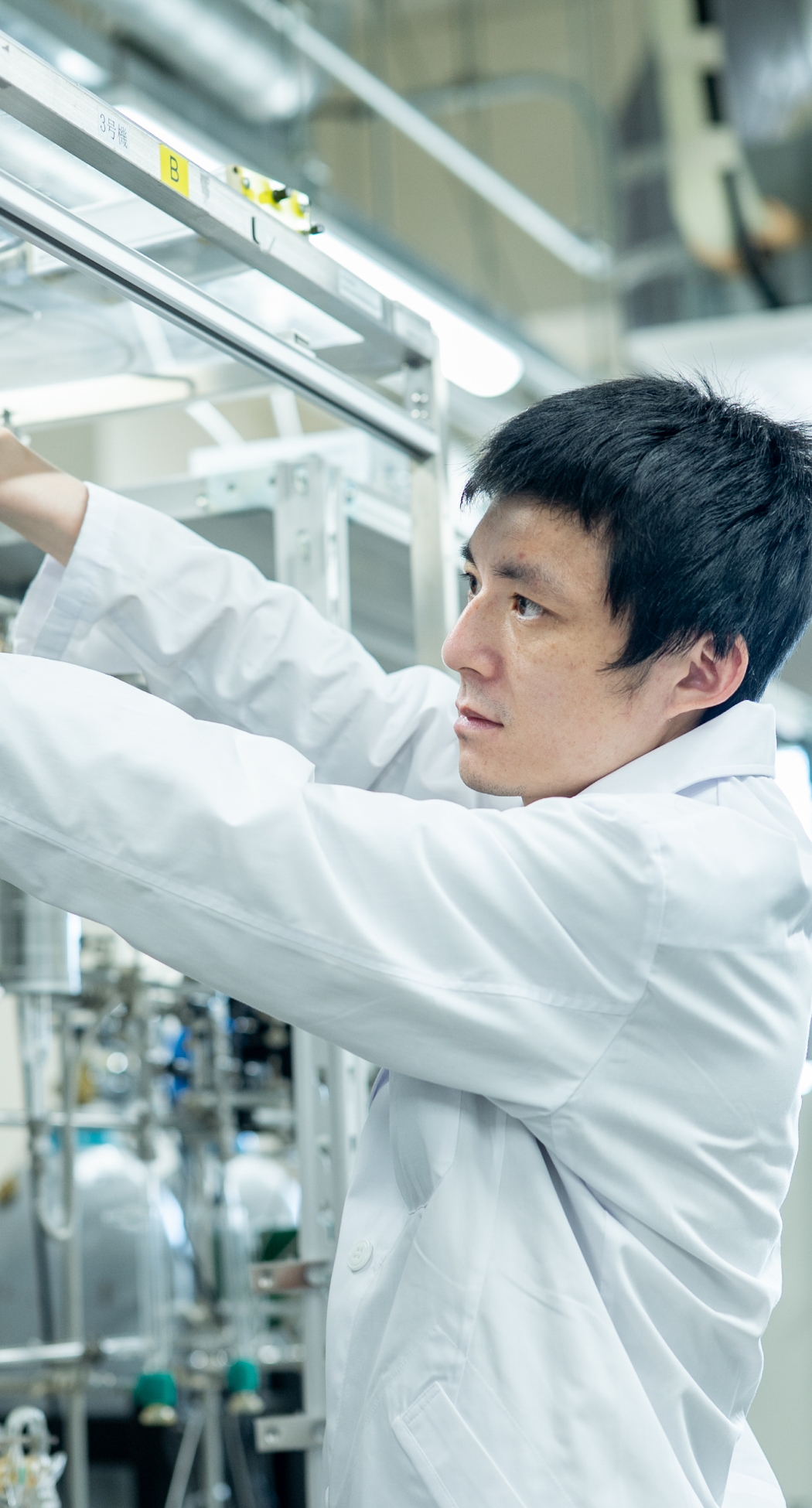
Solar fuel production via photocatalysis refers to the technology of using sunlight to convert abundant resources such as water and carbon dioxide into clean fuels like hydrogen and hydrocarbons. As a form of artificial photosynthesis, it has attracted great attention for its potential to enable sustainable energy supply while reducing greenhouse gas emissions. Key research areas include the development of highly efficient photocatalyst materials, understanding reaction mechanisms, and optimizing electrochemical processes.
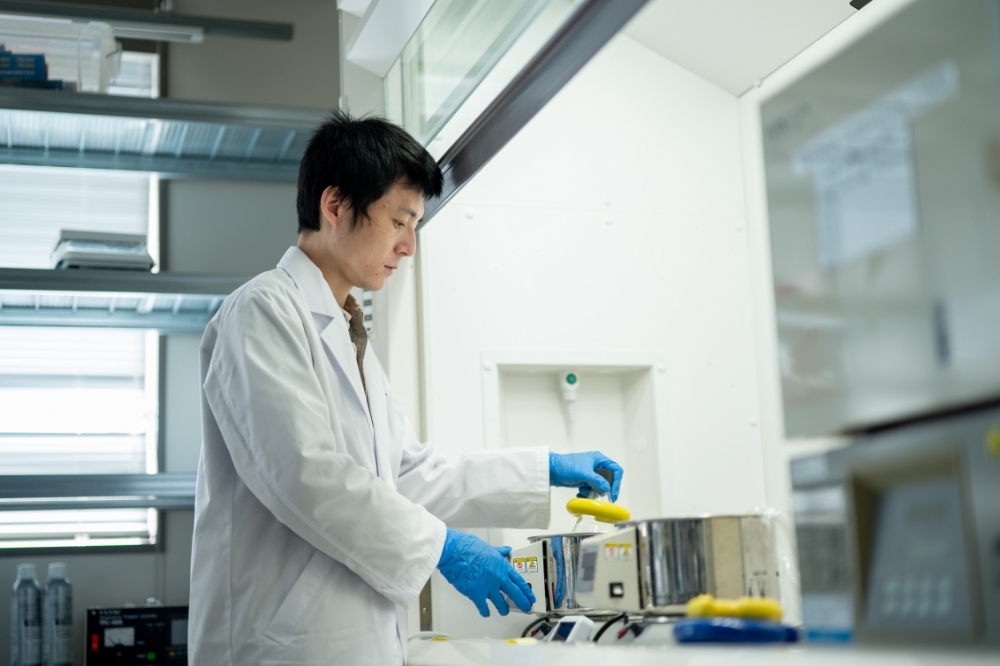
Our laboratory works on artificial photosynthesis — a technology that uses sunlight to make useful chemicals, just like plants do. We mainly focus on using special powdered photocatalysts to split water into hydrogen and oxygen, or to produce hydrogen peroxide, all under light. This means we are turning sunlight into clean chemical energy, which is essential for a carbon-neutral society and solving the global energy crisis.
Our research combines catalyst design, semiconductor science, and electrochemistry to create better materials that can efficiently use sunlight. We study these materials using advanced analysis techniques and computer simulations to understand and improve how they work. By doing this, we hope to build sustainable systems for clean chemical production.
We also work closely with researchers in other countries to tackle global energy and environmental challenges together. Our ultimate goal is to contribute to a future where solar energy helps create the chemicals and fuels we need without harming the planet.
In recent years, reducing our dependence on fossil fuels has become a global priority to tackle climate change and ensure energy security. Developing technologies that use renewable energy to produce clean chemical energy is essential for building a sustainable, carbon-neutral society. Against this backdrop, artificial photosynthesis and photocatalytic solar fuel production — which aim to efficiently generate clean fuels while minimizing carbon dioxide emissions — are attracting significant attention from both industry and academia as promising next-generation green chemical processes.
Photocatalytic reactions using particulate photocatalysts are considered one of the simplest and most cost-effective approaches to artificial photosynthesis, thanks to their straightforward material synthesis and potential for large-scale application. Under light irradiation, photocatalysts drive reactions that produce high-energy-density chemical products, enabling the conversion of intermittent and variable solar energy into storable chemical energy.
Our research primarily focuses on photocatalytic water splitting for hydrogen (H₂) production and oxygen reduction for hydrogen peroxide (H₂O₂) generation. These reactions use abundant reactants (H₂O and O₂) and are more thermodynamically favorable than other photocatalytic processes such as CO₂ reduction. Both H₂ and H₂O₂ are clean energy carriers and can be utilized in fuel cells for sustainable power generation. Project 1: Development of Wide-Spectrum-Responsive Photocatalysts
Oxides such as SrTiO₃ have been widely studied as photocatalysts, but their solar energy conversion efficiency is limited by poor visible-light absorption. In contrast, metal-doped oxides (e.g., Rh-doped SrTiO₃), oxynitrides (e.g., LaTiO₂N), and oxysulfides (e.g., Gd₂Ti₂O₅S₂) exhibit strong absorption across the visible-light spectrum, extending up to ~650 nm. Despite this advantage, these materials still face challenges in achieving high conversion efficiency for the absorbed light. Activating and optimizing these novel materials is essential for advancing artificial photosynthesis. Project 2: Understanding Photochemistry in Photocatalytic Reactions
Photocatalytic reactions involve two key processes: charge separation within the bulk of the photocatalyst and charge transfer across the photocatalyst/(cocatalyst)/water interface. Although these processes play crucial roles in photocatalytic performance, they are not yet fully understood. This project aims to unravel these complex mechanisms through advanced (photo)electrochemical and spectroscopic analyses. The insights gained will help guide the design of more efficient photocatalytic materials. Project 3: Development of Scalable Photocatalyst Panels
While powdered suspension-type photocatalysts have been widely researched for artificial photosynthesis, practical implementation requires the development of scalable and cost-effective fixed-bed reactors, such as photocatalyst panels. We are developing portable and low-cost photocatalyst panels using efficient doctor-blade coating techniques to enable practical solar fuel production at larger scales.
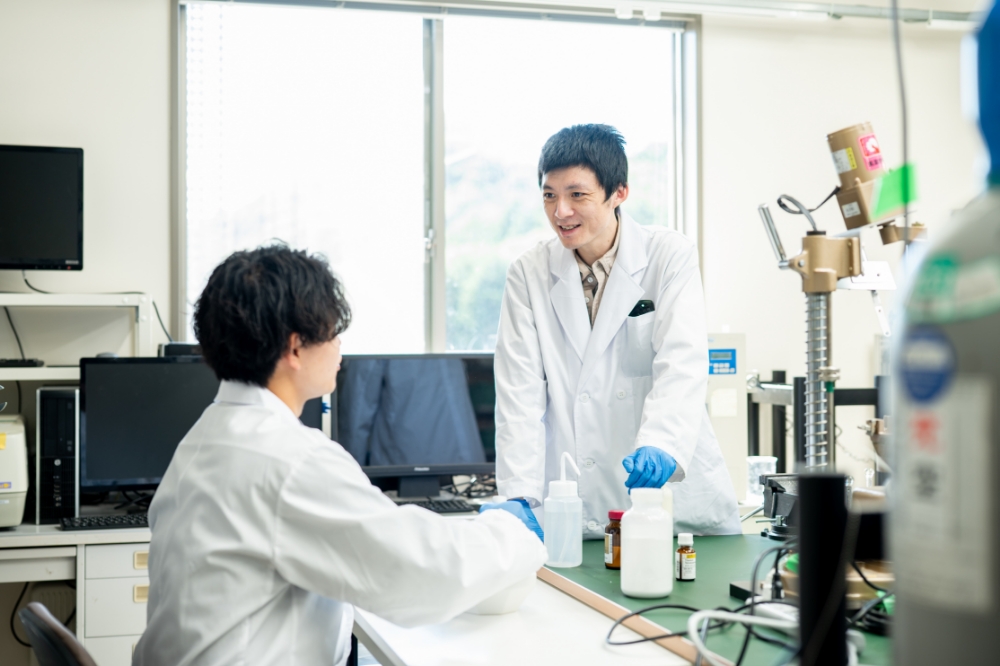
Increasing solar energy conversion efficiency remains the primary target of our photocatalyst research.
Advanced materials need to be tested in scalable devices under real outdoor conditions, beyond the laboratory.
Integrating the latest AI technologies will help accelerate material development and optimization for practical solar fuel production.
| Research | |
|---|---|
| Journal | Angew. Chem. Int. Ed. 2025, 64, e202414628 |
| Title | Simultaneous Structural and Electronic Engineering on Bi- and Rhco- doped SrTiO3 for Promoting Photocatalytic Water Splitting |
| Author | Zhenhua Pan,* Junie Jhon M. Vequizo, Hiroaki Yoshida, Jianuo Li, Xiaoshan Zheng, Chiheng Chu, Qian Wang, Mengdie Cai, Song Sun, Kenji Katayama, Akira Yamakata, and Kazunari Domen |
| Member | Pan, Junie, Yoshida, Wang, Yamakata, Katayama, Domen et al. |
| URL | https://onlinelibrary.wiley.com/doi/full/10.1002/anie.202414628 |
Learn about the cutting-edge research achievements, advanced technical resources, and know-how that the Graduate School of Engineering at the University of Hyogo can provide. We welcome partners who can create the future together with us by jointly generating new ideas and technologies through collaborative research, commissioned research, and technical consultations.
More