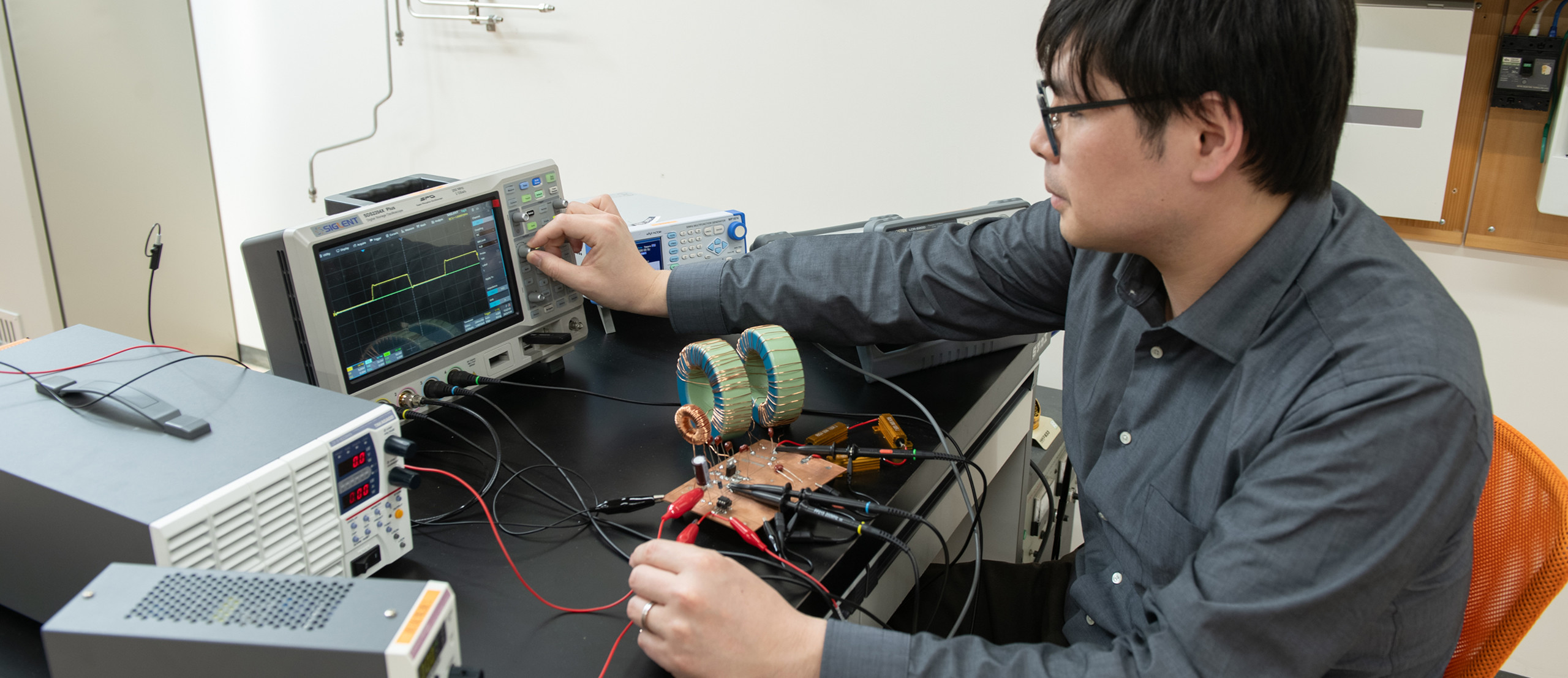
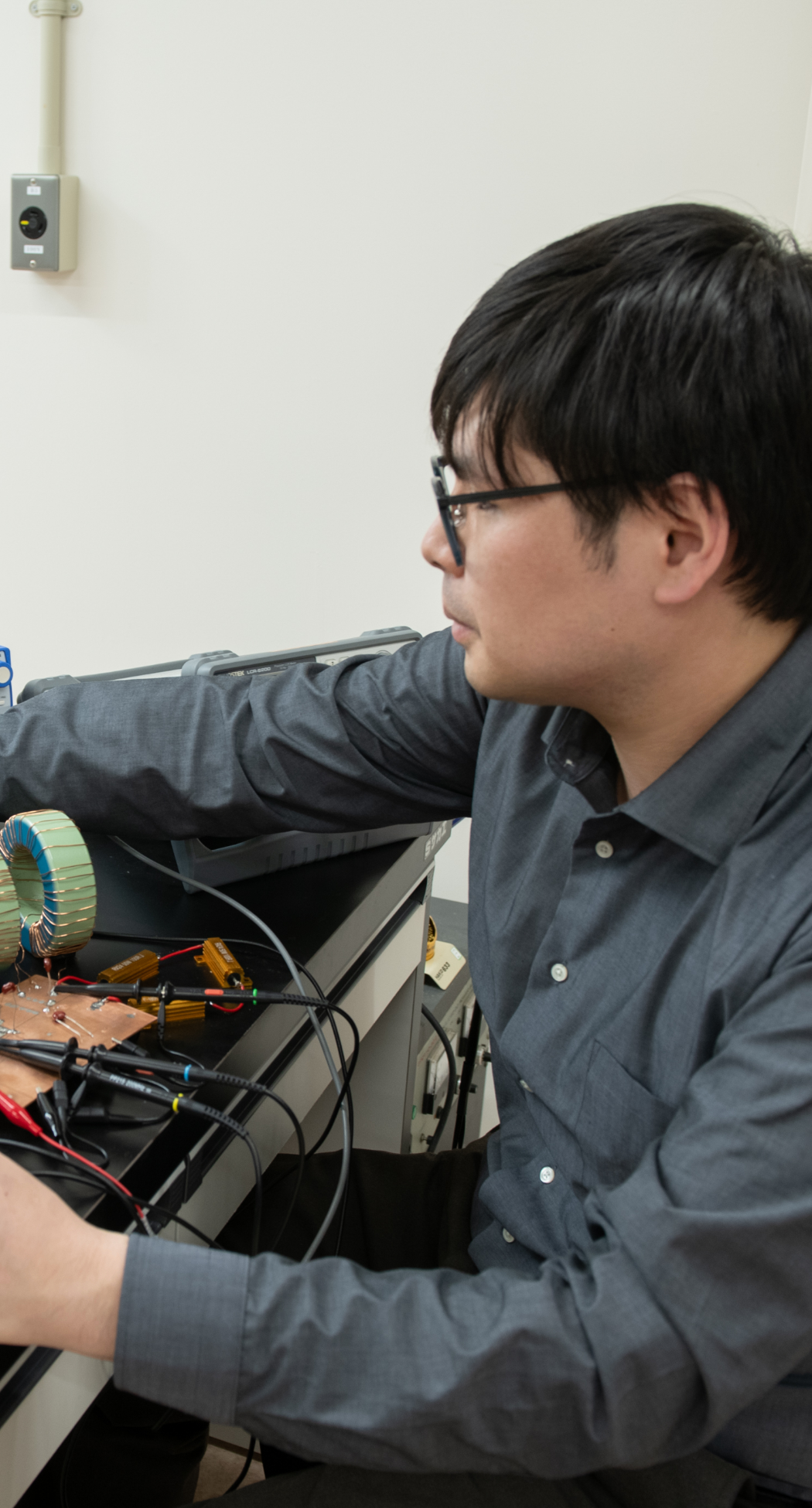
In recent years, the advent of next-generation power semiconductor devices such as SiC and GaN has accelerated the trend toward higher switching frequencies in power supply circuits. However, increasing the switching frequency inevitably leads to higher switching losses. In this study, we derive analytical expressions for a specific circuit model and determine the circuit parameters that satisfy both soft-switching operation and load-independent operation.
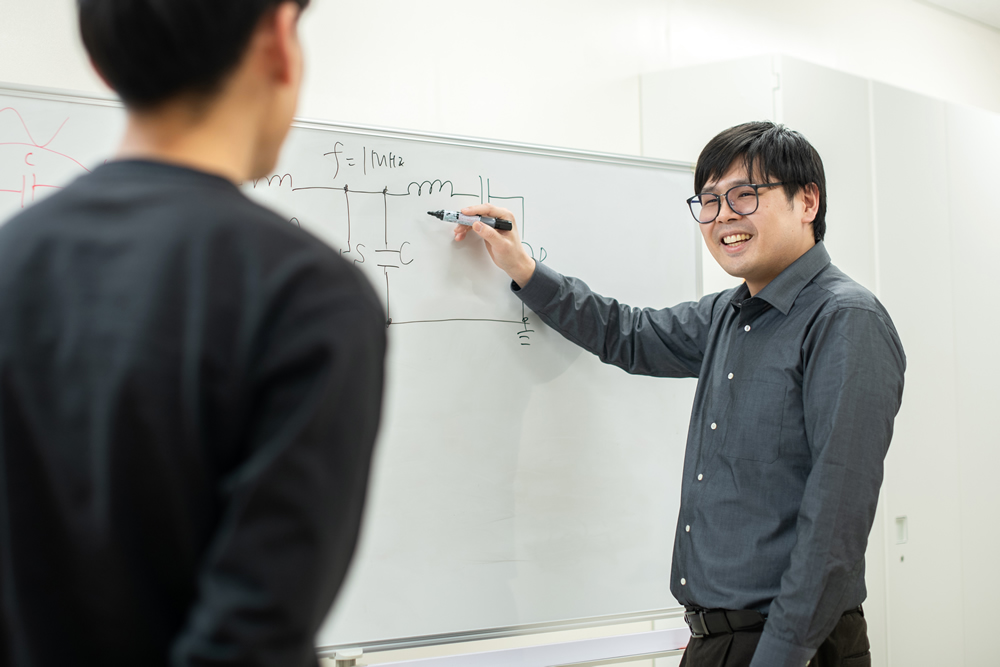
A circuit known as the class-E circuit exists, which achieves soft-switching and enables high power conversion efficiency in high-frequency environments. However, when load variations occur, soft-switching is lost, and the circuit performance deteriorates significantly. Against this background, load-independent operation has attracted considerable attention. By deriving analytical expressions for the load-independent class-E converter, it becomes possible to visualize the circuit characteristics and determine the optimal circuit parameters.
Power supply circuits are essential for all kinds of electronic devices. In recent years, efforts toward miniaturization and weight reduction have led to the adoption of high-frequency operation in the MHz range. However, this advancement also brings challenges, such as increased switching losses and reduced power conversion efficiency.To address these issues, soft-switching technology has been developed, which significantly reduces losses during high-frequency operation. Despite its benefits, deriving the appropriate circuit parameters to achieve soft-switching is often a complex task.By applying our original analytical method, it is possible to identify the optimal circuit parameters more systematically. This approach not only improves efficiency but also contributes to the design of next-generation power supply circuits that are smaller, lighter, and more reliable.
Switching losses are determined by the current flowing through a switching device and the voltage applied across it during switching. By employing soft-switching techniques, the switch voltage at the moment of switching can be reduced to zero, thereby significantly minimizing losses. class-E circuits, which inherently achieve soft switching, are largely unaffected by switching losses even at operating frequencies in the MHz range. However, circuit performance can degrade considerably under varying load conditions. Against this backdrop, load-independent operation has garnered considerable attention. Load-independent operation allows both soft switching and a constant output voltage to be maintained despite load variations. To determine circuit parameters that satisfy these conditions, careful selection of component value combinations is essential. The use of analytical expressions enables the calculation of component values even under complex conditions, substantially reducing design effort and cost. Moreover, by representing circuit characteristics in a two-dimensional space, the behavior of the circuit can be visualized, facilitating intuitive understanding.
In future work, we aim to propose a design methodology for circuits that maintain soft switching and remain load-independent even under non-purely resistive loads, such as dielectric barrier discharge plasma loads, at high voltages and high frequencies. Additionally, we intend to establish analytical expressions to support this design approach.

| Research | |
|---|---|
| Journal | IEICE Transactions on Communications |
| Title | Analysis and Design of Load-Independnt Class-E Synchronous Rectifier |
| Author | Tatsuki Osato, Asiya, Xiuqin Wei, Wenqi Zhu, Kien Nguyen, and Hiroo Sekiya |
| Member | Tatsuki Osato |
Learn about the cutting-edge research achievements, advanced technical resources, and know-how that the Graduate School of Engineering at the University of Hyogo can provide. We welcome partners who can create the future together with us by jointly generating new ideas and technologies through collaborative research, commissioned research, and technical consultations.
More