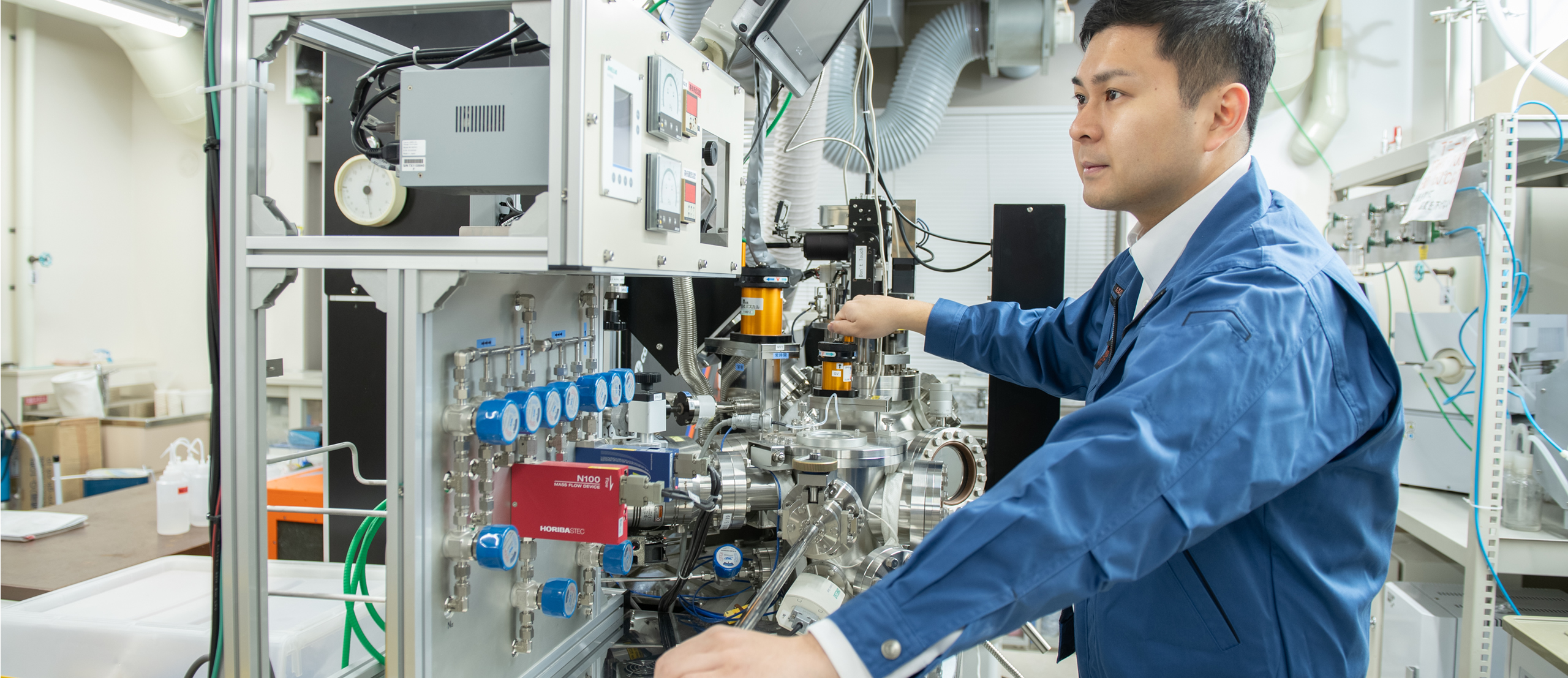
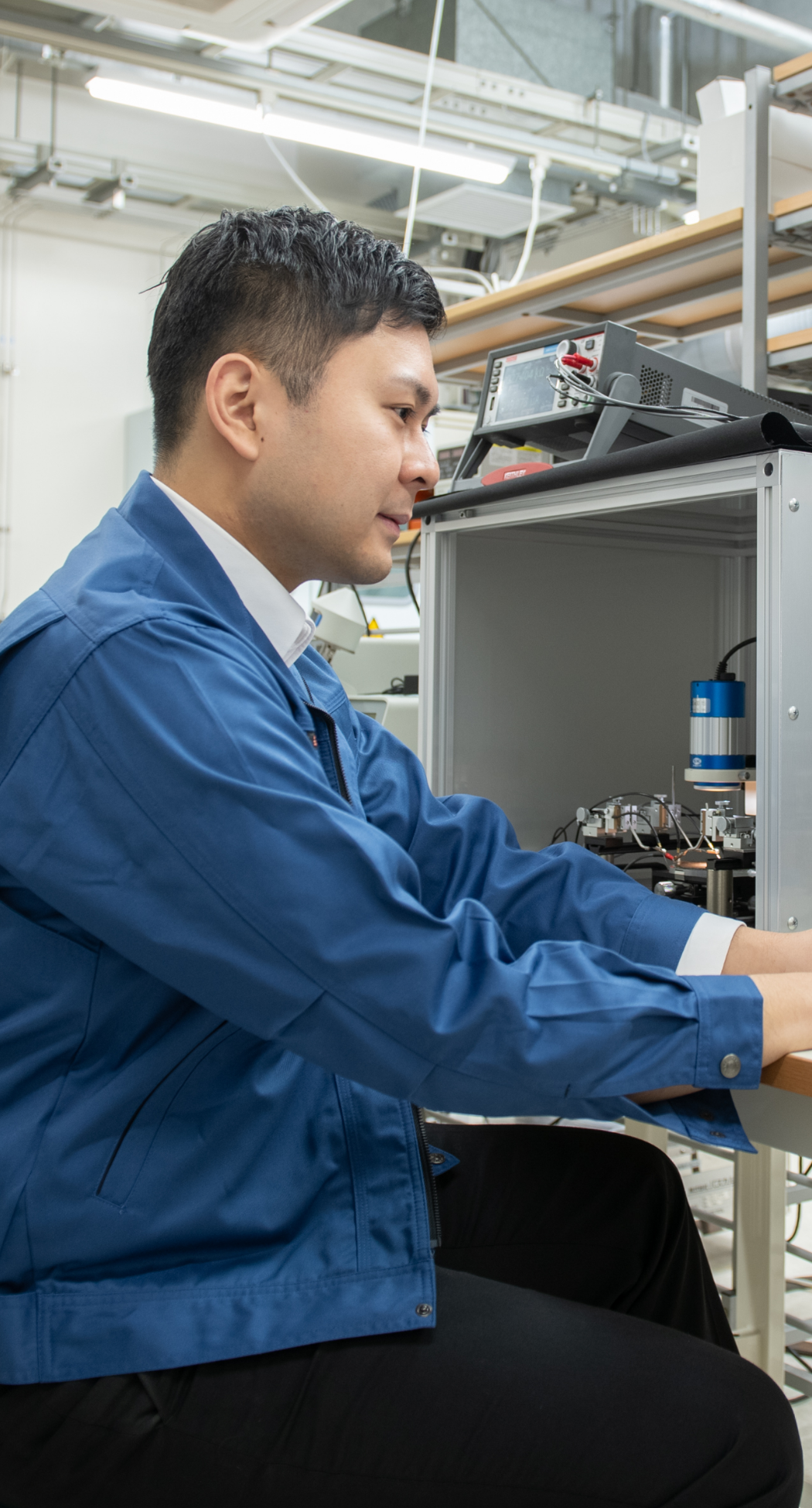
Biological cells exhibit remarkable functionalities that are difficult to achieve using inorganic materials alone, including self-repair, flexibility, environmental adaptability, and advanced parallel information processing. Our research aims to directly incorporate these exceptional capabilities of living cells into silicon-based electronic devices. To this end, we are developing interface materials that bridge biological cells and silicon, and investigating the emergent electronic properties arising from their integration.
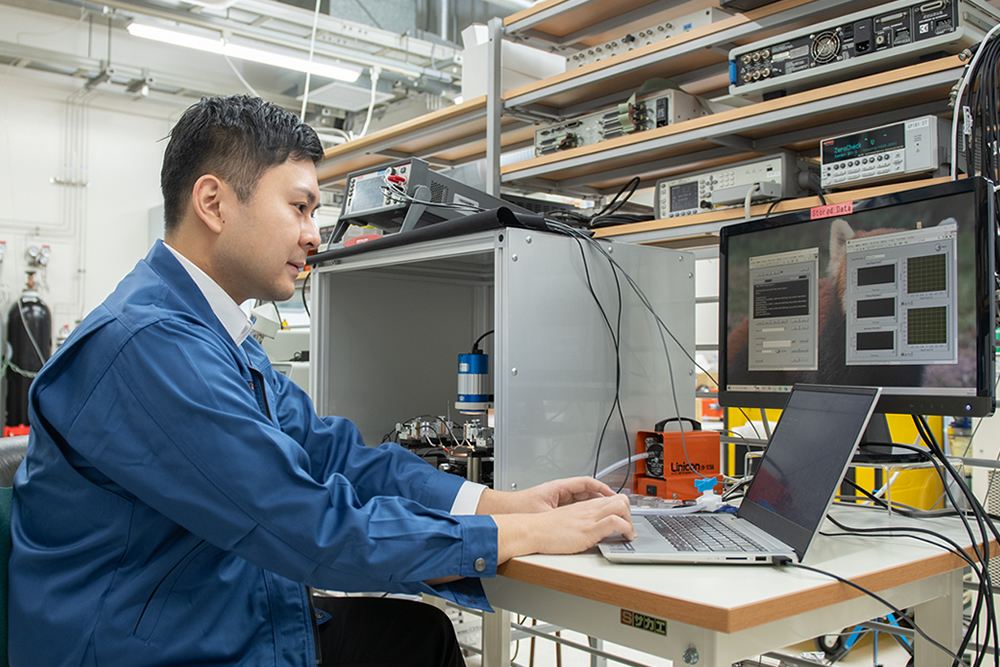
Developing bio-hybrid silicon electronic devices first requires the successful culture of living biological cells—naturally incompatible with bare silicon—on silicon substrates, as well as their electrical integration. To address this, we have explored the use of transition metal oxides as biocompatible buffer layers between biological cells and silicon. As a pioneering step, we have developed a technique to form a direct electrical interface between transition metal oxides and silicon while suppressing interfacial oxidation, specifically the formation of amorphous and insulating layers. This technological advancement may pave the way for novel electronic devices fundamentally different from conventional silicon-based systems.
Silicon is the cornerstone material not only for consumer electronics such as smartphones and computers, but also for medical devices including pacemakers and implantable systems. However, further performance improvements in conventional silicon-based devices have become increasingly difficult. In response, we aim to achieve breakthrough performance and novel functionalities by combining biological cells, transition metal oxides, and silicon. Despite consuming orders of magnitude less power than current integrated circuits, biological cells exhibit unique properties—such as self-propagation and self-repair—that are absent in inorganic materials. Successfully integrating these biological capabilities into electronic systems may enable entirely new classes of functional devices.
To enable the direct integration of biological cells onto silicon, we developed a method for depositing biocompatible transition metal oxides—specifically (La,Sr)VO₃—onto silicon substrates while suppressing surface oxidation. This was accomplished using the pulsed laser deposition (PLD) technique. Interface characterization by X-ray photoelectron spectroscopy (XPS) confirmed the effective suppression of interfacial oxidation. Furthermore, we verified that the (La,Sr)VO₃ thin films grown on silicon retain the same intrinsic properties as their bulk counterparts. This finding demonstrates that these films not only serve effectively as buffer layers for supporting cell adhesion, but also retain functional properties such as the charge-switching behavior characteristic of Mott insulators. This platform therefore provides a foundation for electronic devices that leverage both the unique characteristics of biological cells and the functional properties of transition metal oxides.
This research holds promise for the development of high-speed, low-power transistors, more sensitive and faster neural interfaces, advanced biosensors, and novel implantable devices that are both stable and functional in vivo. By integrating living cells with inorganic materials through advanced interface engineering, we open new frontiers in the field of bio-hybrid electronics.


| Research | |
|---|---|
| Journal | Planned Submission |
Learn about the cutting-edge research achievements, advanced technical resources, and know-how that the Graduate School of Engineering at the University of Hyogo can provide. We welcome partners who can create the future together with us by jointly generating new ideas and technologies through collaborative research, commissioned research, and technical consultations.
More