Kensuke Kanda
Professor | Ph.D. in Engineering
Electrical and Electronic Engineering Course
Applied MEMS Research Group
Professor Kanda believes that understanding the underlying processes and principles behind a technology matters more than memorizing facts, and his teaching places strong emphasis on hands-on practice through exercises. His research centers on MicroElectroMechanical Systems (MEMS), a field that draws together electrical, mechanical, and materials engineering and offers the reward of designing devices that function in the real world.
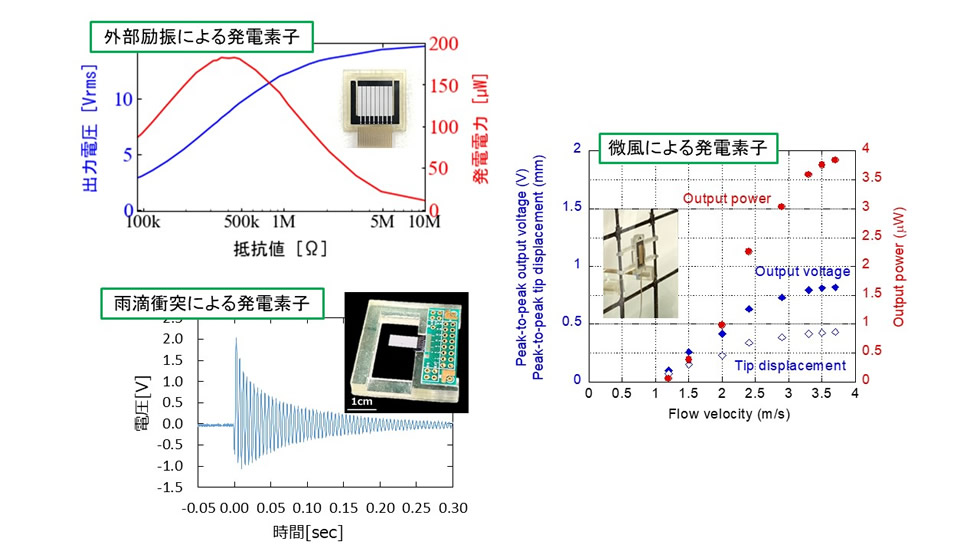
Ultra-Small Power-Supply Devices
What students can learn
Working at the boundary between electrical and mechanical energy conversion, students build broad skills that span numerical simulation and semiconductor fabrication processes.
Miniature electronic systems, such as sensors, require a stable power supply. To reduce battery replacement and its associated environmental burden, growing attention has turned to energy-harvesting technologies that convert energy in the surrounding environment into electricity. This research seeks to develop and integrate such energy harvesters using semiconductor fabrication techniques, aiming ultimately at autonomous sensors equipped with their own power source.
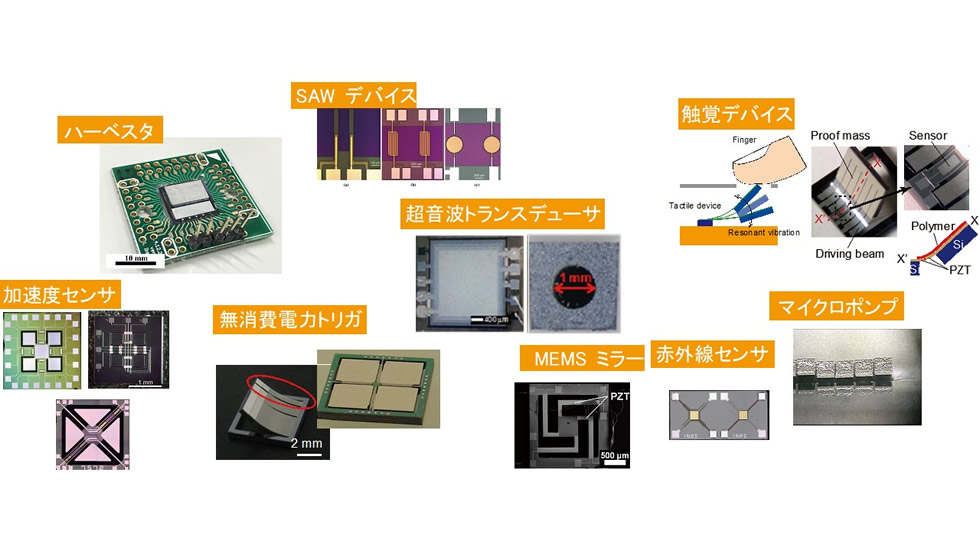
Advancement of Micromachines and Sensor Systems
What students can learn
By using semiconductor fabrication equipment to turn ideas into working devices, students develop broad capabilities spanning electrical engineering, mechanics, materials science, and numerical simulation.
Micromachines and sensor systems are fabricated through processes similar to those used for electronic circuits, combining mechanical structures with circuitry on a single device. Known as MEMS, they underpin many systems throughout modern society. This theme seeks to advance micromachines and sensors beyond their current limits by exploring new materials and design concepts.