Shinichiro Yamamoto
Associate Professor | Ph.D. in Engineering
Electrical and Electronic Engineering Course
Communication and Radio-Wave Applications Research Group
Rather than treating each technology as an isolated topic, Associate Professor Yamamoto situates it within its historical development, tracing a path from underlying principles to present-day applications. His research addresses two closely related pillars of his group's work: information and communication engineering, and electromagnetic compatibility (EMC).
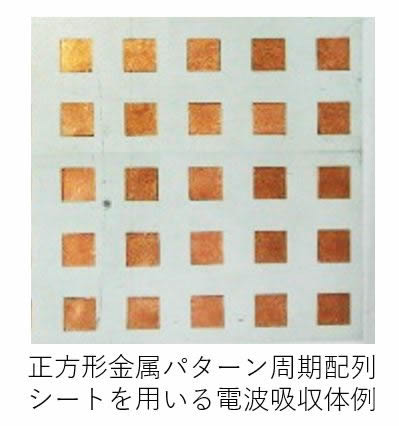
Research and Development of Radio-Wave Absorbers and Shielding Materials for Electromagnetic Compatibility
What students can learn
This theme introduces the nature of electromagnetic environments, why EMC measures are necessary, the methods currently used to implement them, and representative examples of their application.
This research develops EMC technologies that underpin modern information and communication systems such as 5G networks and smartphones. It involves designing and evaluating radio-wave absorbers and shielding materials capable of suppressing unwanted electromagnetic waves across a wide range of frequencies, from low to high, with the aim of supporting everyday convenience and the advancement of new technologies.
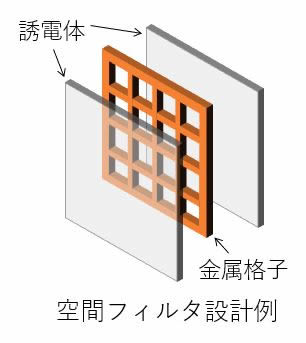
Development of Spatial Filters for Next-Generation Wireless Communication
What students can learn
This theme examines techniques for harnessing electromagnetic waves efficiently, together with the underlying concept of spatial filters.
This research investigates electromagnetic-wave transmitting materials, known as spatial filters. It involves designing and evaluating materials that transmit desired frequency bands with high efficiency across an ultra-wide range, from microwaves to millimeter waves. Such technologies may contribute to systems that rely on specific electromagnetic bands alone, such as millimeter-wave radar for automotive collision prevention.