Kodai Machida
Professor | Ph.D.
Applied Chemistry Course
Field of Applied Chemistry
Genetic engineering forms the core of Professor Machida's teaching, which traces the field from its basic principles to its practical applications and highlights its societal significance through real-world examples of implementation. His research draws on the technological foundations of genetic engineering to develop a cell-free system capable of synthesizing human proteins in a test tube. Applying this system, he investigates the underlying causes of human disease and pursues the creation of artificial cells.
Analysis of Translation Mechanisms Using a Human-Derived Reconstituted Protein Synthesis System
What students can learn
This theme offers hands-on training in fundamental genetic manipulation, protein expression and purification, cell culture, liposome preparation, and microscopy techniques.
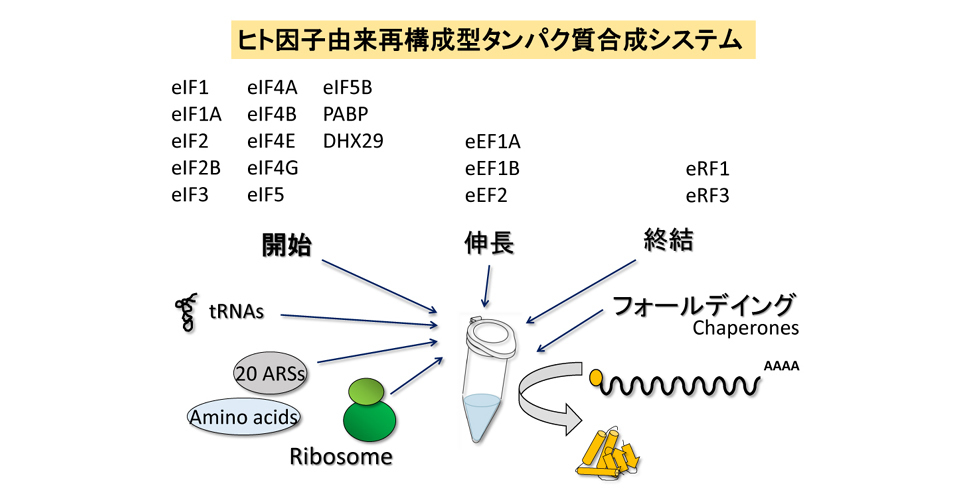
Protein synthesis (translation) inside cells is carried out by a large number of translation-related factors. Purifying and combining all of these factors in a test tube makes it possible to reconstruct a functional protein synthesis system. Professor Machida's group was the first in the world to establish such a system using factors derived from human cells, and this reconstituted system is now used to investigate the mechanisms underlying human translation. Because abnormalities in translation can give rise to disease, a detailed understanding of these mechanisms may help advance the prevention and treatment of a range of illnesses.
Development of Artificial Cells and Disease Models Based on Them
What students can learn
Through this work, students build practical skills in genetic manipulation, protein expression and purification, cell culture, liposome preparation, and microscopy.
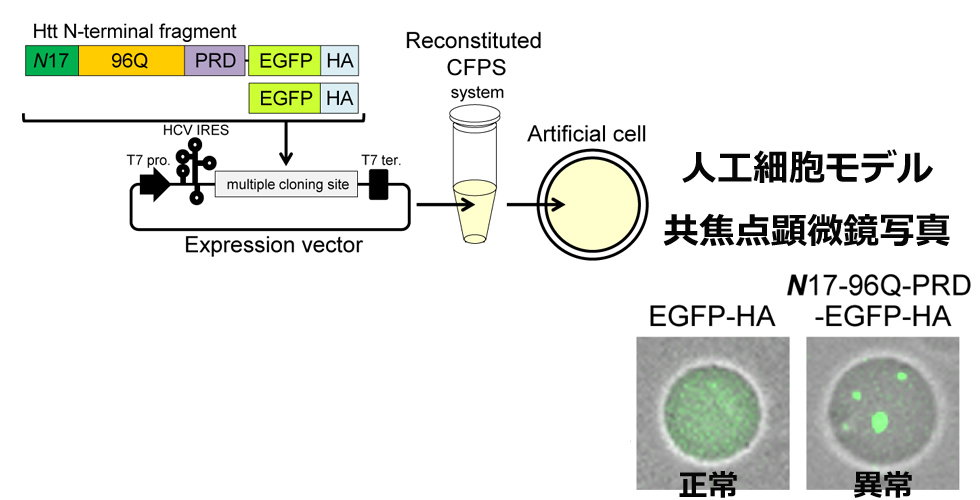
At their most basic level, cells are composed of individual biomolecules. Conversely, combining these molecules in the right way might make it possible to construct a cell. Using this bottom-up approach, Professor Machida's group seeks to reconstruct human cells and establish a variety of disease models. For example, the group is working to recreate, using artificial cells, experimental models of conditions caused by abnormal proteins, such as Huntington's disease and sporadic developmental disorders, with the aim of elucidating the underlying causes of these diseases.