Takao Sato
Professor | Ph.D. in Engineering
[mail] Contact information is available on the Japanese page.
Mechanical Engineering Course
Field of Mechanical Engineering
Control engineering seeks to make any phenomenon behave exactly as desired, automatically and reliably, and is therefore indispensable to the realization of Society 5.0. Because the field addresses an enormous range of possible phenomena, it favors generalized formulations, which can make it seem somewhat forbidding at first encounter. In lectures and within the research group, concrete, familiar examples are woven into the theory whenever possible, so that the ideas remain as accessible as possible.
Control of Networked Systems
What students can learn
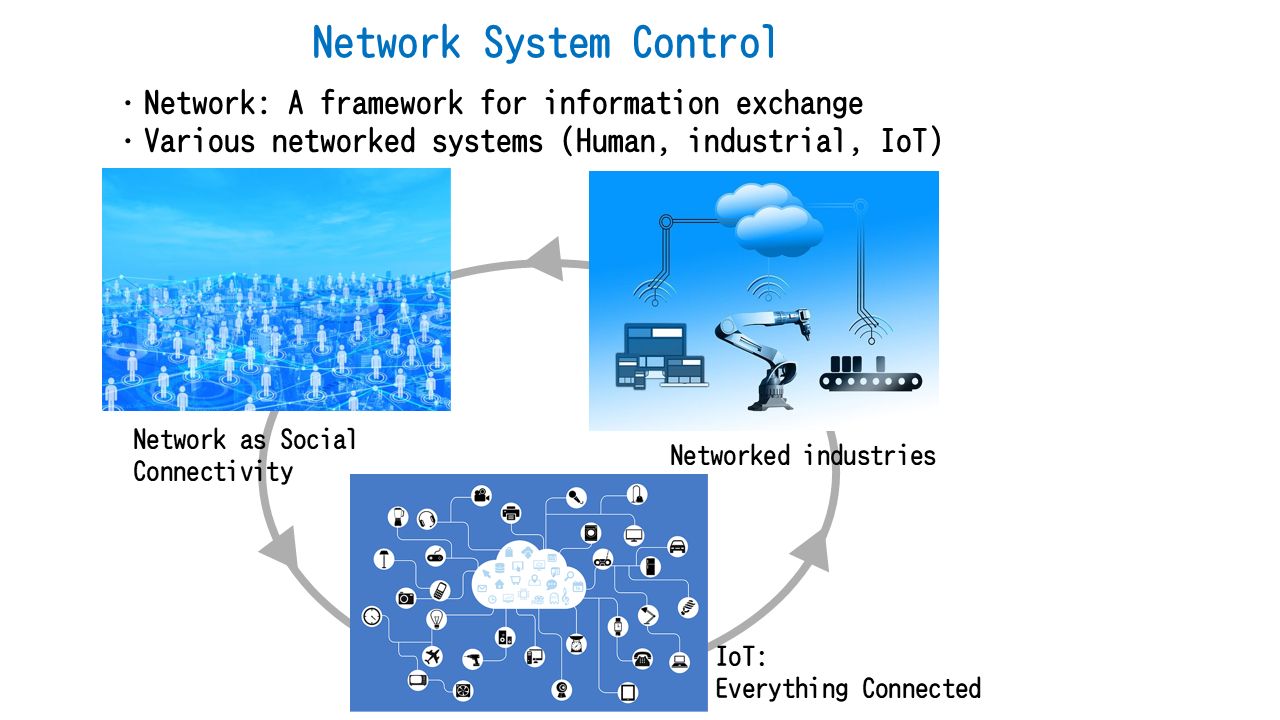
Students acquire methodologies for controlling systems in which numerous elements are interconnected, as is characteristic of a society built on advanced communication networks. Because such tightly coupled systems demand careful attention to safety, students also develop skills relevant to security.
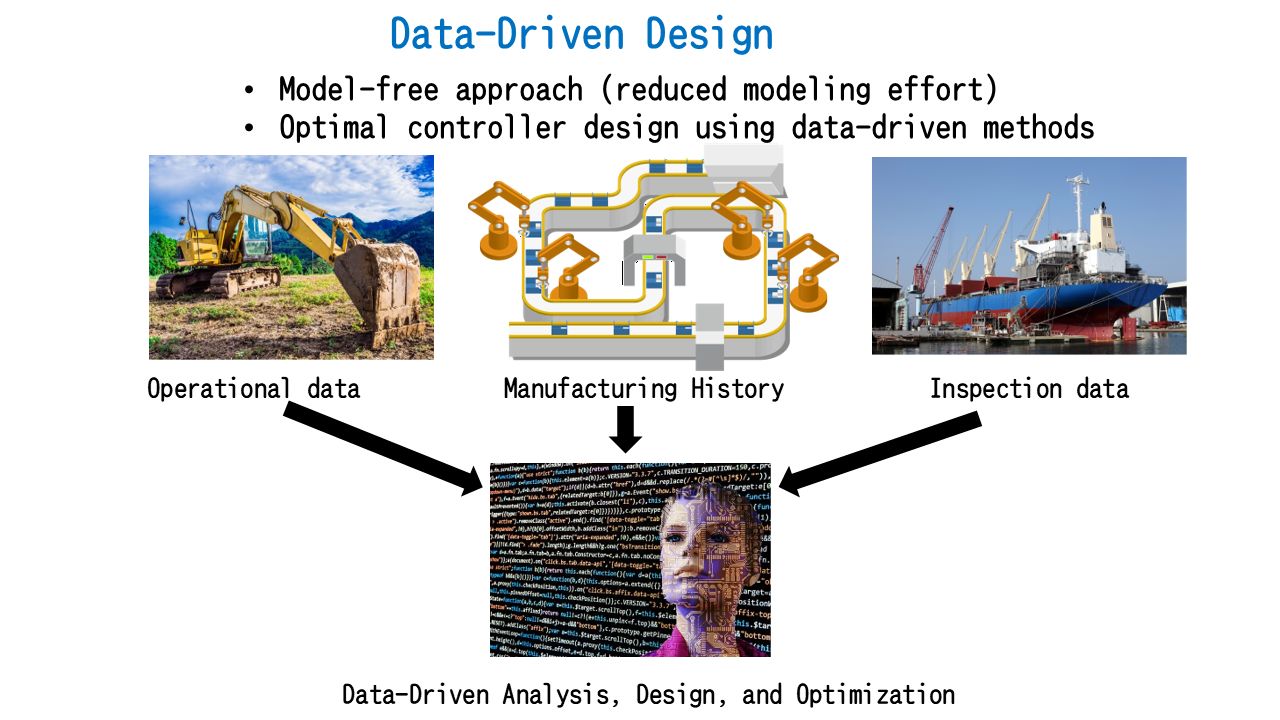
Networked systems in which autonomous devices such as robots and drones, together with human activity, are integrated with diverse social infrastructure involve numerous interacting elements, and at first glance their behavior appears formidably difficult to understand. Indeed, optimizing the system as a whole after fully characterizing every individual element is impractical. This research therefore investigates data-driven design methods that make direct use of operational data. Such approaches make it possible to understand a continuously changing society through data and to optimize the design of required functions accordingly.
Control for Physical and Mental Well-Being
What students can learn
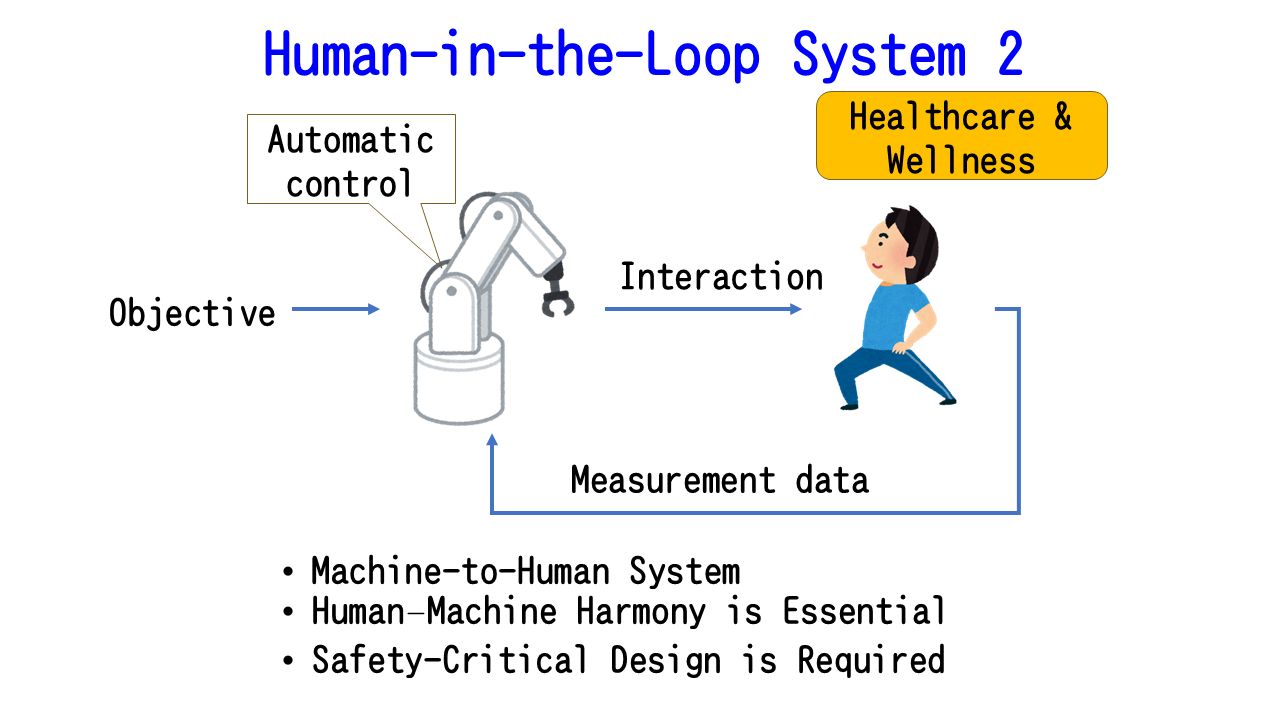
Students develop the skill of optimally designing exercise equipment—tailored to each individual—that safely and comfortably supports the extension of healthy life expectancy, athletic training, and safe rehabilitation.
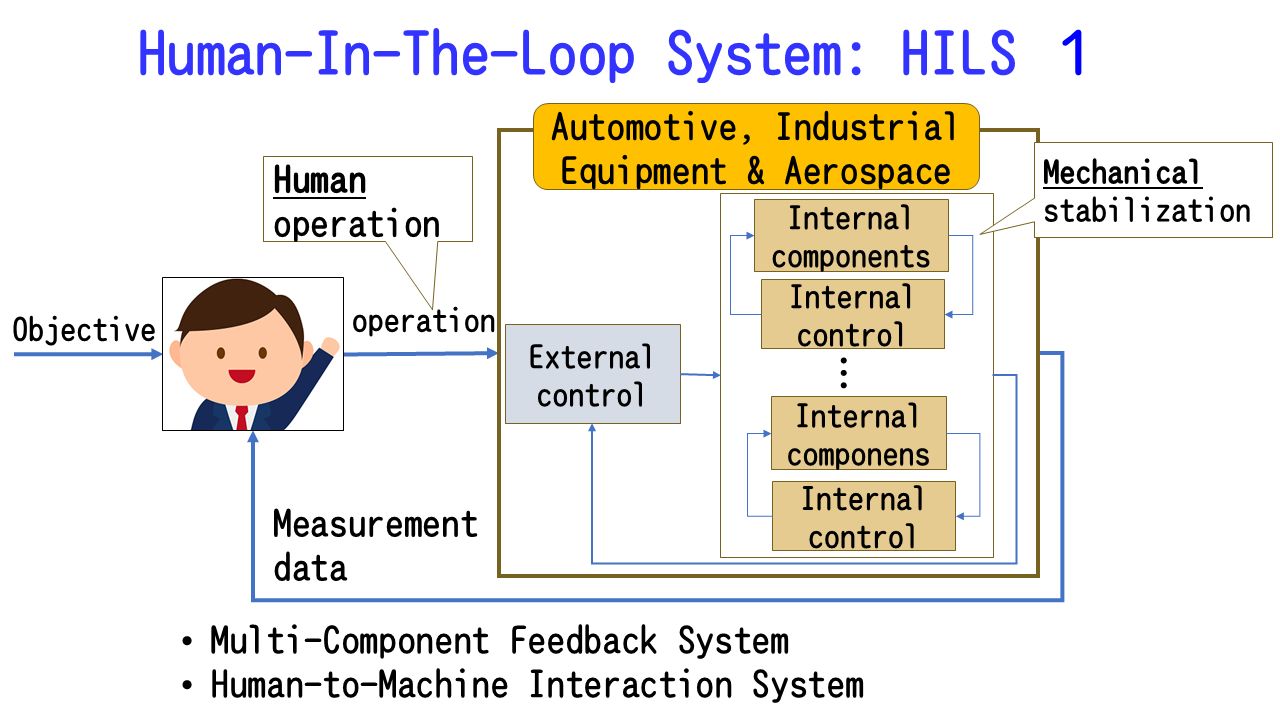
One condition for a happy daily life is maintaining both physical and mental well-being, and exercise performed at an appropriate intensity is highly effective toward this end. This research therefore investigates methods for providing optimal exercise intensity to individuals of varying age, sex, and exercise habits. Ideally, exercise equipment would be controlled only after thoroughly understanding the characteristics of each user, but doing so individually for a very large population is not practical. Accordingly, this work explores design methods that make use of each person's own exercise data, which anyone can readily obtain, thereby enabling the effective, individualized optimization of exercise equipment.