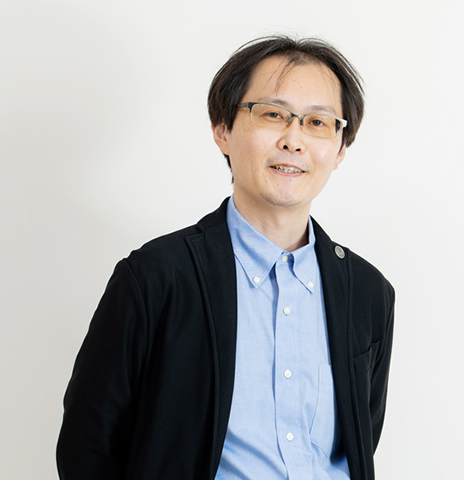
Naohisa Takagaki
Professor | Ph.D. in Engineering
Mechanical Engineering Course
Field of Mechanical Engineering
Grounded in the fundamentals of fluid dynamics, this laboratory pursues interdisciplinary research that extends beyond the conventional boundaries of mechanical engineering, spanning fields such as geophysics, chemical engineering, and medicine, with an eye toward collaboration with industry. In his university lectures, Professor Takagaki strives to convey the broad applicability of fluid dynamics.
Toward High-Precision Typhoon Prediction and Control
What students can learn
Students can take on research questions that no one has yet resolved, developing a foundation in fluid dynamics together with fluid measurement techniques and knowledge of meteorology and oceanography. For those interested in renewable energy—offshore, wind, or hydroelectric power—or in marine vessels, this is a rare opportunity to acquire fundamental knowledge and skills in atmospheric and ocean science.
A typhoon's energy is continuously depleted by the drag exerted at the sea surface, and it weakens when the heat supplied from the ocean falls short. While a typhoon's trajectory is largely governed by atmospheric pressure patterns, and forecasts of its path have grown increasingly accurate, predicting its intensity remains an unresolved challenge, in part because direct observation is so difficult. To address this, Professor Takagaki uses Japan's only large-scale typhoon simulation tank (at Kyushu University), capable of reproducing typhoon conditions, to measure and analyze momentum transport and wind-wave dynamics at the air-sea interface, aiming to clarify the mechanisms by which momentum is transported across the sea surface beneath a typhoon. He also participates in a Moonshot Research and Development Program, investigating whether typhoons can be controlled, specifically weakened, by 2050.
Medical Fluid Engineering
What students can learn
Students gain knowledge of fluid flows within the human body, such as blood circulation and respiration, together with techniques for predicting such flows.
In collaboration with companies and hospitals in Hyogo Prefecture, Professor Takagaki conducts applied medical research at the University of Hyogo's Institute for Advanced Medical Engineering. His work includes clarifying the flow characteristics of needle-free injectors (see a recent press release) and elucidating drug dynamics within bone marrow, among other topics. During the COVID-19 pandemic, he also produced videos on infection countermeasures, released on YouTube, and he continues to work on the development of new high-performance masks. Further details of this research are available here.